Summary
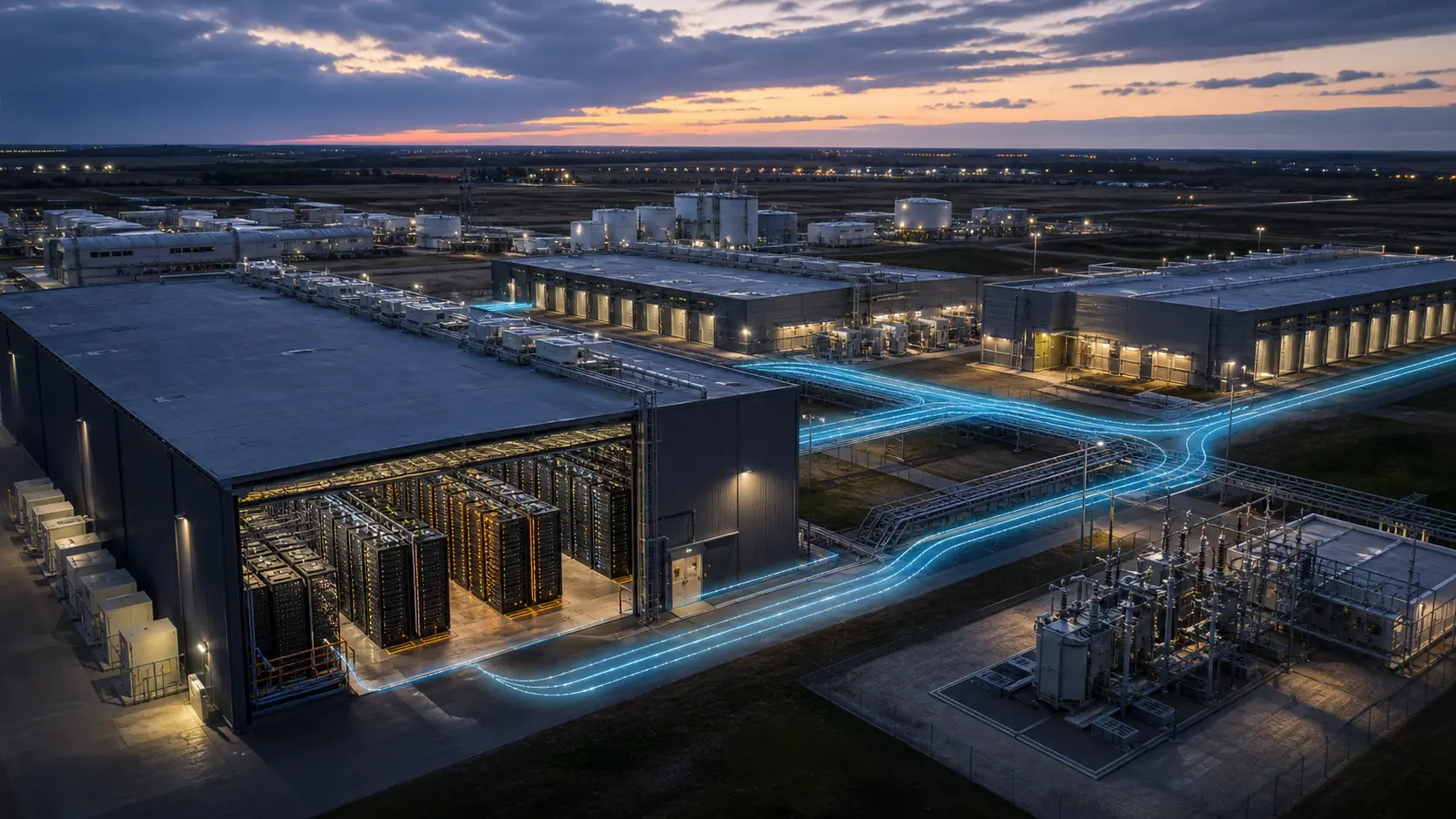
- Business Insider reports that Amazon is redesigning part of its rural Indiana AI campus so several data centres can operate as one “AGI SuperCluster” for future in-house models.
- An internal update described an “emergent request” for more than 6,000 Trainium-powered AI servers and a schedule accelerated by several weeks.
- The plan connects buildings through redesigned networking, storage and fibre; some facilities become annexes sharing core network equipment, while some older Trainium2 systems are slated for Trainium3 replacement.
- The work sits on the same large campus as Project Rainier but is reported not to affect the existing Rainier servers used for Anthropic.
- Amazon’s latest official results put AWS quarterly sales at $42.2 billion and operating income at $16.6 billion, while trailing-12-month free cash flow was a $7.6 billion outflow after a sharp increase in AI-related property and equipment spending.
- Neither Amazon nor the internal-plan report discloses the redesign’s cost, power requirement, chips per server, completion date, expected utilization or return on invested capital.
Reuse is the operative decision
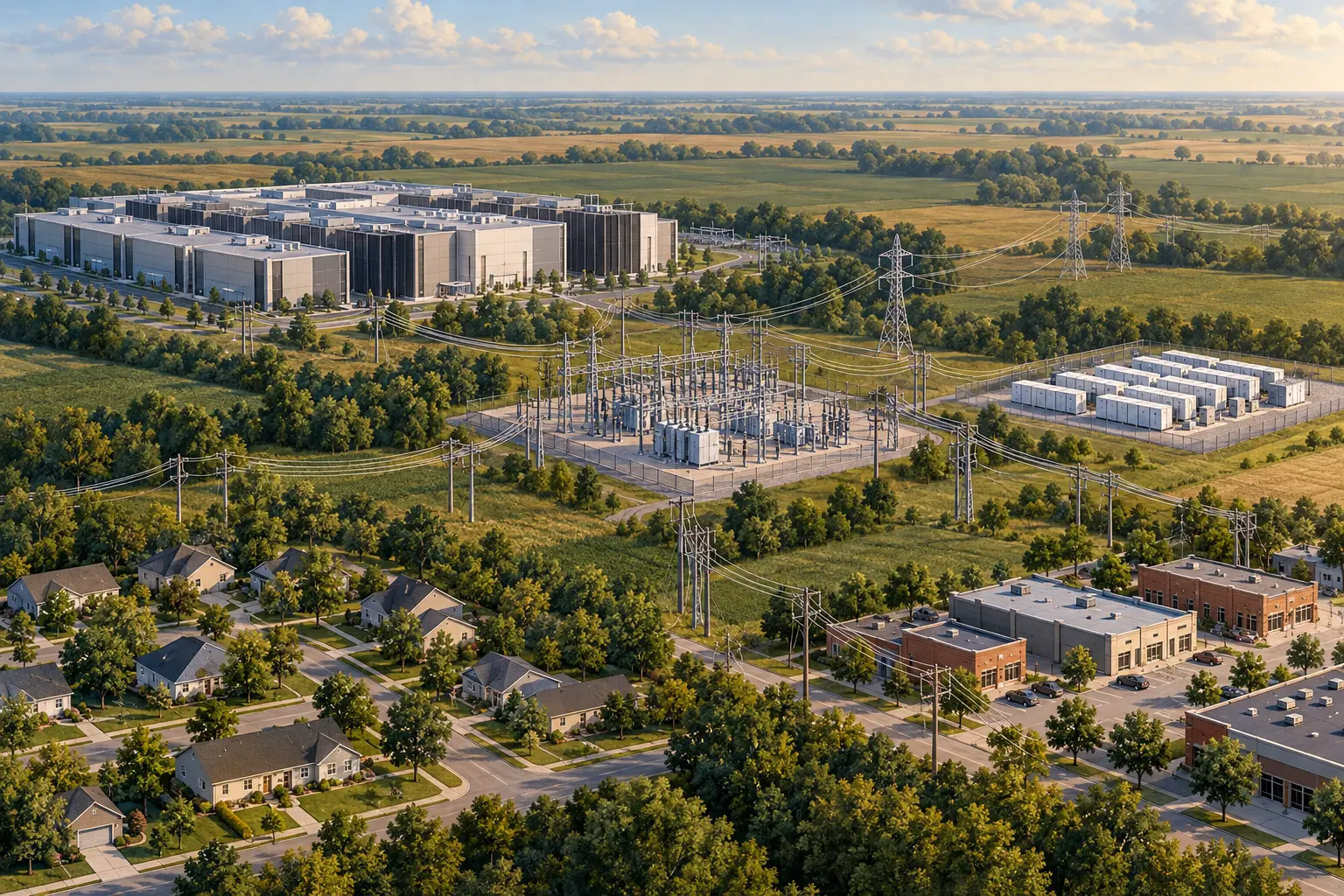
The easiest reading is that Amazon wants another large AI cluster. The more useful reading is that it is trying to avoid treating every new model as a reason to construct an isolated facility. Business Insider says the plan would make multiple Indiana data centres behave as one system, with annexes sharing core network equipment and with storage, fibre and network architecture redesigned around the larger cluster.
That changes the unit of investment. A stand-alone hall carries duplicated switching, storage and operational overhead. A campus-wide cluster can pool some of that equipment and move scarce accelerators toward a common training job. The saving is not proved—the report supplies no budget—but the architecture shows where management believes returns can be recovered: from coordination across sunk assets, not only from adding machines.
Six thousand servers are a request, not capacity
The internal update calls for more than 6,000 Trainium-powered servers and advances the schedule by several weeks. It does not say those servers have been delivered, installed, energized or accepted. Nor does it disclose how many Trainium chips sit in each server. Multiplying the server count by a guessed rack density or power draw would manufacture a capacity figure that the evidence does not contain.
The schedule is also tied to a management objective: prepare Amazon’s next frontier model for its re:Invent conference, normally held in early December, according to the report. That creates a deadline but not a completed model. Hardware availability, network fabric, storage checkpoints, software stability and usable power all have to arrive on the same clock. The request measures urgency; successful training remains the outcome to prove.
Rainier is a neighbour, not a donor
The Indiana campus already contains Project Rainier, which Amazon describes as an operational Anthropic cluster built around nearly half a million Trainium2 chips. The new effort occupies the same broad complex, yet Business Insider reports that it will not affect existing Rainier servers.
That boundary matters commercially. Amazon has customer commitments around Trainium and says both its chips and AI businesses have exceeded $25 billion annual revenue run rates. Reassigning a contracted customer cluster to an internal model would raise a different question about revenue protection and customer concentration. The evidence instead points to coexistence: Amazon is trying to create an internal frontier-model resource without taking the disclosed Rainier estate away from Anthropic.
The cash-flow backdrop makes utilization the real test
Amazon reported second-quarter AWS sales of $42.2 billion, up 37%, and AWS operating income of $16.6 billion. Demand is not the obvious weakness. Capital conversion is. The company’s trailing-12-month free cash flow moved to a $7.6 billion outflow, with Amazon attributing the deterioration primarily to a $66.1 billion year-over-year increase in net purchases of property and equipment, principally for AI.
That does not make the Indiana redesign uneconomic. It raises the burden of proof. Sharing a campus network and replacing selected Trainium2 systems with Trainium3 may improve utilization or shorten time to training. But the public record gives no incremental cost, saved equipment, power released, model throughput or revenue attached to the project. “More efficient” is an engineering aim until those denominators appear.
The downside stays with Amazon
The initiative supports Amazon’s own future models, so Amazon carries the direct risk of overbuilding, delay or a model that fails to justify the capacity. Customers could benefit if the work improves Trainium software and cluster operations; they need not absorb the initial model risk unless prices or capacity allocation later shift.
The alternative is not simply to do nothing. Amazon could rent more external accelerators, build another isolated cluster, delay its model, or redirect customer capacity. The reported design chooses reuse and tighter integration. It is plausible capital discipline, but only if shared infrastructure reduces cost or time without creating a larger failure domain.
Sources
Member Briefing
Deeper Profile Context
Sign in with the right membership level to unlock the full briefing and source notes.
Only for Strategic Circle
Strategic Circle
Open to all readers. Unlock profile briefings after joining and signing in.
Join Strategic CircleOnly for Leadership Alliance
Leadership Alliance
For qualified IP-asset owners and management; sign in to unlock alliance briefings.
Join Leadership Alliance