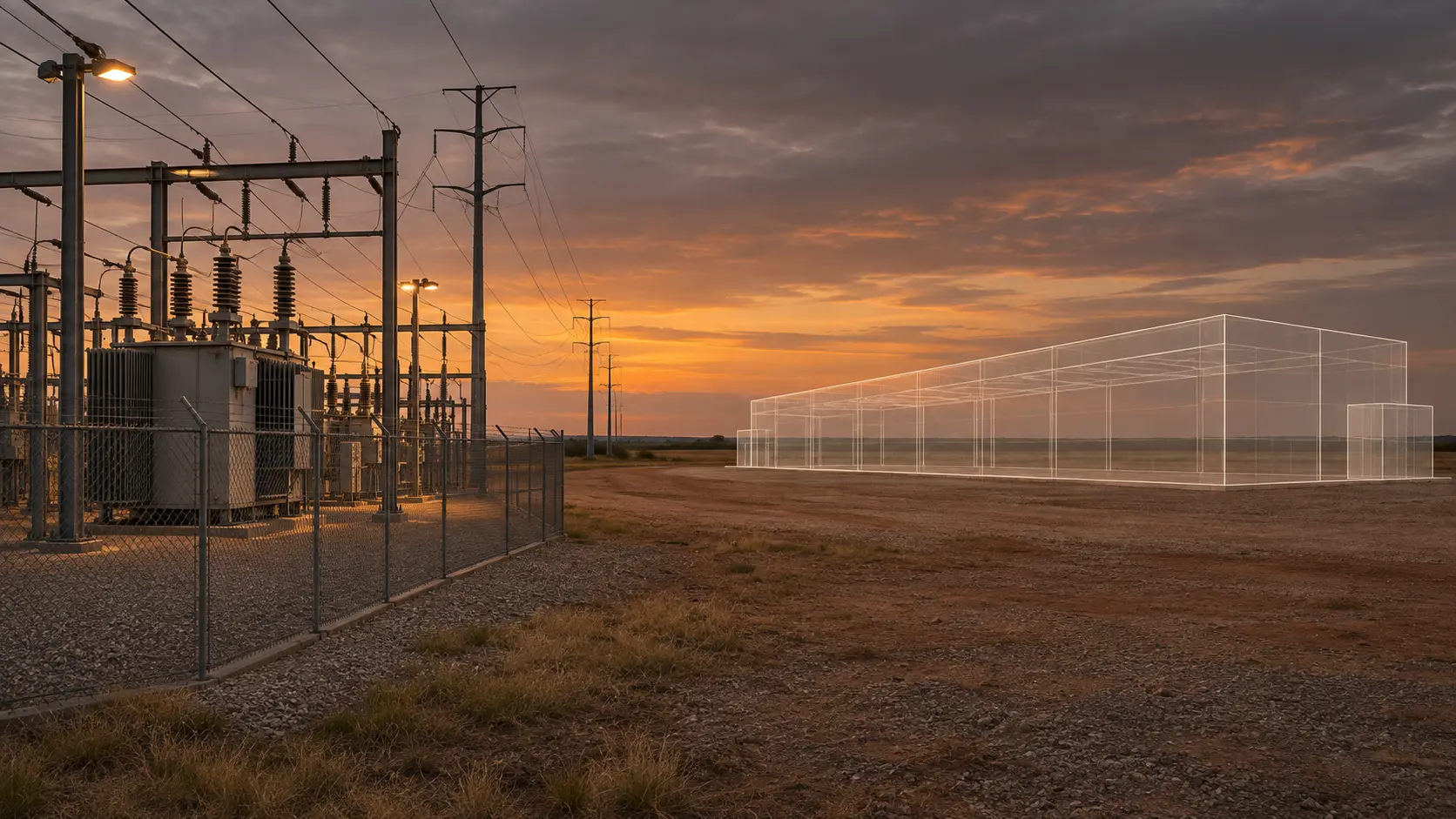
- Texas now demands electricity, on-site generation, water, cooling, ownership and community-impact data before a data-centre project advances
- The audit covers an ERCOT connection queue above 474GW — more than five times the system's record peak demand
Abbott's Question, and the Silence That Answered It
Greg Abbott asked the Texas data-centre industry for homework. Fewer than one in ten companies handed it in.
The governor said fewer than 10% of data-centre developers had responded to a state request for the information needed to forecast future electricity demand — a striking return rate for an industry that insists it is the backbone of the state's next economy.
Earlier this month Abbott directed the Public Utility Commission of Texas and grid operator ERCOT to audit every data-centre project moving through interconnection. The questionnaire is not decorative: projected electricity use, plans for on-site generation, water demand, cooling technology, public incentives received, ownership, and measures to limit the strain on neighbouring communities. Projects that fail to satisfy the requirements can be denied a grid connection.
474GW: A Queue Five Times the Record Peak
ERCOT is weighing more than 474GW of connection requests — more than five times its record peak electricity demand. Abbott put roughly 90% of new requests down to data centres, and told ABC's This Week that developers had grown too fast without earning enough local support.
That last point matters more than the megawatts. A grid connection is a public privilege dressed as a private contract, and Texas has decided to start pricing it in disclosure.
Why 474GW Is a Wish List, Not a Forecast
The headline number measures requested power, not when it arrives or how much of it ever plugs in. A developer can file a colossal load request while the construction schedule, on-site generation plan and financing are still sketches on a whiteboard.
Texas is now forcing those sketches into the open before a request advances. That gives regulators a project-by-project read on what is real. It does not, however, conjure capacity, capital or concrete: clearing the audit is a permission slip, not a power plant.
The number that will actually matter is how much requested load survives the review. That is the figure that tells you how much of the 474GW can meet Texas's information bar and keep moving through interconnection — and how much was always theatre.
What to Watch
Three signals. How many projects complete the audit. How much requested load remains in ERCOT's queue afterwards. And whether any projects are denied or quietly withdrawn. PUCT and ERCOT guidance on the evidence developers must supply will set the bar for every request that follows.
Member Briefing
Read the full trend briefing
Members read the full briefing with the source notes behind every finding.
Strategic Circle
A daily briefing in your language, built from changes we have verified.
Join for USD 20/monthCancel anytime.
Members also get the full research library, a daily briefing on the networks they follow and the private forum.