
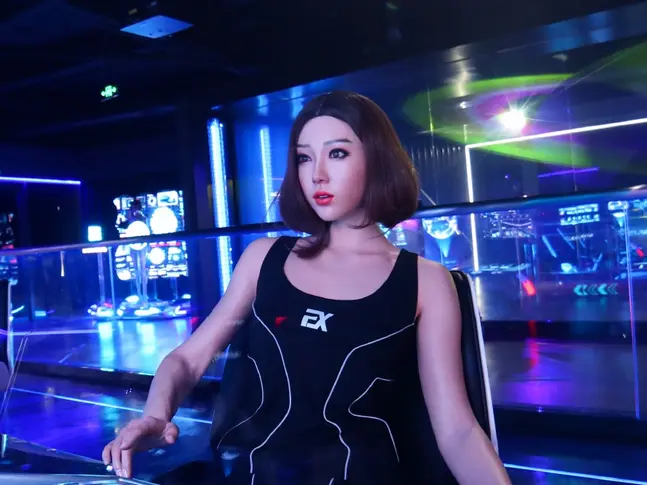
- A company in Dalian, China, begins mass production of bionic robots.
- Robots feature advanced facial expressions and emotions, priced up to 2 million yuan ($280,000).
OUR TAKE
While the technological marvel of these bionic robots is undeniable, it raises some disturbing questions about our future. Are we ready to accept machines that can simulate human emotions so convincingly? What happens to genuine human interactions when we start relying on robots for companionship and empathy? Elon Musk has gone on record saying he expects bionic robots to outnumber humans by at least two to one, in the future. That future appears to be on the way.
–Doris Du, BTW reporter
When I first heard about these humanoid robots from a factory in Dalian, China, I was sceptical. I thought it was another too-good-to-be-true tech story. But after digging deeper, I found out these robots are real and they’re starting mass production. These lifelike robots are designed with advanced facial expressions and emotions, making them appear almost human. They take between two weeks and a month to produce, with prices reaching up to 2 million yuan ($280,000).
What happened
The Ex-Robots factory in Dalian has announced that they are now mass-producing humanoid robots. These robots are notable for their advanced facial expressions and emotional capabilities, which are expected to revolutionise human-robot interactions. The production timeline is relatively swift, taking between two weeks and a month to complete one unit.
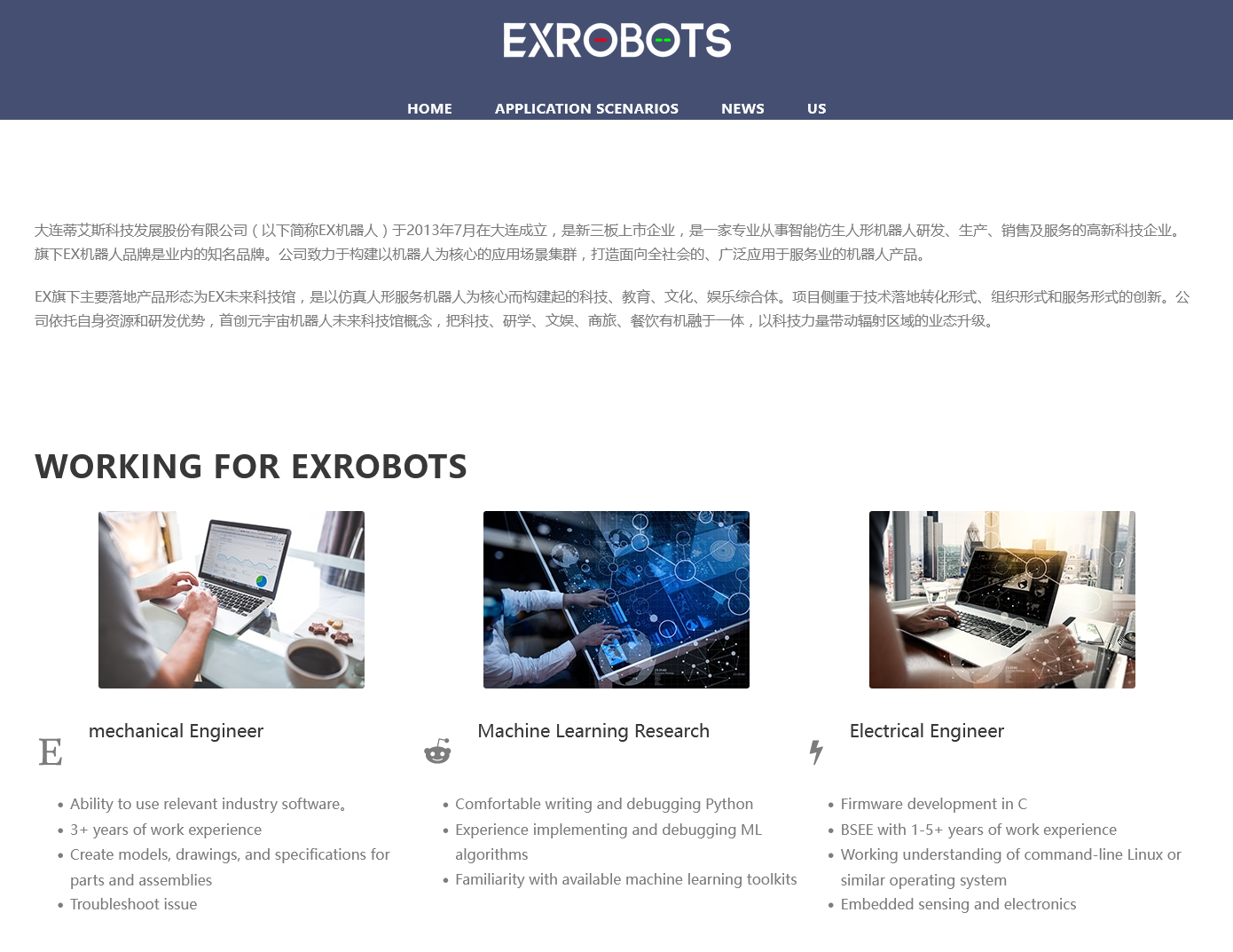
Translation of the Chinese part:
Dalian DS Technology Development Co., Ltd. (hereinafter referred to as EX Robots) was established in Dalian in July 2013. As a listed company on the New Third Board, it is a high-tech enterprise specialising in the research, development, production, sales, and service of intelligent bionic humanoid robots. The EX Robots brand under the company is a well-known name in the industry. The company is dedicated to building a cluster of application scenarios centred around robots, creating robot products widely used in the service industry and aimed at the whole society.
The primary product under EX Robots is the EX Future Technology Museum, a comprehensive complex integrating technology, education, culture, and entertainment, centred on bionic humanoid service robots. The project focuses on the innovation of technology implementation, organisational forms, and service formats. Leveraging its resources and research and development advantages, the company pioneered the concept of the Metaverse Robot Future Technology Museum, organically integrating technology, research, culture, entertainment, business travel, and dining. This approach aims to drive and upgrade the regional economy through technological power.
Why it’s important
This development marks a significant step forward in the field of robotics, showcasing China’s growing prowess in high-tech manufacturing. The ability to mass-produce such sophisticated robots at scale could have wide-ranging implications for various industries, from customer service to healthcare, where robots with human-like expressions and emotional responses could play a transformative role.
Exploring EX Future Technology museum
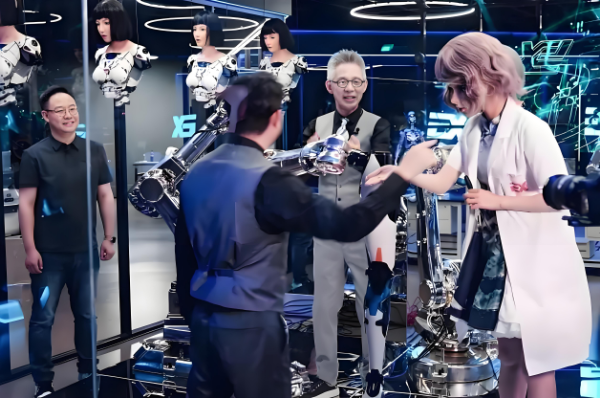
The technological marvels of Ex-Robots have also been featured on Tencent Video’s show 《未来新世界》 (Future New World), where viewers get an in-depth look at the EX Future Technology Museum. This museum is a advanced exhibition space dedicated to showcasing the latest advancements in robotics and artificial intelligence. Visitors can interact with various prototypes, including the advanced humanoid robots, and experience firsthand the capabilities of these machines. The museum also features interactive exhibits that explain the technology behind the robots, the production process, and the potential applications in different industries.
This immersive experience helps demystify the technology and provides a comprehensive understanding of how these robots are developed and their impact on the future.
The role of Douyin
Ex-Robots has effectively utilised Douyin (the Chinese version of TikTok) to promote their innovative products and attract investment. By mastering this platform, the company has managed to garner significant funding, demonstrating the power of social media in modern marketing and fundraising. Douyin serves as a launchpad for innovative marketing and consumer engagement, making it an ideal tool for dynamic startups.
Usage and innovation
These bionic robots are designed for various applications across multiple sectors. In customer service, they can provide a more personalised and engaging interaction with customers, using their advanced facial expressions to convey empathy and understanding. In healthcare, they can assist in caring for the elderly or patients with disabilities, offering companionship and support that feels more human. Educational institutions can also benefit from these robots, using them to teach and engage students in new and exciting ways.
The innovation behind these robots lies in their ability to mimic human facial expressions and emotions accurately. This is achieved through sophisticated artificial intelligence and intricate mechanical design, making these robots appear almost indistinguishable from humans in their expressions. This breakthrough is not just about creating lifelike robots but about enhancing the way humans and robots interact, making these interactions more natural and meaningful.
Ensuring authenticity
To ensure the authenticity of these robots, it’s important to look at the technological advancements and investments made in this field. The Ex-Robots factory has been backed by significant funding and has collaborated with leading AI researchers and engineers to develop these robots. The use of Douyin to promote and fund these robots further underscores their credibility, as the platform’s wide reach and engagement help validate the company’s claims.
Moreover, independent reviews and demonstrations of these robots have been conducted, showcasing their capabilities in various settings. These public demonstrations provide tangible proof of the robots’ functionalities, dispelling any doubts about their authenticity. For instance, the robots have been exhibited at prominent tech expos such as the Consumer Electronics Show (CES) in Las Vegas and the World Robot Conference in Beijing, where they received rave reviews for their realistic facial expressions and interactive capabilities.
Also read: Automakers Magna to trial Sanctuary AI’s humanoid robots
Also read: Are robots better pilots than people?
Personal reflection
When I first heard about these robots, I couldn’t help but think it sounded like something out of a sci-fi movie. But seeing the evidence and the substantial investment behind them, I realised this is no fantasy. The idea of robots that can mimic human emotions so closely blurs the line between man and machine. It’s fascinating to think about the potential benefits these robots could bring to various sectors, yet it also raises questions about our emotional connections with these creations. Could we start to rely on them for companionship or even emotional support?
It’s a thought-provoking prospect that makes one ponder the future of human relationships in an increasingly automated world.
There’s an unsettling aspect to this innovation: the more lifelike these robots become, the more they blur the line between authentic human connection and artificial imitation. This could lead to a society where emotional bonds are devalued, and real human relationships are replaced by interactions with machines. Are we prepared for a future where our deepest emotions and needs can be addressed by something that is not truly alive? This isn’t just a technological revolution; it’s a profound shift in what it means to be human.