Summary
- W3C’s first public Shadow DOM draft of 22 May 2012 proposed functional boundaries between DOM subtrees. A 2014 draft focused on composing multiple trees, and a 2018 Note said the material was being incorporated into DOM, HTML, CSS Scoping and other specifications.
- Today’s DOM Standard defines a shadow tree attached to a host and the assignment of light-tree content to slots. The CSS Shadow draft explains how the composed rendering tree and explicit surfaces such as
:host,::slottedand::partlet component and page authors meet at selected boundaries.
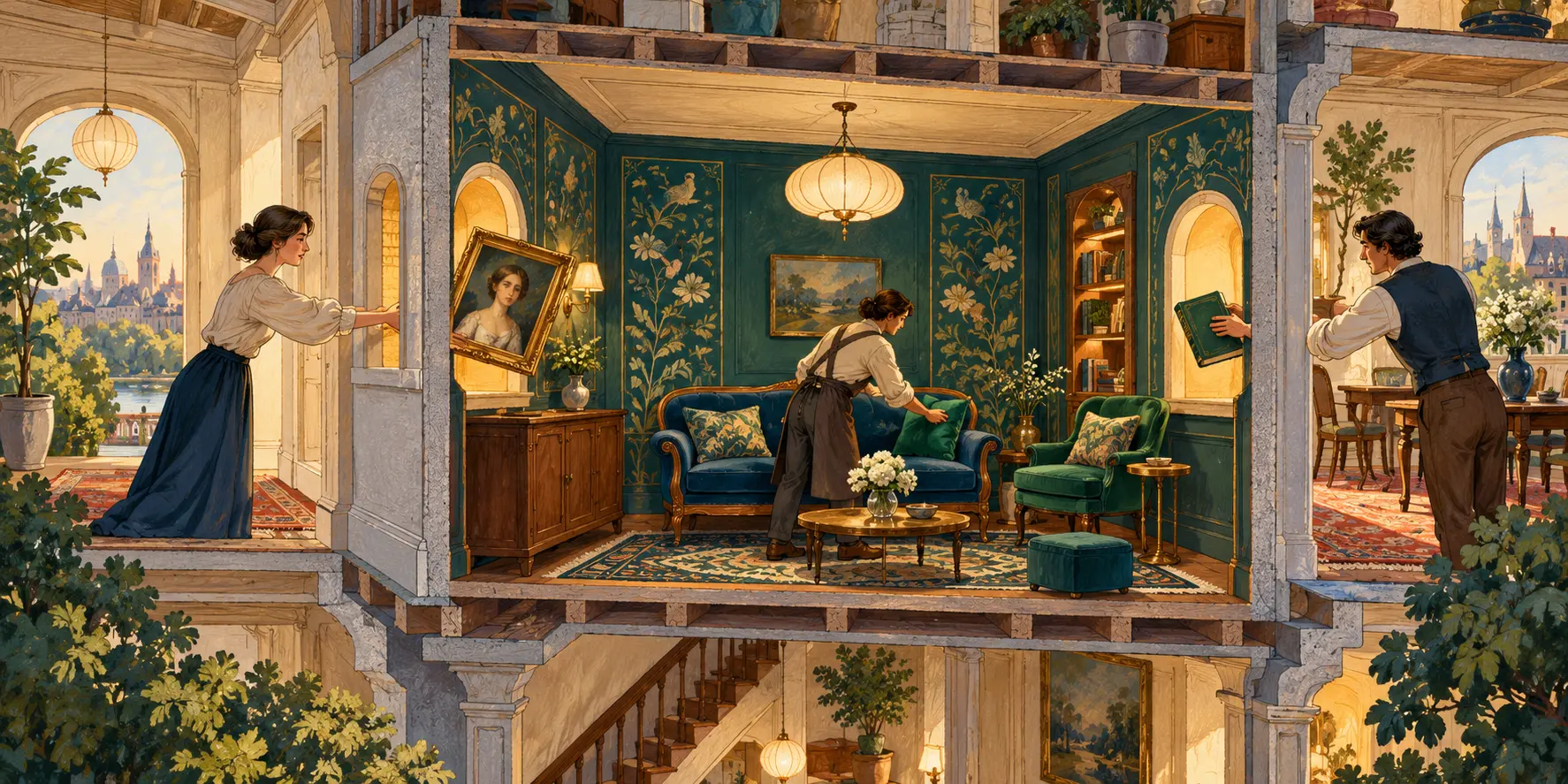
Imagine a card component with a portrait, a title and a button. The component author wants its button to remain a button when a publisher’s enormous stylesheet announces that every button should be fluorescent green. The publisher still wants to choose the portrait and title. A sealed box would protect the furniture and ban the guests. An ordinary shared DOM would invite everyone in, including the stylesheet with the paint roller. Shadow DOM’s design problem sat between those two bad dinner plans.
The W3C First Public Working Draft of 22 May 2012 described functional boundaries between DOM subtrees inside one document. Its purpose was component encapsulation: a sub-tree could keep its own internal structure while participating in a larger page. The 17 June 2014 Working Draft put composition in the foreground. Several DOM trees could contribute to one hierarchy, provided the rules said how they interacted. Neither old draft should be mistaken for a photograph of every browser implementation today. They show the question designers were trying to answer.
The W3C then moved the conversation to several homes. Its 1 March 2018 Working Group Note says Shadow DOM material was being incorporated into the DOM and HTML specifications, CSS Scoping and UI Events. The note retired the stand-alone document’s role while the mechanism continued in core platform texts. The tidy fiction of one specification containing the whole room had given way to separate rules for tree structure, parsing, styling and event behavior.
The WHATWG DOM Living Standard defines the present tree relationship. An element acts as a host for a shadow root and the shadow tree below it. The page also has ordinary children of the host in its light tree. A slot inside the shadow tree can be assigned some of those light-tree children. They remain the page’s nodes in the underlying node tree, yet take a place in the composed presentation. That is the central trick: a component can arrange where outside content appears without taking ownership of the content itself.
Consider the portrait and title again. The page supplies them as children of the card host. The component supplies two places for them in its own layout. A slot assignment connects each guest to a seat. If no guest arrives for a slot, the component may supply fallback content. The arrangement can look like one continuous card to a reader, even though its pieces have different DOM homes. A designer who forgets this split will confuse what is visually inside the card with what is actually a descendant of the shadow root.
Styling follows another carefully drawn border. The CSSWG CSS Shadow Module Level 1 draft explains why ordinary selectors from the outside page do not wander through the shadow tree as if it were a normal descendant. That reduces accidental style collisions. The draft also describes deliberate points of contact. :host lets component styles address the host; ::slotted reaches assigned light content in a scoped way; ::part names an internal element that a component chooses to expose for outside styling. The component can offer a paintable door handle without handing over the entire wallpaper catalogue.
That draft is an editor’s draft, with features still under discussion, so its current text is a guide to the stated design rather than a census of deployed pages. The five originals establish the chronology and the mechanism. They do not say how many sites adopted it or whether a particular widget kept its styles intact. The lasting argument is about ownership and invitation. The page brings the portrait. The component seats it. The browser composes the result while respecting which tree each piece belongs to.
Member Briefing
Deeper Profile Context
Sign in with the right membership level to unlock the full briefing and source notes.
Only for Strategic Circle
Strategic Circle
Open to all readers. Unlock profile briefings after joining and signing in.
Join Strategic CircleOnly for Leadership Alliance
Leadership Alliance
For qualified IP-asset owners and management; sign in to unlock alliance briefings.
Join Leadership Alliance