- Network sockets are software endpoints that enable communication between devices over a network, using a combination of IP addresses and port numbers for data transmission.
- The most common types of network sockets include TCP (stream) sockets for reliable communication, UDP (datagram) sockets for faster but less reliable data transfer, and raw sockets for low-level, custom protocol use.
In the world of networking, understanding the concept of network sockets is essential for anyone involved in setting up or managing network communications. Whether you’re a network administrator, a developer, or simply interested in how data travels across the internet, network sockets play a crucial role in ensuring communication between devices and applications. But what exactly are network sockets? In this comprehensive guide, we will explore what network sockets are, how they work, and their various types and uses.
Introduction to network sockets
A network socket is a software endpoint that establishes a connection between two machines for communication over a network. In simple terms, it’s a bridge that allows programs to communicate with each other over the internet or local networks. Network sockets operate based on a combination of two things: an IP address and a port number.
The role of a network socket is vital because it acts as a channel for data exchange, enabling programs on different machines to send and receive data. By using sockets, systems can interact with one another, regardless of whether they are on the same local area network (LAN) or connected across different regions via the internet.
Also read: Unlocking the potential of raw sockets in networking
Also read: HTTPS protocol: The foundation of secure web browsing
How do network sockets work?
To understand how network sockets work, it’s important to know that they function on a client-server model. The client is typically a computer or device requesting data, while the server is the system that provides the requested data. When two systems communicate, the socket enables both systems to establish a “session” using IP addresses and ports. Here’s how the communication process unfolds:
- Socket Creation: The process begins when a program on the client side creates a socket. This socket is tied to a specific IP address (which identifies the device) and a port number (which identifies the application or service on the device).
- Connection: For communication to happen, the client system must establish a connection with the server’s socket. This involves using the server’s IP address and the appropriate port number.
- Data Exchange: Once the connection is established, the devices can start sending and receiving data. The client sends a request, and the server responds by transmitting the requested data back.
- Termination: After the data exchange is complete, the connection is terminated, closing the network socket.
The entire communication process relies on the TCP/IP model, which is the backbone of the internet and most local networks. This model determines how data is packaged, addressed, transmitted, and received across devices.
Also read: US considers settlement network for multi-asset transactions

Types of network sockets
Network sockets can be categorized based on the type of communication they facilitate. The most common types of network sockets include stream sockets, datagram sockets, and raw sockets.
Stream Sockets (TCP Sockets)
Stream sockets, also known as TCP (Transmission Control Protocol) sockets, are the most commonly used type of socket for reliable, connection-oriented communication. TCP ensures that data is sent in a continuous stream, and it guarantees the reliable delivery of data in the same order it was sent. This makes it ideal for applications like web browsing, file transfers, and email communication.
Key Features of TCP Sockets:
- Connection-oriented: A connection is established before data transmission begins, and the socket remains open until the communication is complete.
- Reliable: TCP ensures that all data is received by the recipient and retransmits lost packets.
- Ordered delivery: Data is delivered in the exact order in which it was sent, ensuring integrity.
Datagram Sockets (UDP Sockets)
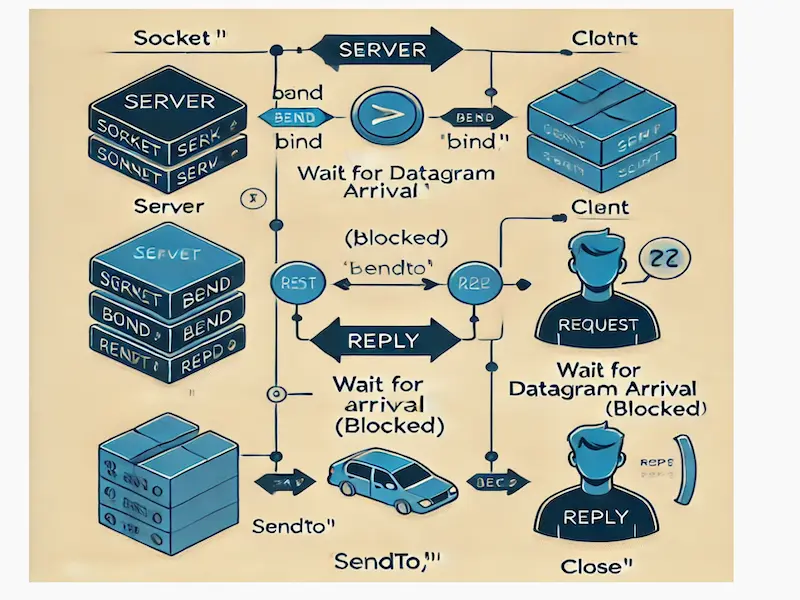
Datagram sockets, also known as UDP (User Datagram Protocol) sockets, provide an alternative to TCP sockets. Unlike TCP, UDP is connectionless and doesn’t guarantee reliable delivery or ordered data. This makes UDP faster but less reliable. Datagram sockets are commonly used for real-time applications where speed is crucial, such as video streaming, online gaming, or VoIP (Voice over Internet Protocol).
Key Features of UDP Sockets:
- Connectionless: There’s no need to establish a connection before sending data.
- Faster: UDP’s lack of overhead (i.e., no need to confirm receipt or retransmit lost packets) makes it faster.
- Unreliable: There’s no guarantee that data will arrive at its destination, nor in the right order.
Raw Sockets
Raw sockets are used by advanced applications that need low-level control over network communications. These sockets allow direct access to the underlying protocols, such as IP, enabling users to create custom protocols or interact with lower layers of the networking stack.
Key Features of Raw Sockets:
- Low-level access: Raw sockets provide a means to bypass the usual layers of networking protocols (like TCP or UDP).
- Custom protocols: Users can create their own protocols for specific applications, offering complete control over the data transmission process.
- Security risks: Due to their low-level nature, raw sockets can be vulnerable to misuse or security exploits.
Also read: Architects of network connectivity: The role of cloud engineers

Common uses of network sockets
Network sockets are essential for a wide variety of applications. Here are some of the most common uses:
Web Browsing
When you access a website using your browser, a TCP socket is created between your device and the web server. This socket facilitates the reliable transmission of data, including HTML files, images, and other media, allowing the webpage to load on your screen.
Email Communication
Email protocols like SMTP (Simple Mail Transfer Protocol) and IMAP (Internet Message Access Protocol) rely on network sockets to send and receive messages. The email client and the email server use TCP sockets to establish a secure connection and exchange data.
File Transfers
Protocols like FTP (File Transfer Protocol) use TCP sockets to ensure the safe and reliable transfer of files between devices. The socket ensures that data is transmitted correctly and in the proper order, which is essential for large files and sensitive information.
In the digital world, network sockets are the unsung heroes, silently ensuring that data reaches its destination, securely and reliably, every time.
Jane Smith, Software Developer
How to set up a network socket
Setting up a network socket depends on the programming language or tool you’re using. However, most socket implementations follow a similar pattern. Here’s a simplified process:
- Create the Socket: Use a programming language (such as Python, Java, or C++) to create a socket using functions like
socket(). This step involves defining the socket type (TCP, UDP, etc.) and specifying the address family (IPv4 or IPv6). - Bind the Socket: For servers, bind the socket to a specific port and IP address using
bind(). This allows the socket to listen for incoming connections. - Listen for Connections: A server must listen for client connections using the
listen()method. Once a connection request is received, the server can accept it with theaccept()function. - Send/Receive Data: Once a connection is established, data can be sent and received using the
send()andrecv()functions. - Close the Socket: After communication is complete, the socket is closed with the
close()function.

Network socket programming
Network socket programming is a critical skill for developers who want to create applications that communicate over a network. It involves writing code that creates, configures, and manages network sockets. Socket programming allows developers to build custom applications, from web servers to chat programs, that can send and receive data over a network.
The basic principles of socket programming include:
- Using appropriate socket types (TCP or UDP) based on the application needs.
- Implementing protocols for communication (HTTP, FTP, SMTP, etc.).
- Handling exceptions and errors to ensure robust communication.
Also read: HTTP vs HTTPS: Understanding the key differences
Security and network sockets
While network sockets are a powerful tool for enabling communication, they can also pose security risks if not properly managed. Here are some potential vulnerabilities associated with network sockets:
- Man-in-the-middle attacks: Attackers can intercept data being transmitted between two devices if the connection is not secure.
- Denial-of-service (DoS) attacks: Attackers can flood a server with socket connections, making it unavailable to legitimate users.
- Port scanning: Malicious users can scan open ports to find vulnerabilities in a network.
To mitigate these risks, it’s essential to use SSL/TLS encryption, implement firewalls, and regularly monitor socket connections for unusual activity.
A network socket is like a door to a device – it opens the gateway for data to flow between machines, ensuring the transfer of information happens smoothly.
John Doe, Network Engineer
Understanding the importance of network sockets
Network sockets are a critical component of modern communication systems, facilitating seamless interaction between devices and applications across networks. Whether you’re browsing the web, sending an email, or transferring a file, network sockets work behind the scenes to ensure data is transmitted securely and efficiently. They form the backbone of network communication, allowing both local and remote devices to exchange data in a reliable and organized manner.
Understanding the different types of network sockets—such as TCP (stream) sockets, UDP (datagram) sockets, and raw sockets—helps shed light on how data flows across the internet and other networks. Each type of socket serves a specific function, balancing factors like speed, reliability, and data integrity, which are essential in various applications, from web services to real-time communication.
For IT professionals, developers, and network administrators, knowing how to configure, optimize, and secure network sockets is crucial in ensuring smooth, scalable, and secure data exchange. As digital communication continues to evolve with emerging technologies like IoT, cloud computing, and 5G, network sockets will remain a foundational element in maintaining efficient and reliable connectivity.
Ultimately, mastering network sockets enhances not only your technical knowledge but also your ability to manage and troubleshoot network communications effectively, ensuring secure and optimal network performance in any environment.
FAQs: What are network sockets?
A network socket is a software endpoint that enables communication between two devices or applications over a network. It uses an IP address and a port number to establish a connection and exchange data, playing a critical role in both local and internet-based communication.
The main types of network sockets are:
TCP (Stream) Sockets: Used for reliable, connection-oriented communication, ensuring data integrity and order.
UDP (Datagram) Sockets: Connectionless and faster, but less reliable. Ideal for real-time applications like video streaming and gaming.
Raw Sockets: Provide low-level access to the network, allowing for custom protocols but are often used by advanced users and can pose security risks.
Network sockets work by creating a connection between a client and server. The client initiates a request, and the server responds through its own socket. Data is exchanged through these sockets based on a combination of the device’s IP address and the port number. The connection can be either reliable (TCP) or faster but less reliable (UDP).
Socket programming involves writing code to create, configure, and manage network sockets. It allows developers to build network applications, such as web servers, chat apps, or file transfer programs, by establishing socket connections for data exchange. Socket programming can be done using various programming languages, including Python, Java, and C++.
Network sockets can be vulnerable to security risks like man-in-the-middle attacks, denial-of-service (DoS) attacks, and port scanning. To secure socket communication, it’s important to use encryption protocols such as SSL/TLS, implement firewalls, and regularly monitor for unusual network activity. Proper security practices help protect data and ensure reliable, safe communication.