
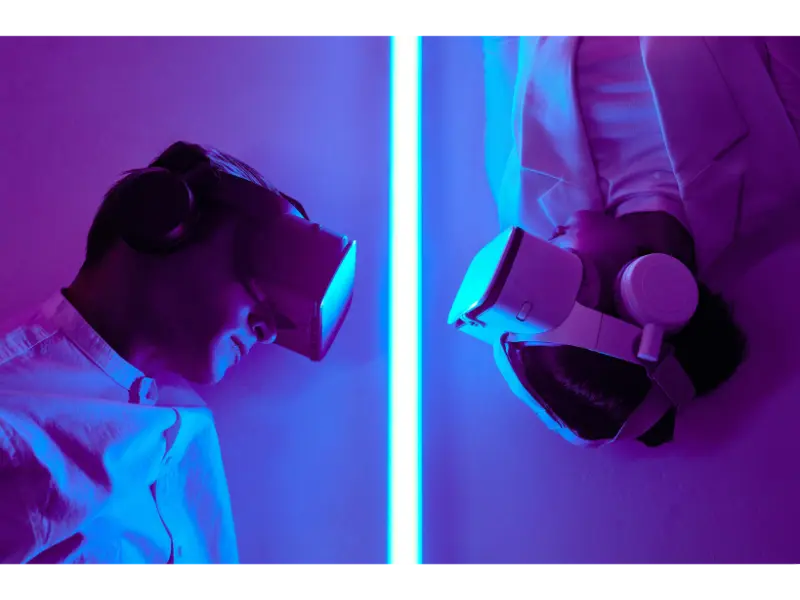
- Mixed Reality (MR) headsets combine virtual and augmented reality elements to enhance both productivity and entertainment.
- Popular MR headset choices in the market includes Microsoft HoloLens 2, MagicLeap 2 and Meta Quest Pro.
Mixed Reality (MR) headsets combine virtual and augmented reality elements to enhance both productivity and entertainment. They’re ideal for immersive experiences that overlay digital entities on the real world, often used in fields like gaming, design, healthcare, and remote work. In recent years, MR headsets have advanced significantly, with improved displays, tracking capabilities, and comfort for longer wear. Here are three popular MR headsets in the market right now:
Microsoft HoloLens 2
The Microsoft HoloLens 2 is an advanced mixed reality headset designed for professionals seeking hands-free, immersive experiences. Launched in 2019, it builds on the original HoloLens with a more ergonomic design, enhanced visuals, and intuitive interaction capabilities. HoloLens 2 offers a wider field of view and higher resolution, allowing digital holograms to appear clearer and more life-like. It features eye and hand-tracking sensors, enabling natural, precise interactions with virtual entities. Targeted at industries like healthcare, manufacturing, and education, HoloLens 2 enhances workflows by overlaying 3D content on the physical environment, enabling users to access critical information in real time. Priced at 3500$.
Also read:10 AR/VR tech companies shaping digital interactions
Magic Leap 2
The Magic Leap 2 is an advanced augmented reality headset aimed at enterprise users, offering enhanced optics and a streamlined, ergonomic design. Released in 2022, it builds on its predecessor with a larger field of view, improved resolution, and advanced dimming capabilities that allow seamless transitions between AR and mixed reality environments. Magic Leap 2’s sensors and eye-tracking technology enable precise entity interaction, making it ideal for industries such as healthcare, manufacturing, and training. With its lightweight build and powerful computing, Magic Leap 2 enhances real-time collaboration and visualization, helping professionals access digital content in their physical surroundings efficiently. Priced at 3299$.
Apple vision pro
Apple’s Vision Pro is a groundbreaking mixed-reality headset, blending virtual and augmented reality experiences seamlessly. With a sleek, minimalist design, Vision Pro is packed with advanced technology, including ultra-high-resolution displays, powerful M2 and R1 chips, and sophisticated sensors for eye and hand tracking. Users can interact with immersive 3D content using natural gestures and voice, creating an intuitive and engaging experience. Designed to redefine digital interactions, Vision Pro caters to various needs, from entertainment and productivity to creative exploration. Apple’s focus on comfort, performance, and seamless integration positions Vision Pro as a leader in the next era of personal technology. Priced at 3500$.
Meta Quest Pro
The Meta Quest Pro is Meta’s premium VR and mixed reality headset, aimed at professionals and enthusiasts seeking high-quality immersive experiences. Launched in 2022, it features advanced technology like full-color passthrough cameras for mixed reality, the powerful Snapdragon XR2+ chip, and innovative pancake lenses, which reduce thickness and improve clarity. Designed for productivity and collaboration, the Quest Pro enables users to blend real and virtual environments seamlessly, making it suitable for remote work, design, and creative applications. Enhanced eye-tracking and facial expression tracking add a layer of realism, allowing for more expressive and interactive virtual meetings. Priced at 1499$.
Microsoft HoloLens 2 focuses heavily on enterprise applications, offering a superior field of view and high-definition holograms, with features like hand and eye tracking. It is tailored for industries such as healthcare, manufacturing, and design, with robust integration into Microsoft’s Azure cloud services. Magic Leap 2 is another enterprise-focused headset, offering similar AR capabilities with a lighter build and improved resolution. It features adjustable field-of-view settings and is known for its immersive experiences in industrial, medical, and collaborative environments. Apple Vision Pro is a mixed reality headset launched this year, offers ultra-high-resolution displays with powered M1 and M2 chips. it is designed for seamless reality experience for entertaining. The Meta Quest Pro features powerful performance with the Snapdragon XR2+ chip and offers advanced mixed-reality passthrough, eye-tracking, and a highly ergonomic design. While not as focused on enterprise use as the HoloLens and Magic Leap, the Quest Pro is a versatile option for both professional productivity and immersive gaming experiences.
In summary, HoloLens 2 and Magic Leap 2 are more suitable for specialized professional use, Apple Vision Pro are entertaining and used at homes. whereas the Meta Quest Pro offers a more affordable, all-around MR solution suitable for a broader range of users.
What is the best mixed reality headset in your opinion?