

- AI technology refers to machines mimicking human intelligence to perform tasks such as learning, decision-making, and problem-solving, with applications in various sectors like healthcare, finance, and retail.
- Key AI components include machine learning, natural language processing, and computer vision, which enable systems to recognize patterns, process language, and interpret visual data.
Artificial Intelligence (AI) technology is one of the most transformative forces in the digital age, reshaping industries, economies, and daily life. From self-driving cars to personalized recommendations on streaming platforms, AI technology is at the forefront of innovation. In this article, we will explore what AI technology is, its key components, how it works, its applications, and why it is a crucial part of our future.
Also read: How LLMs became the first generally accessible AI technology
Also read: The benefits of AI technology
- Understanding AI technology: Definition and basics
- The evolution of AI technology
- Core components of AI technology
- How does AI technology work?
- Applications of AI technology in different industries
- The benefits of AI technology
- Challenges and ethical concerns of AI technology
- The future of AI technology
- FAQ
Understanding AI technology: Definition and basics
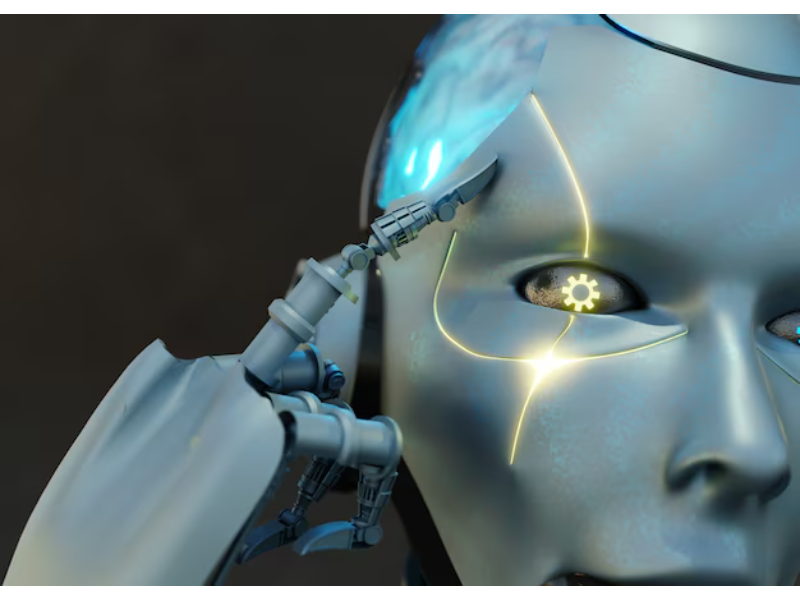
AI technology refers to the simulation of human intelligence in machines that are programmed to think, learn, and perform tasks that typically require human intelligence. These machines, or systems, are capable of understanding their environment, processing data, and making decisions based on the information they receive. AI can be divided into two categories: narrow AI (or weak AI) and general AI (or strong AI).
- Narrow AI refers to AI systems that are designed to perform specific tasks, such as voice assistants like Siri or Alexa, or image recognition systems used in security.
- General AI is a more advanced form of AI that possesses the ability to understand, learn, and apply intelligence across a wide range of tasks, similar to human cognitive abilities. While general AI remains a goal for researchers, it has not yet been fully realized.
The primary aim of AI technology is to enable machines to carry out tasks more efficiently and accurately, with applications spanning from simple data processing to complex problem-solving in various fields.
Also read: Interview with Plutoless, co-founder of TEN: Advancing real-time interactive AI technology
Also read: Nvidia’s AI chip delay is a supply chain test for AI technology
The evolution of AI technology

AI technology has undergone significant transformation since its inception. The term “Artificial Intelligence” was first coined in 1955 by computer scientist John McCarthy, but it was only in recent years that AI has experienced exponential growth, due to advancements in computing power, data availability, and machine learning algorithms.
- 1950s-1970s: Early AI research focused on symbolic AI, where machines were programmed with explicit rules to solve problems. Early successes included the development of chess-playing programs and expert systems.
- 1980s-1990s: The rise of machine learning, where algorithms enabled computers to improve performance over time through data, marked a significant shift in AI research. During this period, AI began to gain traction in fields like robotics, speech recognition, and pattern recognition.
- 2000s-Present: With the advent of deep learning and neural networks, AI technology began to make significant strides. The availability of big data and cloud computing platforms has also played a critical role in AI’s rapid growth, particularly in areas such as self-driving cars, natural language processing, and facial recognition systems.
Insights from experts
As Geoffrey Hinton, one of the pioneers in deep learning, points out, “The success of deep learning is due to the sheer volume of data and the computational power that we now have available. This is what allows us to train models that can perform tasks previously thought to be impossible.” This has been a driving force behind AI’s breakthroughs in areas like image recognition and language processing.
Looking ahead, Andrew Ng, a prominent AI researcher, notes, “AI will be as fundamental to the economy as electricity. Its impact will transform every sector from healthcare to transportation, making industries more efficient and improving everyday life.” This underscores AI’s potential to revolutionize sectors far beyond tech, making everyday tasks more efficient, accurate, and personalized.
Moreover, Fei-Fei Li, a leading expert in AI and computer vision, emphasizes the collaborative future of AI: “AI is not just about algorithms; it’s about how these systems will work alongside humans to augment our capabilities and make the world a better place.” This perspective highlights the importance of human-AI collaboration, where machines enhance human potential rather than replace it.
Today, AI technology continues to evolve, with advanced innovations in reinforcement learning, generative models like GPT (Generative Pretrained Transformers), and AI-driven automation tools in numerous industries.
AI will be as fundamental to the economy as electricity. Its impact will transform every sector from healthcare to transportation, making industries more efficient and improving everyday life.
Andrew Ng, a prominent AI researcher
Also read: WeMove uses AI technology to simplify moving reservations
Also read: Hacker breaches OpenAI, steals internal AI technology details
Core components of AI technology

To understand AI technology better, it’s essential to break down its core components. AI is not a monolithic technology but a collection of interconnected fields and approaches that allow machines to exhibit intelligent behavior.
Machine learning (ML)
Machine learning is a subset of AI that focuses on enabling systems to learn from data without being explicitly programmed. Through algorithms, machines identify patterns, make predictions, and improve over time based on experience. Machine learning can be further divided into:
- Supervised learning: The model learns from labeled data to make predictions (e.g., classification, regression).
- Unsupervised learning: The model finds hidden patterns in unlabeled data (e.g., clustering, anomaly detection).
- Reinforcement learning: The machine learns by interacting with its environment and receiving feedback, often used in robotics and gaming.
As Ian Goodfellow, a leading AI researcher and creator of Generative Adversarial Networks (GANs), explains, “Machine learning models are getting better at capturing patterns and structures from data. This is opening new frontiers in areas like generative models, where AI creates content that mimics human creativity.” This highlights how machine learning is expanding its capabilities beyond traditional data analysis, creating new possibilities in art, design, and entertainment.
Natural language processing (NLP)
NLP is a branch of AI that focuses on enabling machines to understand, interpret, and generate human language. From chatbots to sentiment analysis, NLP is used to bridge the gap between human communication and machine understanding. Key NLP applications include:
- Speech recognition (e.g., voice assistants like Siri and Alexa)
- Language translation (e.g., Google Translate)
- Text summarization and sentiment analysis
Rana el Kaliouby, the co-founder and CEO of Affectiva, an AI company focused on emotion recognition, states, “The true power of NLP lies in its ability to understand context and emotions, which helps machines interact with humans in a more natural, empathetic way.” This perspective highlights the role of NLP not just in technical communication, but also in creating more human-like interactions with AI systems, particularly in customer service and mental health applications.
Computer vision
Computer vision enables machines to interpret and understand visual data from the world, such as images and videos. Using machine learning and neural networks, AI systems can recognize patterns, identify entities, and even predict future events based on visual data. Applications of computer vision include:
- Facial recognition
- Autonomous vehicles (e.g., self-driving cars)
- Medical imaging (e.g., detecting tumors in X-rays)
Dr. Demis Hassabis, co-founder and CEO of DeepMind, explains, “Computer vision is not just about recognizing entities, but also understanding the environment and context in which they exist. This deeper understanding is what makes AI-driven systems smarter and more capable of solving complex real-world problems.” This insight emphasizes that computer vision is not merely about identifying entities, but about understanding and contextualizing them within a broader environment, which is key to applications in autonomous systems and medical diagnostics.
Computer vision is not just about recognizing entities, but also understanding the environment and context in which they exist. This deeper understanding is what makes AI-driven systems smarter and more capable of solving complex real-world problems.
Demis Hassabis, co-founder and CEO of DeepMind
Also read: Apple uses AI technology to overhaul Mac product line
Also read: Google DeepMind CEO Demis Hassabis receives knighthood for AI technology
How does AI technology work?

AI technology works by mimicking human cognitive processes. At the heart of most AI systems are algorithms that process and analyze data. These algorithms are designed to recognize patterns, make decisions, and adapt to new situations based on experience. AI systems often involve:
- Data collection and preprocessing: AI systems require large amounts of data to learn and make decisions. This data can come from various sources such as sensors, user interactions, or the internet.
- Model training: Once data is collected, machine learning algorithms are used to “train” the AI model by analyzing the data to identify patterns or trends. The more data the model receives, the better it becomes at making accurate predictions or decisions.
- Testing and evaluation: After training, the AI model is tested with new data to ensure it can generalize its findings and make accurate predictions or classifications in real-world scenarios.
- Deployment and feedback: Once trained and tested, the AI system is deployed in its designated environment. Feedback from users or systems is then used to further refine the model and improve performance over time.
Applications of AI technology in different industries

AI technology has become a game-changer in numerous industries. Its ability to process large datasets, predict trends, and automate tasks has led to its widespread adoption across various sectors.
Healthcare
In healthcare, AI technology has revolutionized diagnosis, treatment, and patient care. AI systems can analyze medical data, such as imaging scans and patient records, to assist doctors in diagnosing diseases with high accuracy. AI-powered robots also help with surgery and rehabilitation.
- Examples: AI systems can detect early signs of diseases like cancer, recommend personalized treatment plans, and monitor patient vitals through wearable devices.
As Dr. Eric Topol, a prominent cardiologist and author, points out, “AI’s ability to process vast amounts of medical data is transforming healthcare. It enables precision medicine, where treatments are tailored to individual patients based on their genetic makeup and health data.” This insight highlights how AI not only assists in diagnosis but is also a key player in creating personalized healthcare solutions that were previously unimaginable.
Finance
AI is widely used in the finance industry to detect fraud, automate trading, and provide personalized financial advice. Machine learning algorithms can analyze transaction patterns and identify fraudulent activities in real-time, while AI-driven trading systems optimize investment strategies.
- Examples: Robo-advisors, credit scoring models, and fraud detection systems.
Dr. Daniel Kahneman, a Nobel laureate and psychologist, emphasizes the influence of AI in decision-making within finance, stating, “AI can help eliminate human biases in financial decisions, leading to more objective and data-driven outcomes. This is especially important in areas like risk assessment and trading.” His perspective sheds light on the transformative potential of AI to reduce human error and bias, providing more reliable and fair outcomes in financial services.

Retail
Retailers use AI technology to enhance customer experience, optimize inventory, and predict demand trends. AI-powered recommendation engines suggest products based on customer behavior, while chatbots handle customer inquiries.
- Examples: Personalized shopping experiences, dynamic pricing, and supply chain optimization.
According to HBR Analytics Services, “AI in retail is not just about automating processes; it’s about understanding customer preferences and delivering personalized experiences at scale. Retailers are using AI to create a seamless, highly individualized shopping experience.” This statement reinforces the idea that AI is central to understanding consumer behavior and offering tailored services that enhance customer satisfaction and loyalty.
Manufacturing and industry
AI technology enables predictive maintenance, automation, and quality control in manufacturing. AI-powered robots and machines can perform repetitive tasks with precision, while machine learning models predict when equipment will fail, reducing downtime.
- Examples: Smart factories, industrial robots, and supply chain optimization.
Dr. James Manyika, chairman and director of the McKinsey Global Institute, highlights the role of AI in industrial innovation: “AI is central to the next wave of industrial transformation. It allows manufacturers to improve both efficiency and quality by enabling more precise operations, anticipating maintenance needs, and optimizing production lines.” His perspective emphasizes how AI is reshaping the future of manufacturing by making operations more efficient, less wasteful, and more predictive.
AI is central to the next wave of industrial transformation. It allows manufacturers to improve both efficiency and quality by enabling more precise operations, anticipating maintenance needs, and optimizing production lines
James Manyika, chairman and director of the McKinsey Global Institute
The benefits of AI technology
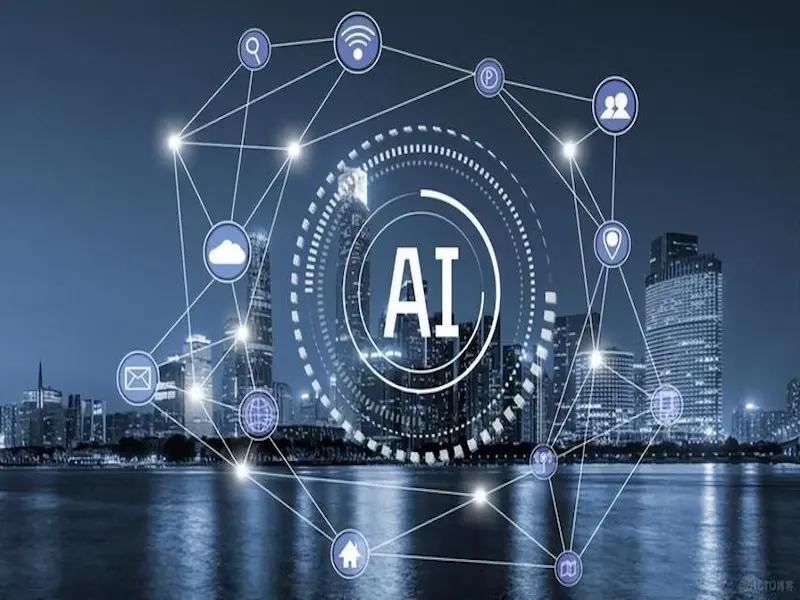
AI technology brings several advantages that can improve efficiency, accuracy, and convenience:
- Automation: AI can automate mundane tasks, saving time and reducing human error.
- Cost efficiency: By improving operational efficiency and reducing human labor costs, AI helps businesses save money.
- Enhanced decision-making: AI can analyze vast datasets to provide insights that inform better decision-making.
- 24/7 availability: Unlike humans, AI systems can work around the clock without rest.
Challenges and ethical concerns of AI technology
Despite its many benefits, AI technology raises several challenges and ethical concerns, including:
- Bias and discrimination: AI systems can perpetuate existing biases if trained on biased data.
- Job displacement: Automation powered by AI could displace jobs, especially in industries like manufacturing and retail.
- Privacy and security: AI systems that process sensitive data must be secure to prevent misuse.
- Ethical AI: The development of responsible AI technologies that prioritize human well-being remains an ongoing concern.
The future of AI technology
The future of AI technology is both exciting and uncertain. As AI systems become more advanced, we can expect innovations in areas such as:
- General AI: Researchers are working towards creating AI that can perform a wider range of tasks, similar to human intelligence.
- AI ethics and regulation: There will likely be increased efforts to regulate AI and ensure its ethical use.
- Human-AI collaboration: Rather than replacing humans, AI could augment human abilities, leading to more efficient and innovative workflows.
FAQ
AI technology refers to the development of machines or software that can perform tasks that typically require human intelligence, such as learning, problem-solving, and decision-making. It encompasses a wide range of technologies, including machine learning, natural language processing, and computer vision, all aimed at making systems more autonomous and efficient.
In traditional programming, developers write explicit rules and instructions for machines to follow. In contrast, machine learning allows machines to learn from data and make predictions or decisions without being programmed with specific rules. Machine learning models improve over time by analyzing patterns in data, making them more adaptable and capable of handling complex tasks.
AI is used across various industries, including healthcare (for diagnosis and personalized treatment), finance (for fraud detection and risk assessment), retail (for personalized recommendations and inventory management), and transportation (for self-driving cars). AI is also applied in entertainment, marketing, cybersecurity, and manufacturing to improve efficiency and innovation.
While AI can automate certain tasks and increase efficiency, it is unlikely to fully replace human workers. Instead, AI is often seen as a tool that augments human abilities, allowing workers to focus on more complex and creative tasks. The collaboration between humans and AI can lead to more technology services and greater productivity across various sectors.
AI technology has significant potential, but its development and use must be approached with care. Ethical concerns such as privacy, bias, and transparency are critical in AI research and deployment. Industry leaders, researchers, and policymakers are working to establish frameworks and regulations to ensure AI is used responsibly, with a focus on human well-being and fairness.