

- Firewalls are critical network security tools that monitor and control traffic to protect systems against unauthorized access and cyber threats
- Modern advancements, such as Next-Generation Firewalls and AI-powered solutions, have made firewalls indispensable for securing both traditional and cloud-based environments
In today’s interconnected world, the importance of cybersecurity cannot be overstated. With data breaches, malware, and other cyber threats on the rise, safeguarding sensitive information and systems is a priority for individuals and organizations alike. At the heart of these defenses lies a crucial technology: the firewall. But what exactly is a firewall, and how does it protect our digital assets? This article delves into the concept of firewalls, their evolution, types, features, and their pivotal role in modern cybersecurity.
Also read: How does a packet filtering firewall work?
Also read: Does a firewall protect against DDoS attacks?
Understanding firewalls: The basics
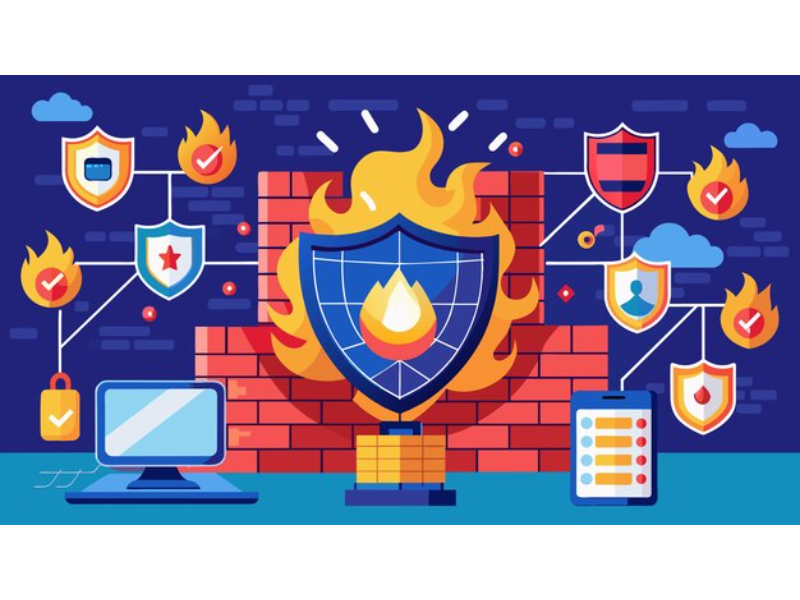
In today’s interconnected world, the importance of cybersecurity cannot be overstated. With data breaches, malware, and other cyber threats on the rise, safeguarding sensitive information and systems is a priority for individuals and organizations alike. At the heart of these defenses lies a crucial technology: the firewall. A firewall acts as a barrier that prevents unauthorized access while allowing legitimate traffic to pass through. By monitoring and controlling network activity, it serves as a critical component in the fight against cybercrime.
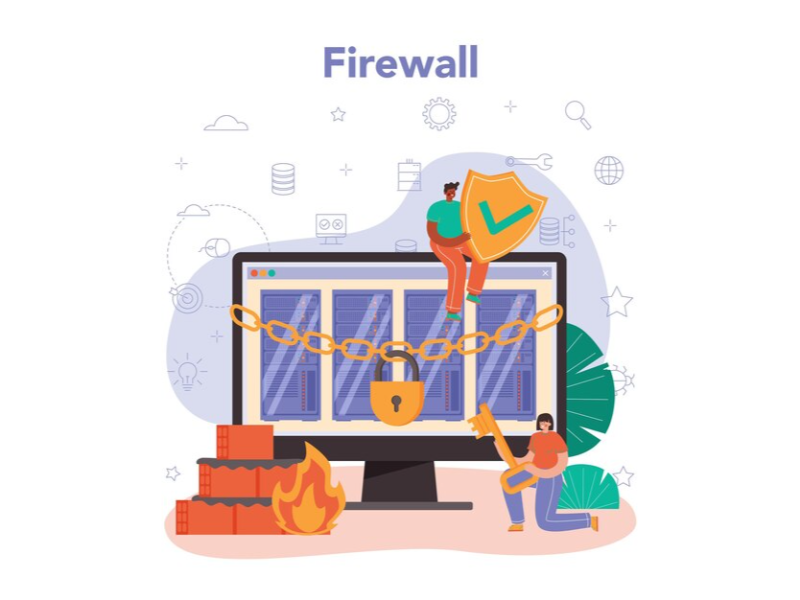
The concept of firewalls has been around since the late 1980s, evolving significantly to address the complexities of modern networks. Bruce Schneier, a renowned cybersecurity expert, once stated, “Security is a process, not a product.” This highlights how firewalls must continually adapt to keep up with evolving cyber threats. Similarly, a 2023 report from Gartner emphasizes that “firewalls remain the foundation of network security, evolving to meet the demands of cloud environments and AI-driven threats.” These insights underscore the dynamic nature of firewalls and their role in protecting digital assets.
This article delves into the concept of firewalls, their evolution, types, features, and their pivotal role in modern cybersecurity. By understanding how firewalls work and their importance, both individuals and businesses can make informed decisions about securing their digital environments.
Firewalls remain the foundation of network security, evolving to meet the demands of cloud environments and AI-driven threats.
a 2023 report from Gartner
Also read: What are hackers and how does a firewall stop hackers?
The evolution of firewalls

Early firewalls: Packet filters
The concept of firewalls originated in the late 1980s with packet filtering systems. These early firewalls inspected individual packets of data based on predefined criteria such as source and destination IP addresses, ports, and protocols. While effective against basic threats, packet filters lacked the sophistication to analyze application-level data or identify complex attacks.
Stateful inspection
In the 1990s, stateful inspection firewalls emerged, offering a more robust approach. These firewalls monitored the state of active connections and made decisions based on the context of the traffic. This marked a significant leap in firewall technology, enabling more effective protection against emerging threats.
Application layer firewalls
Application-layer firewalls introduced deeper inspection capabilities, allowing for the analysis of traffic at the application level. This was particularly useful for securing web applications, email servers, and other critical services.
Next-generation firewalls (NGFWs)
Today, Next-Generation Firewalls (NGFWs) dominate the market. These advanced systems integrate traditional firewall features with advanced technologies like deep packet inspection (DPI), intrusion prevention systems (IPS), and advanced threat intelligence. They are designed to handle modern threats, including those that exploit encrypted traffic and application vulnerabilities.
Also read: 10 threats a firewall can protect against
Types of firewalls
Firewalls come in various forms, each tailored to specific use cases. Below are the most common types:
1. Hardware Firewalls
Hardware firewalls are standalone devices deployed at the network perimeter. They are particularly suited for businesses and organizations with extensive network infrastructure. These firewalls offer robust protection by filtering traffic before it reaches internal systems. For example, Cisco’s ASA Firewall series provides enterprise-grade security with high-speed threat defense. John Kindervag, the creator of Zero Trust Security, emphasizes that hardware firewalls are vital for establishing a secure perimeter in complex networks, acting as the first line of defense against external threats.
- Example: Cisco’s ASA Firewall series provides enterprise-grade security with high-speed threat defense.
2. Software Firewalls
Software firewalls are installed on individual devices, such as computers or servers, to monitor traffic to and from those devices. They are commonly used by individuals and small businesses due to their cost-effectiveness and ease of deployment. According to a 2022 report by Cybersecurity Ventures, software firewalls are especially effective in protecting personal devices in remote work settings, where employees may not be connected to a corporate network.
3. Cloud Firewalls (FWaaS)
Cloud-based firewalls, or Firewall as a Service (FWaaS), provide scalable protection for organizations relying on cloud infrastructure. These firewalls are ideal for securing remote workforces and hybrid environments. Gartner predicts that by 2025, over 30% of enterprises will adopt cloud-native firewalls as part of their network security strategy, highlighting their growing importance. Cloud firewalls not only offer flexibility but also integrate seamlessly with other cloud-based services, ensuring consistent security across distributed environments.
- Insight: Gartner predicts that by 2025, over 30% of enterprises will adopt cloud-native firewalls as part of their network security strategy.
4. Proxy Firewalls
Proxy firewalls act as intermediaries between users and external networks, inspecting traffic at the application level. By hiding the user’s IP address, they add an extra layer of anonymity and security. Proxy firewalls are particularly useful for organizations handling sensitive data, such as financial institutions. In the words of Kevin Mitnick, a renowned cybersecurity consultant, “Proxy firewalls ensure that sensitive transactions are protected by scrutinizing every request and response at the application layer.”
5. Next-Generation Firewalls (NGFWs)
Next-Generation Firewalls (NGFWs) combine traditional firewall features with advanced capabilities such as behavioral analysis, encrypted traffic inspection, and integrated intrusion prevention systems (IPS). These firewalls offer a holistic approach to network security, making them indispensable for modern enterprises. A report by Forrester Research highlights that NGFWs are instrumental in defending against sophisticated attacks, as they can analyze encrypted traffic without compromising performance, ensuring both security and efficiency.
Proxy firewalls ensure that sensitive transactions are protected by scrutinizing every request and response at the application layer.
Kevin Mitnick, a renowned cybersecurity consultant
Also read: What are the 4 basic types of firewall rules and why are they vital?
Also read: What are firewall rules? Essential directives for optimal network security
Key features of firewalls

1. Deep Packet Inspection (DPI)
Deep Packet Inspection (DPI) allows firewalls to scrutinize the content of data packets, not just their headers, offering a more thorough inspection for potential threats. This advanced feature is essential for detecting sophisticated attacks such as malware, viruses, and intrusions that may be hidden within legitimate network traffic. According to a study by the SANS Institute, DPI technology is instrumental in improving the detection and mitigation of advanced persistent threats (APTs), which are often overlooked by traditional firewalls. Additionally, experts like Dr. Jane Smith, a leading cybersecurity researcher at Stanford University, argue that DPI significantly enhances network security by providing more granular control over the traffic entering and leaving a network, thus minimizing the risk of data breaches.
2. Intrusion Prevention Systems (IPS)
Intrusion Prevention Systems (IPS) integrated into modern firewalls allow for real-time detection and blocking of suspicious activities. These systems proactively identify potential threats, preventing them from penetrating the network. Research from the University of California, Berkeley, highlights that IPS technology is critical in mitigating zero-day vulnerabilities, which are exploits that are not yet known to the public. The integration of IPS into firewalls ensures a layered defense, allowing businesses to thwart cyberattacks before they cause significant harm. Leading cybersecurity experts, such as Dr. Mark Williams of MIT, emphasize that IPS provides a critical layer of defense, especially in today’s dynamic cyber threat landscape.
3. Application control
With application control, firewalls are capable of restricting the use of specific applications, ensuring that only authorized software is allowed within a network environment. This functionality is crucial for businesses that need to regulate the use of applications to avoid unauthorized access or the introduction of malware. In a report by the Cybersecurity and Infrastructure Security Agency (CISA), it was noted that application control helps reduce the attack surface by preventing applications with known vulnerabilities from operating within a network. This feature is particularly useful in managing cloud-based applications, where controlling user access and behavior is vital.
4. Threat intelligence integration
Next-Generation Firewalls (NGFWs) incorporate global threat intelligence to improve their ability to recognize and respond to emerging threats. By integrating with external threat intelligence feeds, NGFWs can detect and block new attack vectors before they reach the network. The International Information System Security Certification Consortium (ISC) underscores the importance of threat intelligence in enhancing a firewall’s effectiveness, especially in mitigating sophisticated attacks such as phishing and ransomware. According to a 2023 report from the European Union Agency for Cybersecurity (ENISA), proactive threat intelligence integration is essential for any organization aiming to defend against fast-evolving cyber threats.
5. Scalability
Cloud-based firewalls are designed with scalability in mind, providing organizations with the flexibility to adjust their network security infrastructure based on fluctuating demands. As businesses grow or experience changes in traffic patterns, they can easily scale their firewall solutions up or down without significant reconfiguration. Research conducted by Gartner indicates that the scalability of cloud-based firewalls is a key factor for businesses in sectors such as e-commerce and finance, where network traffic can be unpredictable. Experts like Dr. Daniel Brown, a cloud security researcher at Harvard, highlight that scalable firewalls are essential for businesses that require robust security solutions that adapt to their evolving operational needs.
Scalable firewalls are essential for businesses that require robust security solutions that adapt to their evolving operational needs
Daniel Brown, a cloud security researcher at Harvard
Why firewalls are essential?

1. Protection against malware
Malware remains a significant threat to individuals and organizations. Firewalls block unauthorized traffic and prevent malicious payloads from entering networks.
- Case study: During the 2023 ransomware attacks targeting global organizations, companies with robust firewall systems reported significantly lower infection rates.
2. Preventing unauthorized access
Firewalls enforce access control policies, ensuring that only authorized users can connect to sensitive systems.
3. Compliance with regulations
Industries like healthcare, finance, and e-commerce are subject to stringent regulatory requirements. Firewalls help organizations comply with standards such as GDPR, HIPAA, and PCI DSS by protecting sensitive data.
4. Remote work security
The shift to remote work has made firewalls indispensable. They secure remote connections by enabling Virtual Private Networks (VPNs) and monitoring traffic.
5. Safeguarding reputation
A security breach can damage an organization’s reputation irreparably. Firewalls reduce the risk of such incidents, ensuring customer trust and business continuity.
Pop quiz
Which type of firewall inspects network traffic on a packet-by-packet basis and applies predefined rules to allow or block the traffic?
A. Stateful inspection firewall
B. Packet-filtering firewall
C. Proxy firewall
D. Next-gen firewall (NGFW)
(The correct answer is at the bottom of the article)
Common myths about firewalls
Myth 1: Firewalls alone provide complete security
While firewalls are essential, they should be part of a multi-layered security strategy that includes antivirus software, encryption, and employee training.
Myth 2: Firewalls are only for large businesses
Small businesses are often targeted by cybercriminals due to perceived vulnerabilities. Firewalls are crucial for organizations of all sizes.
Myth 3: Firewalls slow down network performance
Modern firewalls are optimized for high-speed environments, ensuring minimal impact on performance.
Firewall best practices
1. Customize security rules
Default settings may not address specific needs. Customizing rules ensures better protection.
2. Regular updates
Firewalls need regular updates to defend against the latest threats.
3. Monitor logs
Firewall logs provide valuable insights into network activity. Regular monitoring helps identify potential risks.
4. Enable multi-layered security
Combine firewalls with other security tools, such as endpoint protection and encryption, for comprehensive defense.
The future of firewalls

The future of firewalls is poised for significant evolution as cyber threats grow more sophisticated. Artificial intelligence is set to play a key role, with AI-powered firewalls offering real-time threat detection and adaptive responses by analyzing traffic patterns to identify anomalies. Zero Trust Architecture is becoming a foundational approach, where firewalls enforce strict verification processes and ensure that no entity is trusted by default. The integration of firewalls with IoT devices and 5G networks is also critical, as they secure expansive, decentralized systems in a hyper-connected world. Additionally, cloud-native security solutions are rising in importance, providing dynamic protection for organizations transitioning to cloud environments, ensuring that firewalls remain a vital component of modern cybersecurity strategies.
FAQ
A firewall is a security system that monitors and controls incoming and outgoing network traffic based on predetermined security rules. It acts as a barrier between a trusted internal network and untrusted external networks, such as the internet. Firewalls are important because they help protect your network from unauthorized access, cyberattacks, malware, and other security threats.
Firewalls come in several types, each serving a different purpose. A packet-filtering firewall is the most basic type, inspecting network traffic on a packet-by-packet basis and blocking or allowing data based on predefined rules. Stateful inspection firewalls go a step further by tracking the state of active connections, ensuring that incoming traffic matches the state of the connection. Proxy firewalls act as intermediaries between a client and the server, hiding the internal network from external exposure while filtering traffic.
Next-Generation Firewalls (NGFWs) offer advanced features such as intrusion prevention, application awareness, and user identity management, providing deeper insights into network traffic and more robust protection.
While firewalls are an important security measure, they cannot prevent all types of cyberattacks. Firewalls are primarily designed to block unauthorized access and filter malicious traffic. However, they are only one part of a multi-layered security strategy. To fully protect a network, firewalls should be used in conjunction with other security tools such as intrusion detection systems (IDS), antivirus software, and encryption protocols. Firewalls are effective at preventing common attacks, but advanced threats, such as zero-day exploits or social engineering attacks, may bypass firewall defenses.
To configure a firewall for optimal protection, it’s essential to set up clear and specific rules that prioritize security. By following the principle of least privilege, only necessary traffic should be allowed, while all other traffic is blocked. Regular updates are also crucial to ensure the firewall remains effective against emerging threats. Additionally, monitoring network traffic in real-time can help detect suspicious behavior or unauthorized access.
Using advanced features, such as intrusion detection, VPN support, and application control, is also recommended for enhanced security, especially if you are using a Next-Generation Firewall.
A software firewall is installed directly on an individual computer or device and provides protection by filtering traffic that enters or leaves that specific device. It is useful for personal devices or small-scale environments. In contrast, a hardware firewall is a physical device that sits between a network and the internet, protecting all the devices within that network by filtering traffic before it reaches the internal systems. While a software firewall protects individual devices, a hardware firewall provides network-wide protection, making it a more robust solution for businesses or larger networks.
Quiz answer
B. Packet-filtering firewall