
Summary
- MidWave Wireless has identified Wavsys as its site-acquisition and construction partner for Project Fortis across an 18-market US footprint.
- The network can support local communications among participating radios; neither spectrum holdings nor that autonomy establishes completed coverage or access to distant systems.
A self-forming network cannot negotiate access to a rooftop. That prosaic distinction gives commercial substance to MidWave Wireless's September 10 announcement: Wavsys is handling site acquisition and construction for Project Fortis. The operator describes a design-build arrangement with a single point of accountability through Wavsys's Professional Services business. The news is about who turns locations into network infrastructure, not simply which radios communicate. MidWave's announcement
The timing matters. MidWave announced Project Fortis deployment on July 20 and named TrellisWare Technologies as the foundational radio and mobile ad hoc networking, or MANET, provider. That earlier statement already referred to deployment and entry into operational service in 18 markets. September's reference to an 18-market footprint is therefore not evidence of 18 additional markets. Nor does either announcement establish that every location has completed commissioning and customer acceptance. The July launch
MidWave describes nationwide 1.4 GHz and regional 1.7 GHz spectrum assets. Those are the operator's account of its spectrum platform, not an independently audited licence inventory or a measurement of working radio coverage. A right to use spectrum and a usable installed service are different commercial assets. The disclosures provide no site count, contract value or market-by-market acceptance schedule.
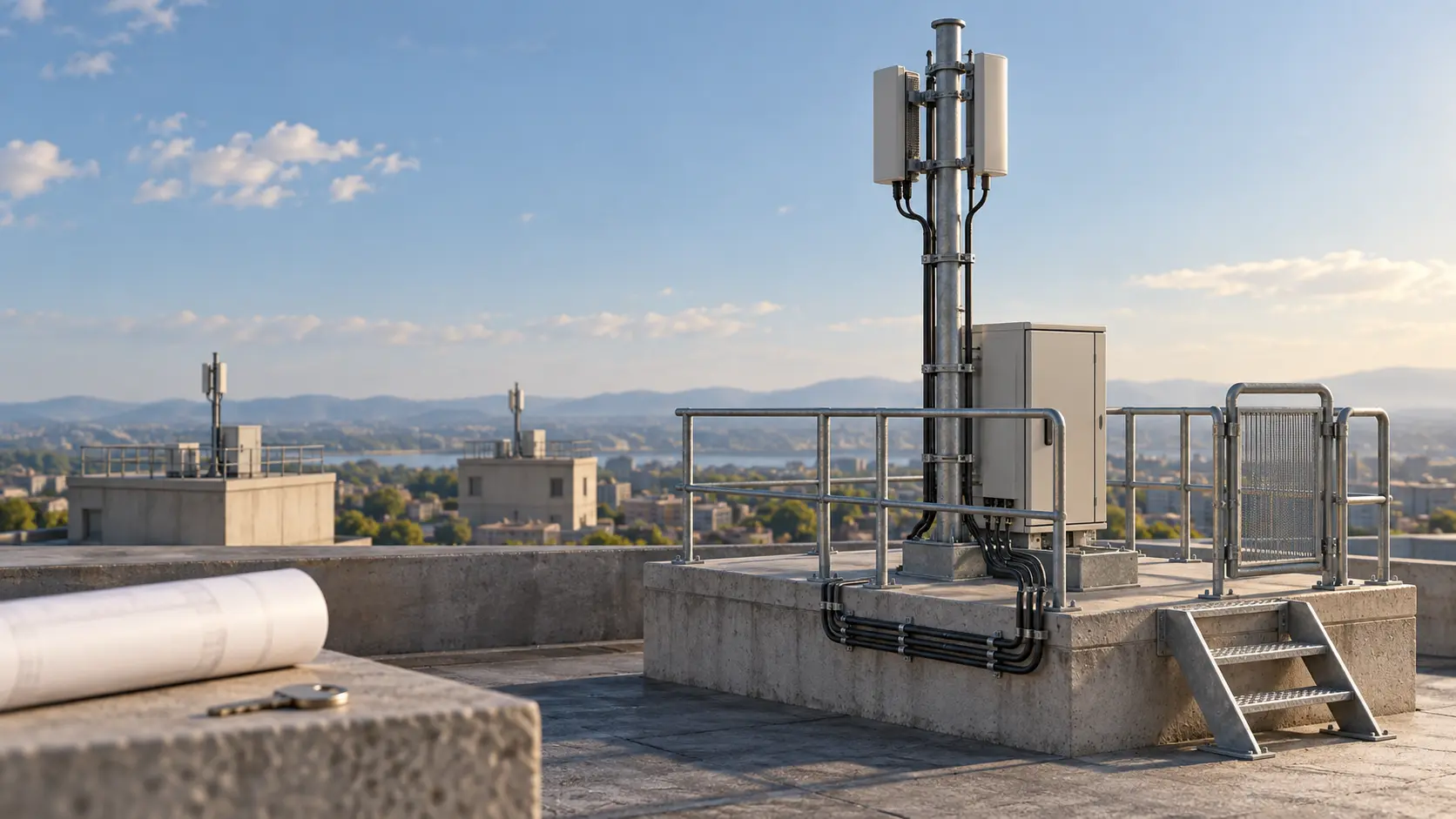
The architecture explains why a construction partner still matters. On MidWave's account, participating radios can maintain a local, self-forming communications network, while infrastructure anchors extend its reach and can provide IP backhaul. Where external connections are available, the system can connect with carrier or cloud networks. If those connections disappear, local communication does not by itself provide continued access to remote applications. Project Fortis is presented as a complement to LTE and 5G, not their universal replacement. The platform description
For Wavsys, the opportunity is the work surrounding the radio technology. Its general services page describes projects scoped to customer milestones, supported by internal teams, an expandable workforce and digital management tools. That helps explain the delivery model being offered; it does not disclose the Fortis contract's actual milestones, maintenance obligations or savings. The prospective public-safety, utility, transport and industrial uses cited by MidWave should likewise not be counted as signed customers. Wavsys's service model
The partnership makes an implementation responsibility visible. It leaves the financial allocation of that responsibility largely undisclosed. Buyers now have a named deployment counterparty to ask about installed sites and handover, but no public basis for pricing the contract or treating the announced footprint as an accepted service.
Member Briefing
Deeper Profile Context
Sign in with the right membership level to unlock the full briefing and source notes.
Only for Strategic Circle
Strategic Circle
Open to all readers. Unlock profile briefings after joining and signing in.
Join Strategic CircleOnly for Leadership Alliance
Leadership Alliance
For qualified IP-asset owners and management; sign in to unlock alliance briefings.
Join Leadership Alliance