
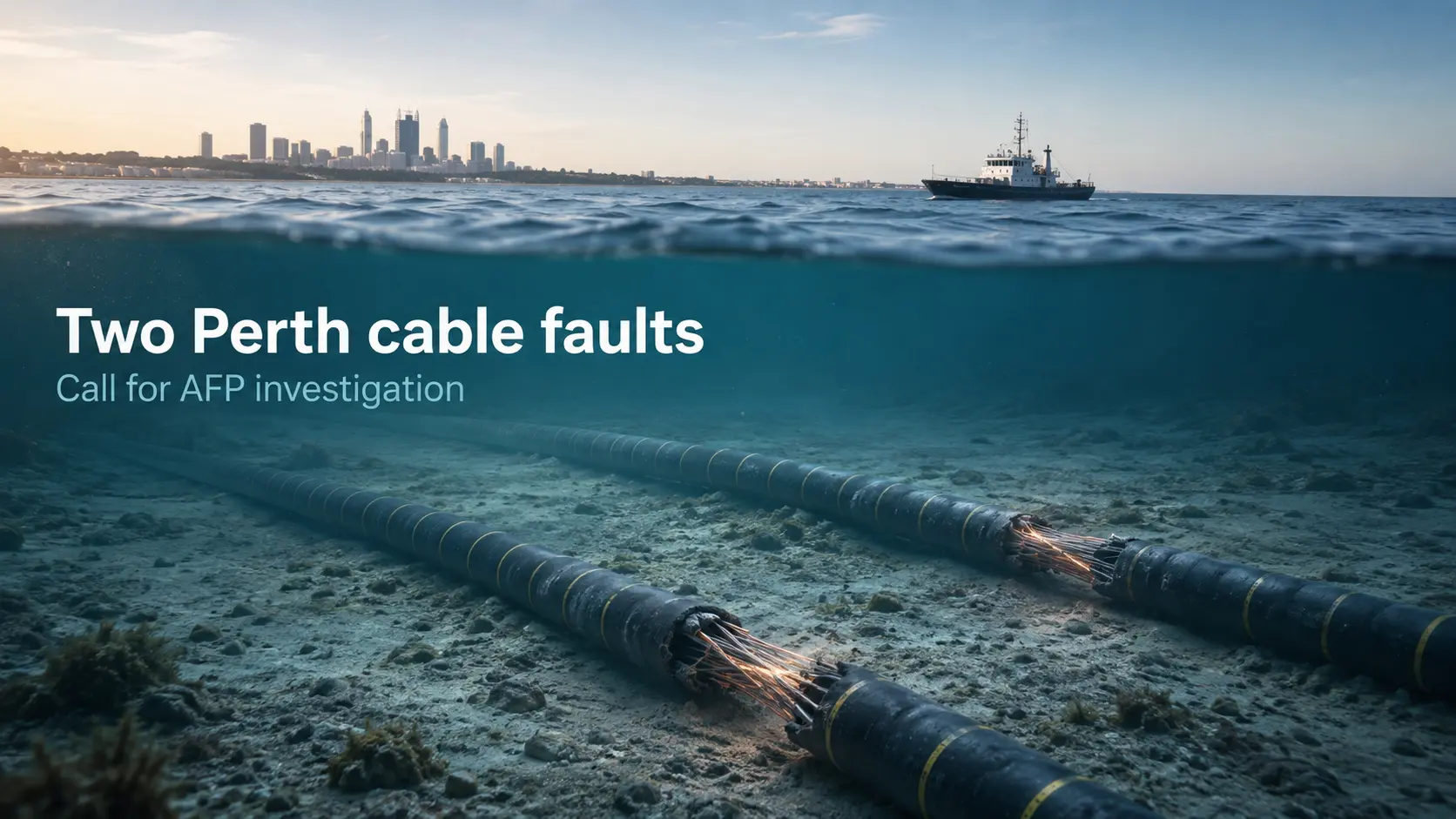
- Two subsea cable faults were reported in quick succession and close together inside Perth’s submarine cable protection zone
- SUBCO founder Bevan Slattery called for an AFP investigation, while the cause of the faults has not been established
The fact
Two subsea telecommunications cables off Perth suffered faults over the weekend inside the city’s submarine cable protection zone. SUBCO founder Bevan Slattery said the faults occurred one after the other and close to each other, calling the situation concerning and urging the Australian Federal Police to investigate. He also pointed to vessel activity near the area, but no official finding has established what caused either fault or whether the incidents were connected.
The Australian Communications and Media Authority’s Perth Protection Zone extends 60 nautical miles, or about 112 kilometres, off City Beach and reaches waters up to 2,000 metres deep. It extends one nautical mile on either side of protected cables. ACMA restricts activities that could damage cables in the zone and prohibits anchoring in waters deeper than 100 metres. Damaging a protected cable, or negligently causing damage, can be a criminal offence.
The assessment
The two faults matter most if they turn out to have a common physical cause. Perth’s protection zone limits activities such as anchoring and seabed work, but it cannot prevent every incident affecting cables that pass through the same coastal corridor. Until the fault locations and vessel movements are established, there is no basis for treating the failures as connected.
For BTW readers, a common cause would put the focus on how much physical separation exists near Perth’s landing approaches. Separate cables provide stronger redundancy when the same local incident is unlikely to affect both routes. If one event damaged both systems, operators may need to examine whether their nearshore paths share too much exposure. If the faults were unrelated, that concern would be much weaker.
What to watch
Watch for confirmation of the affected cable systems, fault locations and whether the AFP or another agency opens a formal investigation. Repair inspections and vessel-tracking evidence should show whether the incidents share a cause. Any ACMA or operator review of the Perth protection zone or landing routes would indicate whether the faults lead to changes in how cables are protected.