
Asia-Pacific Institutional Trends
Asia-Pacific Institutional Trends
Institutional trend intelligence tracks institutional market trends, regulatory pressure, standards activity, public-sector digital policy, governance reform, and infrastructure funding in Asia-Pacific, giving readers a fuller view of the demand shifts, capacity constraints, platform strategies, capital timing, regulatory pressure, and operating assumptions behind the market.

Latest Coverage
Latest from Asia-Pacific Institutional Trends
212 articles

Asia-Pacific Institutional Trends
ASEAN’s Cable-Repair Clock Still Runs Through National Gates
The enhanced ASEAN submarine-cable guidelines give governments and operators a clearer regional playbook. Their familiar seven-to-ten-working-day permit target, however, was already in the 2019 version—and the 2026 text still qualifies it as a goal “where possible,” subject to…

Asia-Pacific Institutional Trends
Singapore’s Passed Infrastructure Bill Sets Three Different Licensing Tests
Parliament passed Singapore’s Digital Infrastructure Bill on 7 October. Its three numerical tests measure different things: data-centre capacity, the reach of a facility service, and cloud revenue tied to Singapore users.

Asia-Pacific Institutional Trends
Z.AI raises $5bn through shares and bonds
Z.AI raised $5bn through shares and zero-coupon convertible bonds due in September 2027 to fund model development and expansion.

Asia-Pacific Institutional Trends
China Merchants Bank logs 13.88m AI-equivalent hours
China Merchants Bank says token throughput rose more than 78% as it measures AI use against the work delivered.

Asia-Pacific Institutional Trends
ASML gains broader backing for High NA tools
ASML's High NA tools are gaining customers, but their economics will be decided on the production line rather than by the machine price alone.
Asia-Pacific Institutional Trends
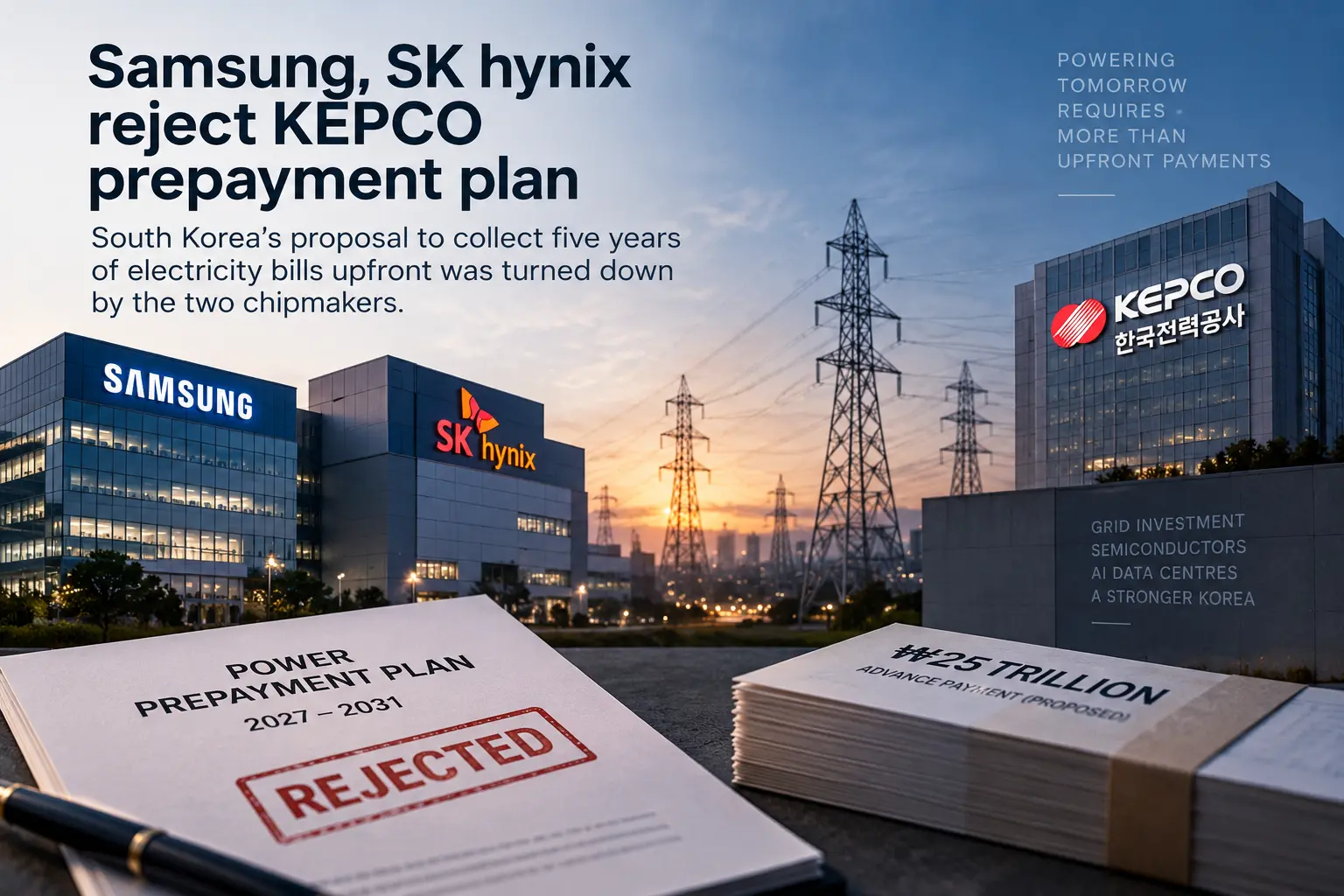
Samsung and SK hynix reject KEPCO power prepayment plan
KEPCO wanted future electricity bills to help fund grid construction now, but Samsung and SK hynix rejected a proposed 25 trillion won advance.

Asia-Pacific Institutional Trends
Samsung backs ASML High NA for 2028 DRAM
Samsung plans to use ASML's High NA lithography in volume DRAM production from 2028, while a separate larger-mask programme remains years away.

Asia-Pacific Institutional
NICT reports incorrect timestamps from public time servers
NICT says part of its public time service sent incorrect timestamps for 11 minutes, putting the focus on whether connected systems accepted the wrong time.

Asia-Pacific Institutional Trends
South Korea chip exports jump 270% in early September
South Korea’s chip exports surged 270% in early September, lifting semiconductors to nearly half of total export value.

Asia-Pacific Institutional Trends
Micron offers Taiwan staff rewards as union talks continue
Micron announced new Taiwan staff rewards while union talks remained unresolved, with no confirmed production or delivery disruption.

Asia-Pacific Institutional Trends
ARC–Firstborn’s $1 Billion Price Is a Floating Share Count
Firstborn Top Capital’s sellers cannot know their final ARC share count from the transaction announcement, and they may not know it at closing. The contract first adjusts a US$1 billion base for debt, working capital and unpaid deal compensation, then divides the result by the…

Asia-Pacific Institutional Trends
AirNav completes migration to national aviation network
JARKOMPENAS separates AirNav's internal network from connections with outside aviation organisations, giving future information services a clearer integration boundary.

Asia-Pacific Institutional Trends
Samsung’s High-NA Deadline Runs Through a Larger Mask
Samsung has put 2028 on the calendar for High-NA EUV in future DRAM mass production. The harder part of the announcement is not the date or even the scanner: it is the attempt to make a 6x12-inch photomask, and everything that must handle and qualify it, into an industrial…
Asia-Pacific Institutional Trends
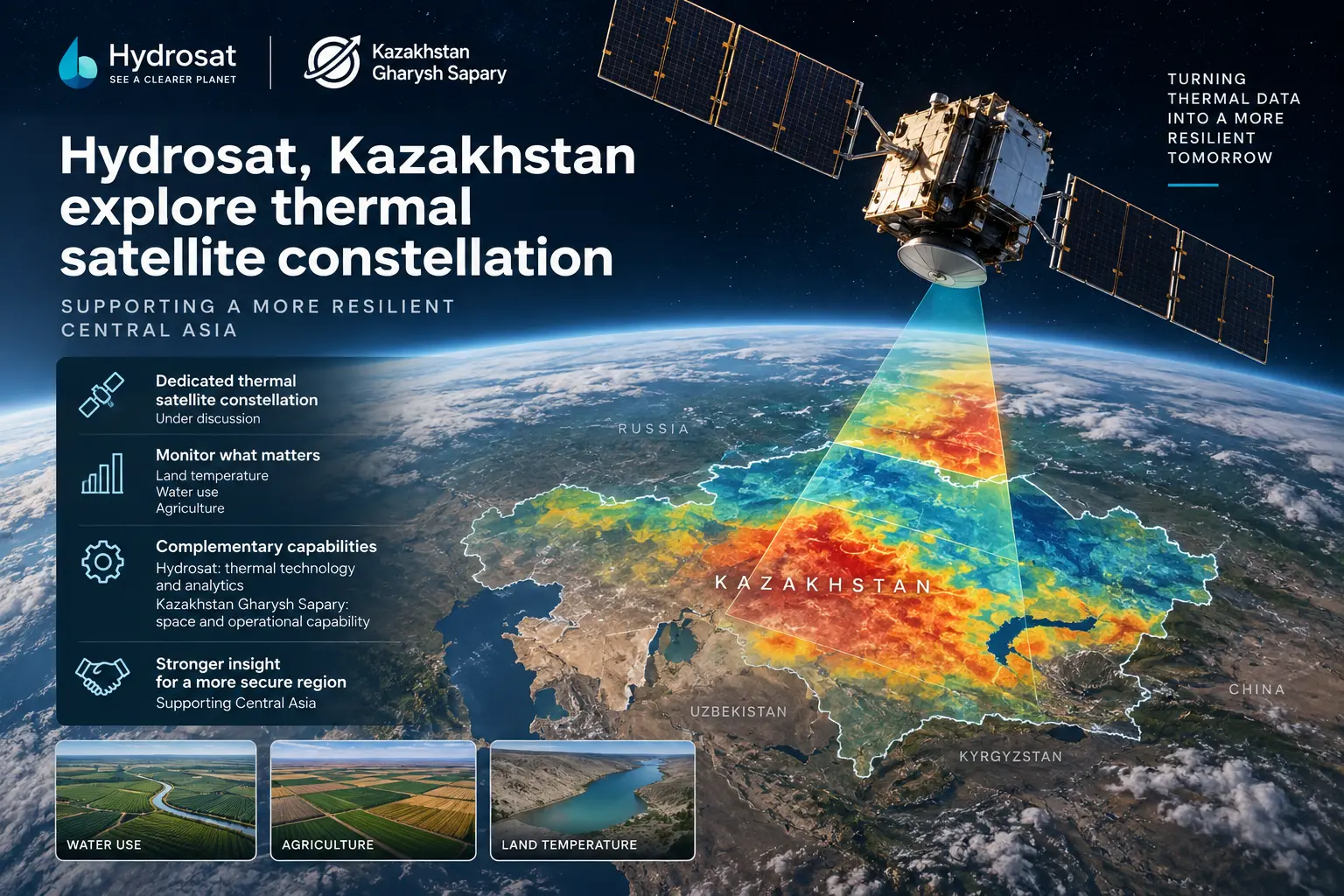
Hydrosat, Kazakhstan explore thermal satellite constellation
The proposed constellation could give Kazakhstan more control over thermal observations, while Hydrosat would retain its underlying technology and software.

Asia-Pacific Institutional Trends
SOI Asia Signs a Wider Mission in Bandung as Work Spreads Across Campuses
The 2026 declaration puts social resilience alongside academic networking. The collaboration’s earlier equipment retirement offers a practical test of what can endure.

Asia-Pacific Institutional Trends
The Backup Warning Still Needs Someone on the Radio
Walailak University's latest expansion plans pair offline warnings with a new repair and training centre. The crucial connection is between the administrator who receives an alert and the community that must hear it.

Asia-Pacific Institutional Trends
Zepp’s Premium-Mix Evidence Arrives Before Its Earnings
Zepp can already show that buyers are choosing dearer watches and bands. It cannot yet show that those choices have crossed every commercial boundary between an activation, a channel order, recognized revenue and an operating profit. That distinction is the useful part of its…

Asia-Pacific Institutional Trends
Papua adds temporary broadband at Lake Sentani Festival
Papua and Telkom used three load-balanced IndiBiz links to support connectivity during the Lake Sentani Festival.

Asia-Pacific Institutional
Pixxel raises $100m to expand satellite sensing
Pixxel will use its $100m Series C to expand satellite imaging and Aurora software, with the first Honeybee satellite due in 2027.

Asia-Pacific Institutional Trends
La Caisse's ₹121bn changed Altius owners, not Altius capital
One transaction placed a new 24% investor beside Brookfield in India's largest independent tower platform. It did not, on the records reviewed, place ₹121bn on Altius's balance sheet. The distinction between buying existing units and funding the trust is the first fact that every…