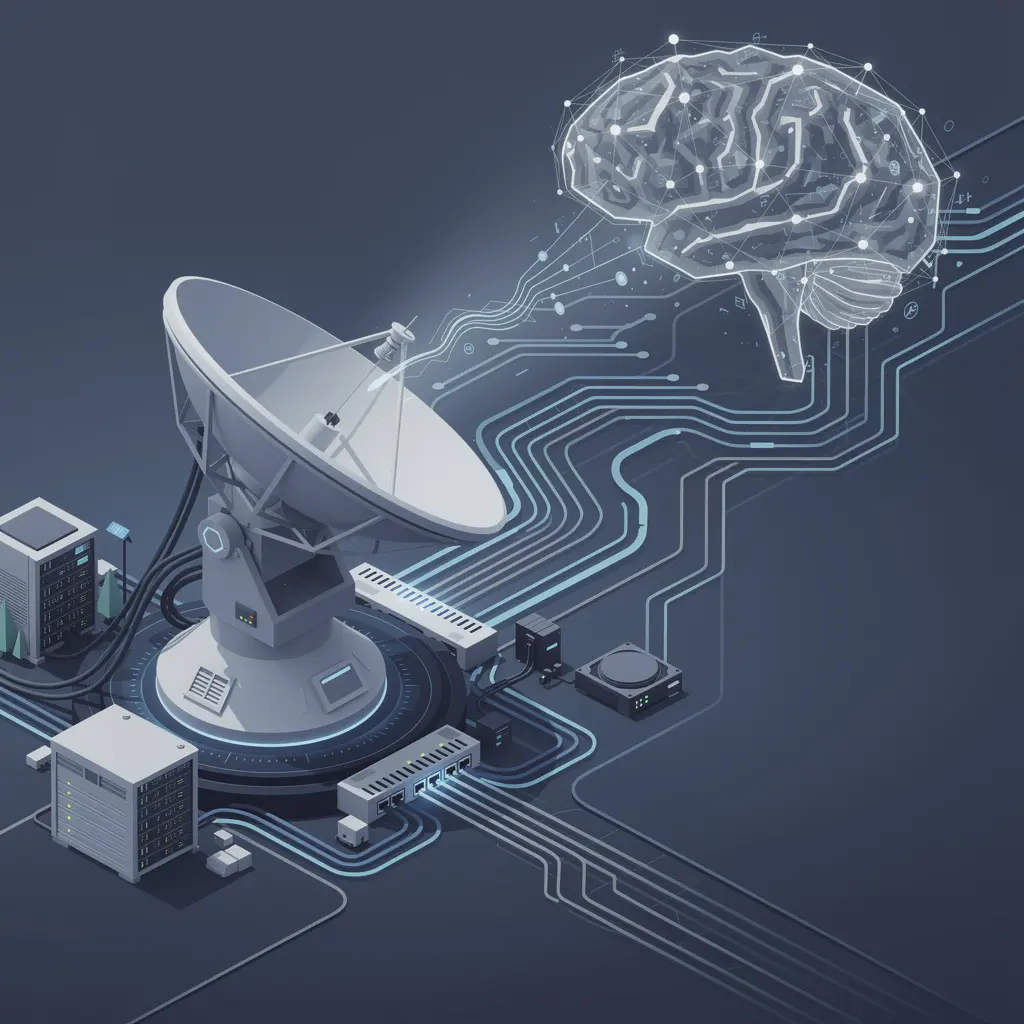
- The Internet Protocol (IP) is a set of rules that dictate how data is formatted, addressed, and sent between devices on the internet.
- IP is a cornerstone of modern networking, enabling the vast and complex web of connections that make up the internet.
In the realm of technology, few concepts are as fundamental as the Internet Protocol (IP). It is the backbone of the internet, enabling the seamless communication between devices across the globe. This article aims to demystify the Internet Protocol, explaining its purpose, function, and importance in networking.
Understanding the internet protocol
The Internet Protocol is a set of rules governing the format of data transmitted over the internet and the way this data is addressed and routed between devices. It is a network layer protocol that operates at the third layer of the OSI model, ensuring that data packets are delivered to their intended destinations.
The birth of IP
The Internet Protocol was developed in the 1970s by the United States Department of Defense’s Advanced Research Projects Agency (ARPA) as part of the ARPANET project. The original version, IP version 4 (IPv4), was introduced in 1981 with the publication of RFC 791. It has since been succeeded by IP version 6 (IPv6), which was designed to address the limitations of IPv4, particularly the limited number of available IP addresses.
How IP works
IP operates on a principle known as packet switching. When data is sent over a network, it is divided into small packets. Each packet is then transmitted independently and may take different routes to reach its destination. At the destination, the packets are reassembled into the original data.
Each IP packet contains a header and a payload. The header includes the source and destination IP addresses, which are crucial for routing the packet to its destination. The payload is the actual data being transmitted.
Also read: Which internet protocol is used to transmit encrypted data?
IP addressing
IP addresses are numerical labels assigned to devices connected to a computer network that use the Internet Protocol for communication. IPv4 addresses are 32-bit numbers, which allows for approximately 4.3 billion unique addresses. IPv6, on the other hand, uses 128-bit addresses, significantly expanding the number of available addresses.
Subnetting and CIDR
To efficiently manage IP addresses, networks are often divided into smaller segments known as subnets. The Classless Inter-Domain Routing (CIDR) system was introduced to allow for more flexible allocation of IP addresses and to reduce the need for large, contiguous blocks of addresses.
Routing
Routing is the process of selecting the path for forwarded packets across an interconnected network. Routers use routing tables to determine the best path for each packet based on the destination IP address. The Internet Protocol relies on various routing protocols to facilitate this process.
The role of IP in networking
The Internet Protocol is essential for several reasons:
- Connectivity: IP provides a universal method for devices to communicate over a network.
- Scalability: The introduction of IPv6 has ensured that the internet can continue to grow without running out of addresses.
- Flexibility: IP’s packet-switching nature allows for efficient use of network resources and adaptability to different network conditions.
- Security: While IP itself does not provide security features, it forms the basis for various security protocols such as IPsec.
Also read: Is DNS a network protocol? Understanding its role and functionality
Challenges and evolution
Despite its importance, the Internet Protocol faces several challenges:
- IPv4 exhaustion: The limited number of IPv4 addresses has led to the widespread adoption of NAT (Network Address Translation) and the transition to IPv6.
- Security: IP packets can be intercepted or tampered with, necessitating the development of security protocols.
- Mobility: The original IP was not designed with mobile devices in mind, leading to the development of Mobile IP to address this.
The future of IP
As the internet continues to evolve, so too does the Internet Protocol. Efforts are ongoing to improve IP’s efficiency, security, and adaptability to new technologies such as the Internet of Things (IoT).
The internet protocol is a cornerstone of modern networking, enabling the vast and complex web of connections that make up the internet. Understanding IP is crucial for anyone working in the technology sector, as it underpins much of the infrastructure and services we rely on daily.