
- Virtual Reality (VR) technology traces its roots back to visionary concepts depicted in science fiction literature and film, inspiring early pioneers to explore immersive digital experiences.
- The evolution of VR technology has been marked by significant milestones, from the conceptualisation of immersive environments in the mid-20th century to the commercialisation of consumer-facing VR devices in the 21st century.
- Beyond gaming and entertainment, VR technology has found applications across diverse industries, including healthcare, education, architecture, and manufacturing, revolutionising how we simulate, train, visualise, and interact with digital environments.
Virtual Reality (VR) technology has captured imaginations and pushed the boundaries of human experience for decades. What began as a dream in the realm of science fiction has now become a tangible reality, revolutionising industries from gaming to healthcare. Let’s embark on a journey through the fascinating history of VR technology, tracing its origins, milestones, and transformative impact on society.
Early beginnings
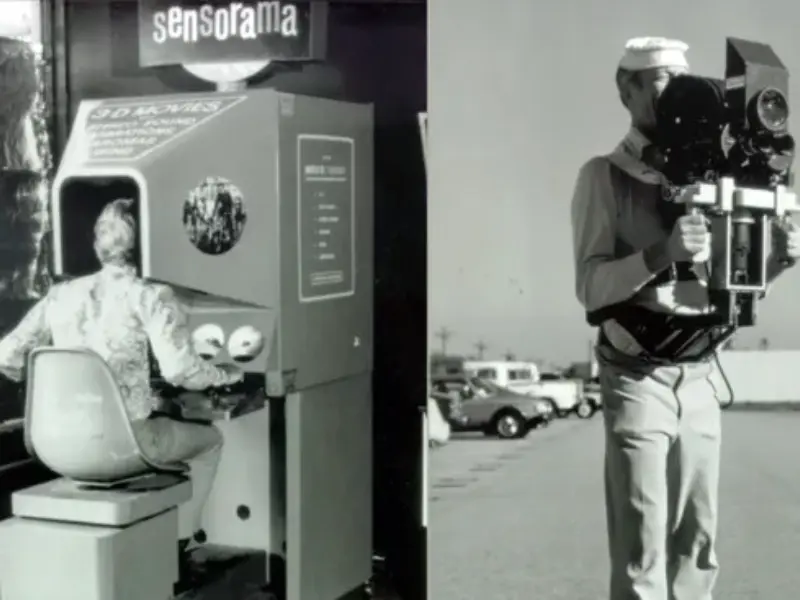
The roots of VR can be traced back to the mid-20th century when visionary pioneers like Morton Heilig conceptualised immersive experiences through devices like the Sensorama in the 1950s. These early endeavors laid the groundwork for the development of immersive technologies that would redefine how we interact with digital environments.
Rise of computer graphics
The advent of computer graphics in the 1970s and 1980s fueled further advancements in VR technology. Ivan Sutherland’s “Sword of Damocles” in 1968 marked a significant milestone, showcasing the potential for head-mounted displays (HMDs) to immerse users in virtual worlds. This era saw the emergence of influential platforms like the Aspen Movie Map and the first VR arcade machines, paving the way for consumer-facing VR experiences.
Gaming and entertainment
The 1990s witnessed the commercialisation of VR technology, with companies like Sega and Nintendo introducing VR gaming peripherals to the mass market. While these early attempts faced technical limitations and commercial challenges, they ignited interest in immersive gaming experiences that would later come to fruition with the development of more advanced VR hardware and software.
Also read: Apple’s Vision Pro headset: Global expansion and advanced VR features
Renaissance in the 21st century
The 21st century heralded a renaissance for VR technology, driven by breakthroughs in hardware, software, and content creation. The launch of devices like the Oculus Rift and HTC Vive in the 2010s brought high-fidelity VR experiences to consumers, enabling unprecedented levels of immersion and interactivity. Concurrently, advancements in mobile technology led to the proliferation of accessible VR platforms like Google Cardboard and Samsung Gear VR, democratising VR experiences for a broader audience.
Beyond gaming
While gaming remains a cornerstone of VR applications, the technology’s potential extends far beyond entertainment. Industries ranging from healthcare and education to architecture and manufacturing have embraced VR as a powerful tool for simulation, training, visualisation, and therapy. VR enables medical professionals to practice surgical procedures, educators to immerse students in historical events, architects to design virtual buildings, and engineers to prototype products in virtual environments, unlocking new possibilities for innovation and collaboration.
Also read: UK Network Rail employs VR to solve real-world concerns
Future prospects
As VR technology continues to evolve, the future holds boundless potential for its expansion into new frontiers. Advancements in hardware miniaturisation, haptic feedback, eye-tracking, and artificial intelligence promise to enhance the fidelity, immersion, and realism of VR experiences. Additionally, the convergence of VR with augmented reality (AR) and mixed reality (MR) technologies is poised to redefine how we perceive and interact with the digital and physical worlds.
The history of VR technology is a testament to human ingenuity, innovation, and imagination. From humble beginnings as a niche pursuit to becoming a transformative force shaping the way we work, play, and connect, VR has transcended barriers and opened doors to new realms of possibility. As we look to the future, one thing is certain: the journey of VR is far from over, and the best is yet to come.