
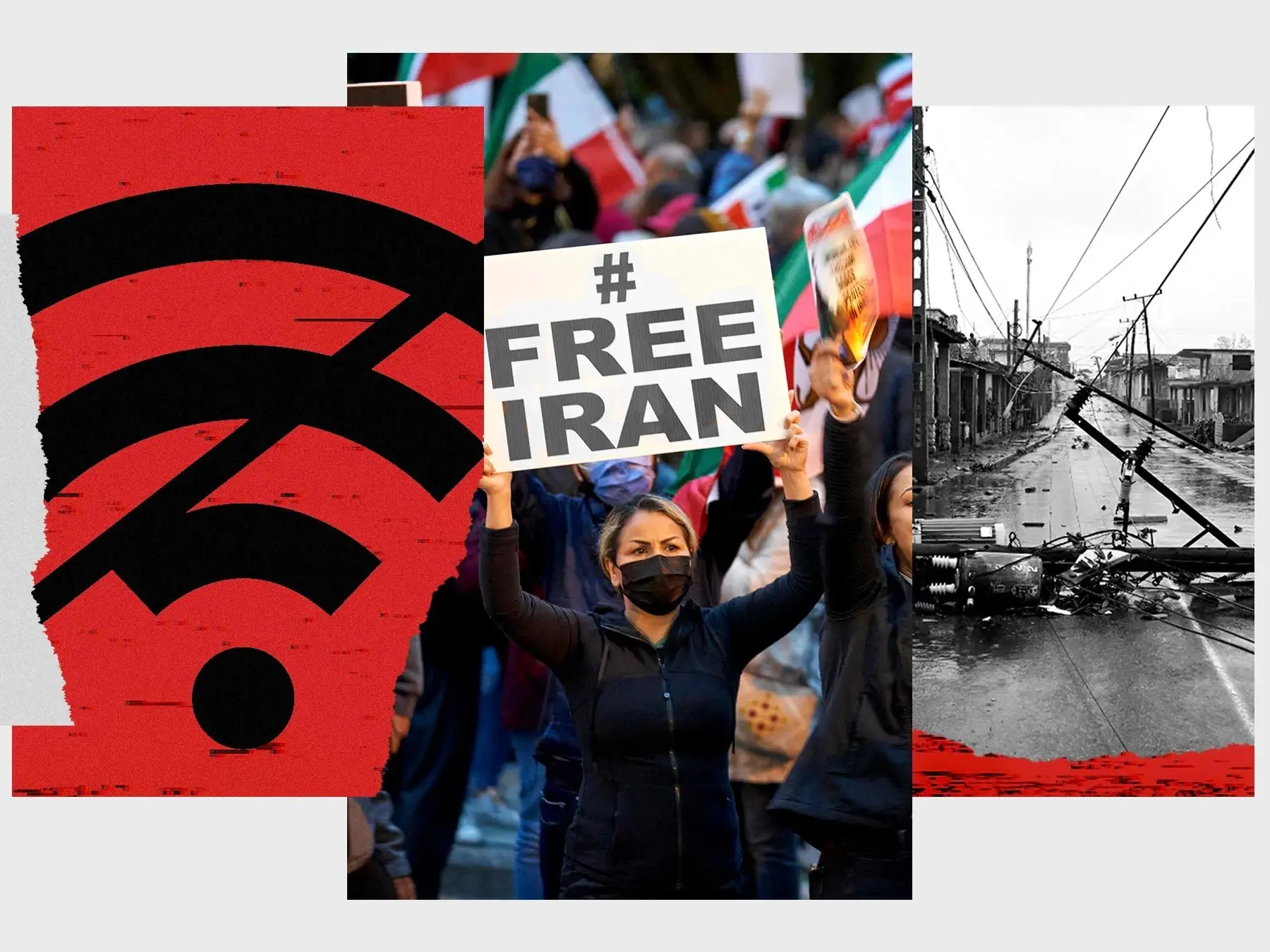
Tehran cuts global internet by 97% to counter cyber threats is profiled by BTW Media because published evidence links it to internet infrastructure, governance, operational dependencies, or market visibility.
Tehran cuts global internet by 97% to counter cyber threats is tracked as a internet infrastructure institution within the internet infrastructure ecosystem.
Tehran cuts global internet by 97% to counter cyber threats has public-source relevance to network operations, governance, dependency mapping, or market structure.
Tehran cuts global internet by 97% to counter cyber threats is tracked as a internet infrastructure institution within the internet infrastructure ecosystem.
Public-source signals support medium-impact monitoring for infrastructure visibility and dependency analysis.
Tehran cuts global internet by 97% to counter cyber threats is profiled by BTW Media because published evidence links it to internet infrastructure, governance, operational dependencies, or market visibility.
Public-source signals support medium-impact monitoring for infrastructure visibility and dependency analysis.
| 0.90–1.00 | A | High — direct sources |
| 0.75–0.89 | A/B | Strong |
| 0.55–0.74 | B/C | Medium |
| 0.35–0.54 | C/D | Weak–medium |
| 0.10–0.34 | D | Weak signal |
| 0.00–0.09 | D | Internal monitoring |
Several public sources
- Iran cut access to about 97% of its global internet amid tensions with Israel, citing cyber‑attack prevention.
- The shutdown sparks deep concern across telecom firms and blocks international communication channels.
What happened: Iran imposes major blackout
In mid-June 2025, Iran implemented a near-total internet shutdown, cutting approximately 97% of its global internet traffic. This followed reports of cyber-attacks on local banks and the cryptocurrency platform Nobitex, which authorities blamed on hostile foreign actors. Officials justified the blackout as a security measure to protect Iran’s digital infrastructure during heightened tensions with Israel.
The government redirected all online activity to the National Information Network (NIN), Iran’s domestic intranet, which remains functional while global platforms are inaccessible. Messaging apps like WhatsApp and Signal, along with social platforms such as Instagram, have been blocked nationwide.
Telecom operators including MCI and Irancell confirmed their compliance with government orders. Digital rights groups like NetBlocks have verified the outage, calling it one of the most severe since the November 2019 protests, raising fresh concerns about censorship and access to global communication.
Also Read: Google Cloud and Lumen collaborate on next-gen network tech
Also Read: US targets China AI investments with new national security rules
Why it is important
This aggressive blackout demonstrates how governments are increasingly willing to isolate their digital infrastructure during geopolitical crises. Iran’s deployment of the National Information Network enables state control over data flow, leaving citizens dependent on censored, domestic services and cutting them off from global platforms.
For telecom operators and global businesses, such shutdowns bring economic uncertainty, risk to infrastructure investment, and damage to public trust. International human rights groups warn that prolonged disconnections reduce information transparency, hinder emergency response, and violate digital freedoms.
Furthermore, Iran’s model of “national internet sovereignty” is being studied by other authoritarian regimes, which could accelerate a global fragmentation of the internet. If replicated, this could undermine open internet principles and increase the likelihood of state-sponsored cyber conflict and surveillance.
At A Glance
- Name: Tehran cuts global internet by 97% to counter cyber threats
- Type: Internet infrastructure institution
- Base: Asia Pacific
- Profile focus: Institution
What It Does
- Public records support monitoring of its role, services, and key relationships.
Why It Matters
- Public-source signals support medium-impact monitoring for infrastructure visibility and dependency analysis.
- Operational criticality: Medium
- Time horizon: Next quarter
What To Watch
- Monitoring focuses on verified service continuity, governance changes, and relationship signals.
Track verified source updates, role changes, and current public evidence.
Public-source signals support medium-impact monitoring for infrastructure visibility and dependency analysis.
Longer-term relevance depends on verified operating, policy, and relationship changes.
Member Briefing
Deeper Profile Context
Login is required to unlock the full profile briefing and source notes.
Only for Strategy Circle
Strategic Circle Access
Open to all readers. Unlock profile briefings after joining and logging in.
Join Strategic CircleOnly for Leadership Alliance
Leadership Alliance Access
For owners and management of IP-holding companies. Login required to unlock.
Join Leadership Alliance


