Summary
- On 12 October, PTS granted Myndigheten för civilt försvar (MCF) the national 703–713/758–768 MHz licence through 31 December 2041. The 2×10 MHz block had previously been reserved for terrestrial television and is intended for SWEN, the replacement for Rakel.
- The award bypassed a general invitation to apply under the public-safety exception. Its conditions give MCF priority over later users while binding the network to military consent in three municipalities, protection of TV reception and domestic operating controls.
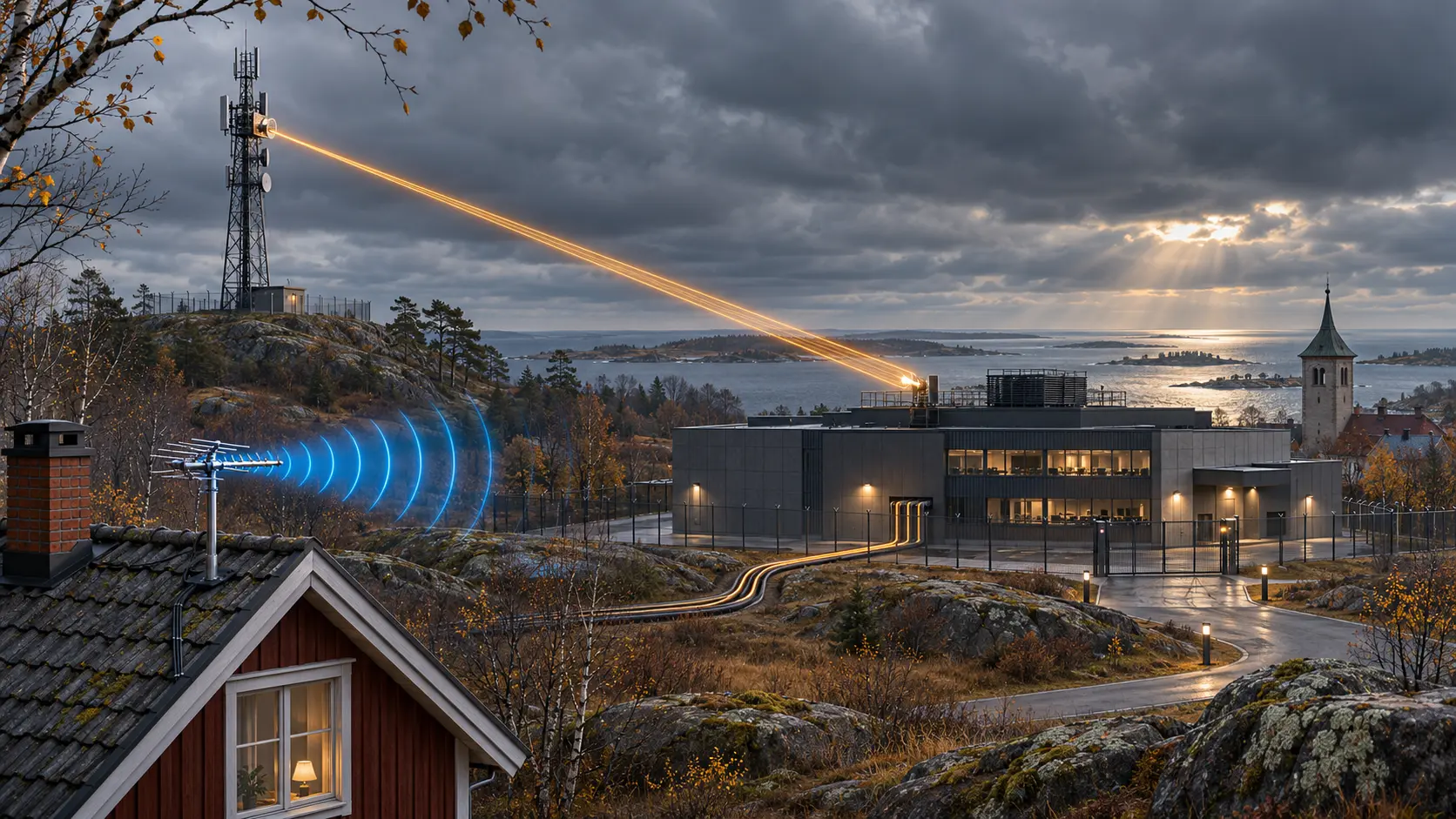
Sweden handed its future emergency network a frequency block that television once kept for itself. PTS's award decision gives MCF 703–713 MHz for uplink and 758–768 MHz for downlink nationwide. It took effect on 12 October 2026 and runs to the last day of 2041. SWEN is being developed to replace the TETRA-based Rakel system; this decision grants room to build it, not a completed network.
The route to that spectrum matters. PTS judged demand greater than the available block, limited the band to one 2×10 MHz licence and received one response to its market consultation. It consulted the Swedish Security Service and Armed Forces. Because the intended users serve public order, safety or health, PTS applied the statutory exception to a general invitation to apply. A single response to the consultation is a recorded fact; an imagined queue of rival bidders is not. PTS's announcement sets out that sequence.
The permit conditions make the state's preference unusually tangible. Eligible users must be engaged in public-order, safety or health functions. MCF takes priority over any later holder admitted to its assigned frequencies; sharing is allowed only without harmful interference to MCF. Yet MCF must obtain Armed Forces consent before installing or changing transmitters in Ystad, Gotland and Karlskrona. National priority stops at another state desk.
The old television neighbour also has teeth. The licence bars defined interference to terrestrial TV reception at permanently occupied homes in 470–694 MHz. MCF must join other 700 MHz holders in maintaining a phone contact point and complaint record, investigate and remedy interference attributable to its equipment without charge, and if necessary switch off the offending transmitter immediately until the problem is fixed. A priority channel for rescuers can still lose a transmitter to a viewer's aerial.
There is a final boundary behind the mast. Central radio, transmission, core and operations functions may contain no Huawei or ZTE products and may not depend on staff or functions abroad. If primary common timing comes from GNSS or another source outside Sweden, a tested redundant timing source inside Sweden must be ready. The licence writes operational sovereignty into people, equipment and the clock, not merely into the name on the permit.
Member Briefing
Deeper Profile Context
Sign in with the right membership level to unlock the full briefing and source notes.
Only for Strategic Circle
Strategic Circle
Open to all readers. Unlock profile briefings after joining and signing in.
Join Strategic CircleOnly for Leadership Alliance
Leadership Alliance
For qualified IP-asset owners and management; sign in to unlock alliance briefings.
Join Leadership Alliance