
SpaceX plans 5 uncrewed Mars missions in 2 years, says Elon Musk is profiled by BTW Media because public-source evidence links it to internet infrastructure, governance, operational dependencies, or market visibility.
SpaceX plans 5 uncrewed Mars missions in 2 years, says Elon Musk is tracked as a internet infrastructure institution within the internet infrastructure ecosystem.
SpaceX plans 5 uncrewed Mars missions in 2 years, says Elon Musk has public-source relevance to network operations, governance, dependency mapping, or market structure.
SpaceX plans 5 uncrewed Mars missions in 2 years, says Elon Musk is tracked as a internet infrastructure institution within the internet infrastructure ecosystem.
Public-source signals support medium-impact monitoring for infrastructure visibility and dependency analysis.
SpaceX plans 5 uncrewed Mars missions in 2 years, says Elon Musk is profiled by BTW Media because public-source evidence links it to internet infrastructure, governance, operational dependencies, or market visibility.
Public-source signals support medium-impact monitoring for infrastructure visibility and dependency analysis.
| 0.90–1.00 | A | High — direct sources |
| 0.75–0.89 | A/B | Strong |
| 0.55–0.74 | B/C | Medium |
| 0.35–0.54 | C/D | Weak–medium |
| 0.10–0.34 | D | Weak signal |
| 0.00–0.09 | D | Internal monitoring |
Mixed-source
- Earlier this month, Musk indicated that the first Starships would launch in two years when the next Earth-Mars transfer window opens.
- Crewed Mars missions could follow in four years, depending on the success of the uncrewed flights.
OUR TAKE
This marks a significant step toward achieving human exploration and potential colonisation of Mars. SpaceX’s ambitious timeline for uncrewed and crewed missions demonstrates progress in developing advanced space travel technology.
–Jennifer Yu, BTW reporter
What happened
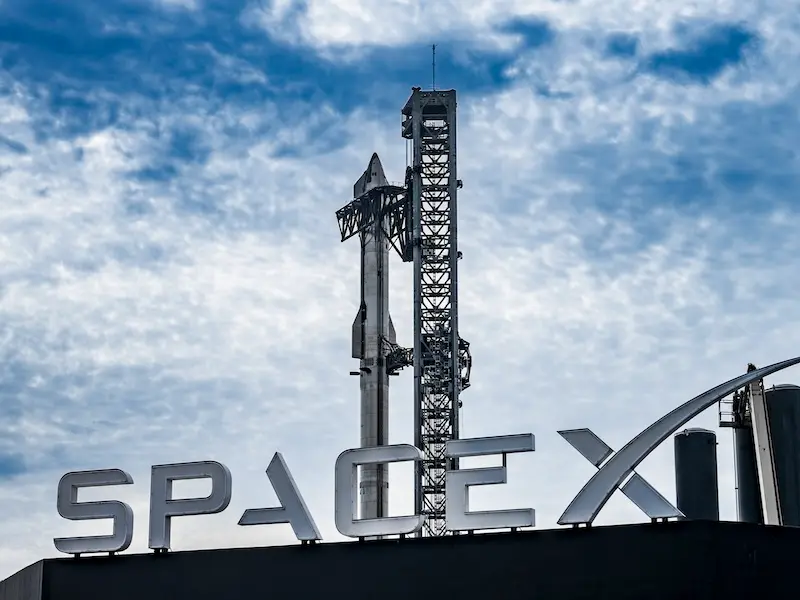
SpaceX aims to launch five uncrewed Starship missions to Mars over the next two years, CEO Elon Musk announced on social media platform X on Sunday. Earlier this month, Musk indicated that the first Starships would launch in two years when the next Earth-Mars transfer window opens.
The timeline for the first crewed mission depends on the success of these uncrewed flights. If successful, a crewed mission could launch in four years, but setbacks could delay it by two more years, Musk explained.
In June, a Starship rocket successfully completed a hypersonic return from space, landing in the Indian Ocean after a full test mission. Musk envisions Starship as a next-generation spacecraft capable of transporting people and cargo to the moon and Mars.
NASA delayed its Artemis 3 moon mission using Starship to 2026, and Japanese billionaire Yusaku Maezawa recently cancelled a private moon mission due to delays in Starship’s development.
Also read: SpaceX launches private crew on billionaire-backed spacewalk mission
Also read: SpaceX’s Falcon 9 returns to flight after FAA pause
Why it’s important
By planning five uncrewed Starship missions within the next two years, SpaceX is pushing the boundaries of space exploration, demonstrating technological advancements that could dramatically alter humanity’s future in space.
The successful execution of these missions would be critical not just for reaching Mars, but for testing key technologies such as long-duration space travel, autonomous landing systems, and the sustainability of missions on a distant planet.
The timeline for the first crewed mission to Mars is crucial. If the uncrewed missions are successful, the first human journey to Mars could happen within four years, marking a monumental achievement in space exploration.
Core Entity Brief
- Entity: SpaceX plans 5 uncrewed Mars missions in 2 years, says Elon Musk
- Subject Type: Internet infrastructure institution
- Region: Global
- Classification: Institution Type
Service Surface / Control Surface
- Public records support monitoring of governance, service, and infrastructure control surfaces.
Governance and Policy Surface
- Public-source signals support medium-impact monitoring for infrastructure visibility and dependency analysis.
- Operational criticality: Medium
- Time horizon: Quarter (30-120d)
Decision Trigger Matrix
- Monitoring focuses on verified service continuity, governance changes, and relationship signals.
Current state favours active tracking due to infrastructure relevance.
Public-source signals support medium-impact monitoring for infrastructure visibility and dependency analysis.
Long-cycle infrastructure decisions likely to remain path-dependent.
Member Unlock
Restricted Profile Intelligence
Login is required to unlock full profile briefings and deep-dive sections.
Only for Strategy Circle
Strategic Circle Access
Open to all readers. Unlock profile briefings after joining and logging in.
Join Strategic CircleOnly for Leadership Alliance
Leadership Alliance Access
For owners and management of IP-holding companies. Login required to unlock.
Join Leadership Alliance


