
SK aims for AI tech leadership and semiconductor market growth is profiled by BTW Media because published evidence links it to internet infrastructure, governance, operational dependencies, or market visibility.
SK aims for AI tech leadership and semiconductor market growth is tracked as a internet infrastructure institution within the internet infrastructure ecosystem.
SK aims for AI tech leadership and semiconductor market growth has public-source relevance to network operations, governance, dependency mapping, or market structure.
SK aims for AI tech leadership and semiconductor market growth is tracked as a internet infrastructure institution within the internet infrastructure ecosystem.
Public-source signals support medium-impact monitoring for infrastructure visibility and dependency analysis.
SK aims for AI tech leadership and semiconductor market growth is profiled by BTW Media because published evidence links it to internet infrastructure, governance, operational dependencies, or market visibility.
Public-source signals support medium-impact monitoring for infrastructure visibility and dependency analysis.
| 0.90–1.00 | A | High — direct sources |
| 0.75–0.89 | A/B | Strong |
| 0.55–0.74 | B/C | Medium |
| 0.35–0.54 | C/D | Weak–medium |
| 0.10–0.34 | D | Weak signal |
| 0.00–0.09 | D | Internal monitoring |
Several public sources
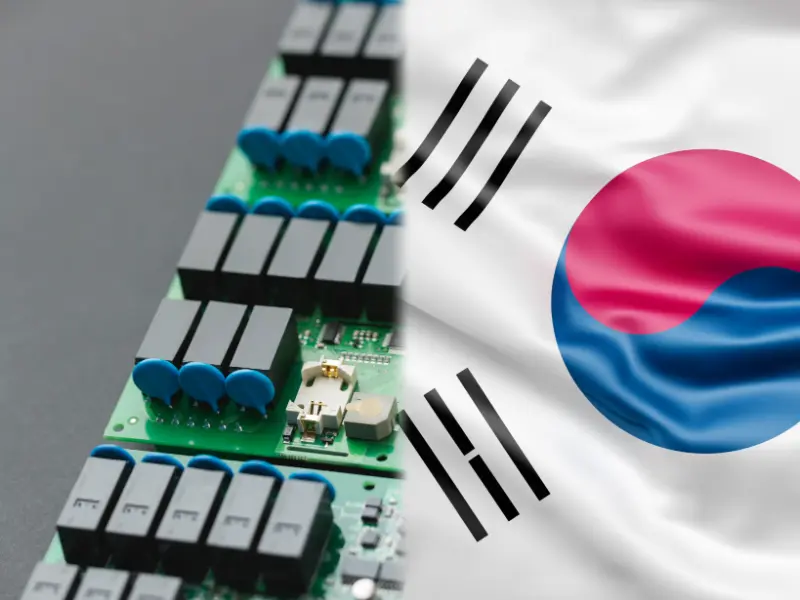
- South Korean President Yoon Suk Yeol has announced a $1 billion fund to bolster innovative AI chipmakers, aiming to propel South Korea to the forefront of AI technology.
- The local government is spearheading a $454 billion semiconductor “mega cluster” in Gyeonggi-do Province, aimed at centralising chip manufacturing and research facilities while bolstering infrastructure support with expanded power grid capabilities.
South Korean President Yoon Suk Yeol has announced plans to create a $1 billion fund aimed at supporting the growth of innovative AI chipmakers.
Ambitious goal
President Yoon revealed the plan at a meeting convened on April 9, where he outlined his vision for South Korea to become one of the top 3nations in AI technology globally and to account for more than 10% of global semiconductor production by 2030.
Yoon said: “To set up an all-out response system that rises to the level of that for a wartime situation, we will review all proposals to attract semiconductor industries starting with investment incentives. We will comprehensively compare and analyse the investment climates and support systems of key countries to devise bold assistance customised for our country’s circumstances.”
Korea is among the nations aiming to secure a larger share of the semiconductor market. This push comes in response to the global hardware shortage caused by the water shortages and the pandemic-induced halt in chip production in Taiwan in 2020.
Also read: 5 women that are changing the AI industry
Also read: Artists vs AI: Who will win the copyright fight of the century?
South Korea’s investment
To bolster South Korea’s semiconductor industry, the local government is investing in the development of a semiconductor “mega cluster” in Gyeonggi-do Province.
This initiative aims to centralise chip manufacturing, equipment production, and research and development facilities, consolidating resources and expertise. The project is estimated to cost $454 billion.
Yoon stated that the government would supply electricity and industrial water for the site, in line with his administration’s recent passage of a bill aimed at expanding the nation’s power grid to support the project.
At A Glance
- Name: SK aims for AI tech leadership and semiconductor market growth
- Type: Internet infrastructure institution
- Base: Asia Pacific
- Profile focus: Institution
What It Does
- Public records support monitoring of its role, services, and key relationships.
Why It Matters
- Public-source signals support medium-impact monitoring for infrastructure visibility and dependency analysis.
- Operational criticality: Medium
- Time horizon: Next quarter
What To Watch
- Monitoring focuses on verified service continuity, governance changes, and relationship signals.
Track verified source updates, role changes, and current public evidence.
Public-source signals support medium-impact monitoring for infrastructure visibility and dependency analysis.
Longer-term relevance depends on verified operating, policy, and relationship changes.
Member Briefing
Deeper Profile Context
Login is required to unlock the full profile briefing and source notes.
Only for Strategy Circle
Strategic Circle Access
Open to all readers. Unlock profile briefings after joining and logging in.
Join Strategic CircleOnly for Leadership Alliance
Leadership Alliance Access
For owners and management of IP-holding companies. Login required to unlock.
Join Leadership Alliance


