Summary
- Plug Power received $40 million on 7 August for specified high-voltage assets at Graham, Texas. That money is generally non-refundable to Stream Data Centers even if the remaining property sale does not close.
- The other $50.5 million in July’s maximum-liquidity formulation is not one receivable: $10 million sits in buyer-funded land escrow, up to $26.5 million depends on final interconnection capacity and the remaining closing, and roughly $14 million was an expected collateral release.
- The remaining land and interconnection closing has an outside date of 31 March 2027. If it never occurs, the earnout terminates; the land escrow can return to the buyer.
The difference between a transaction headline and cash received is $50.5 million in Plug Power’s Graham sale. In July, the hydrogen company said the Texas project could provide up to approximately $90.5 million of liquidity. In August, its quarterly filing recorded a narrower event: $40 million received when specified high-voltage equipment was transferred to Stream Data Centers.
That is not merely a timing delay against a single balance. The missing $50.5 million consists of three claims with different owners, conditions and failure modes. Ten million dollars is in an escrow account funded by the buyer for land. Up to $26.5 million is a capacity-linked earnout that may shrink and can disappear entirely. About $14 million was described as collateral expected to be released after interconnection obligations and security arrangements move. None was identified as cash received at the August equipment closing.
The cleanest reading is therefore a four-column ledger, not one sale-price number.
The August closing sold hardware, not the whole project
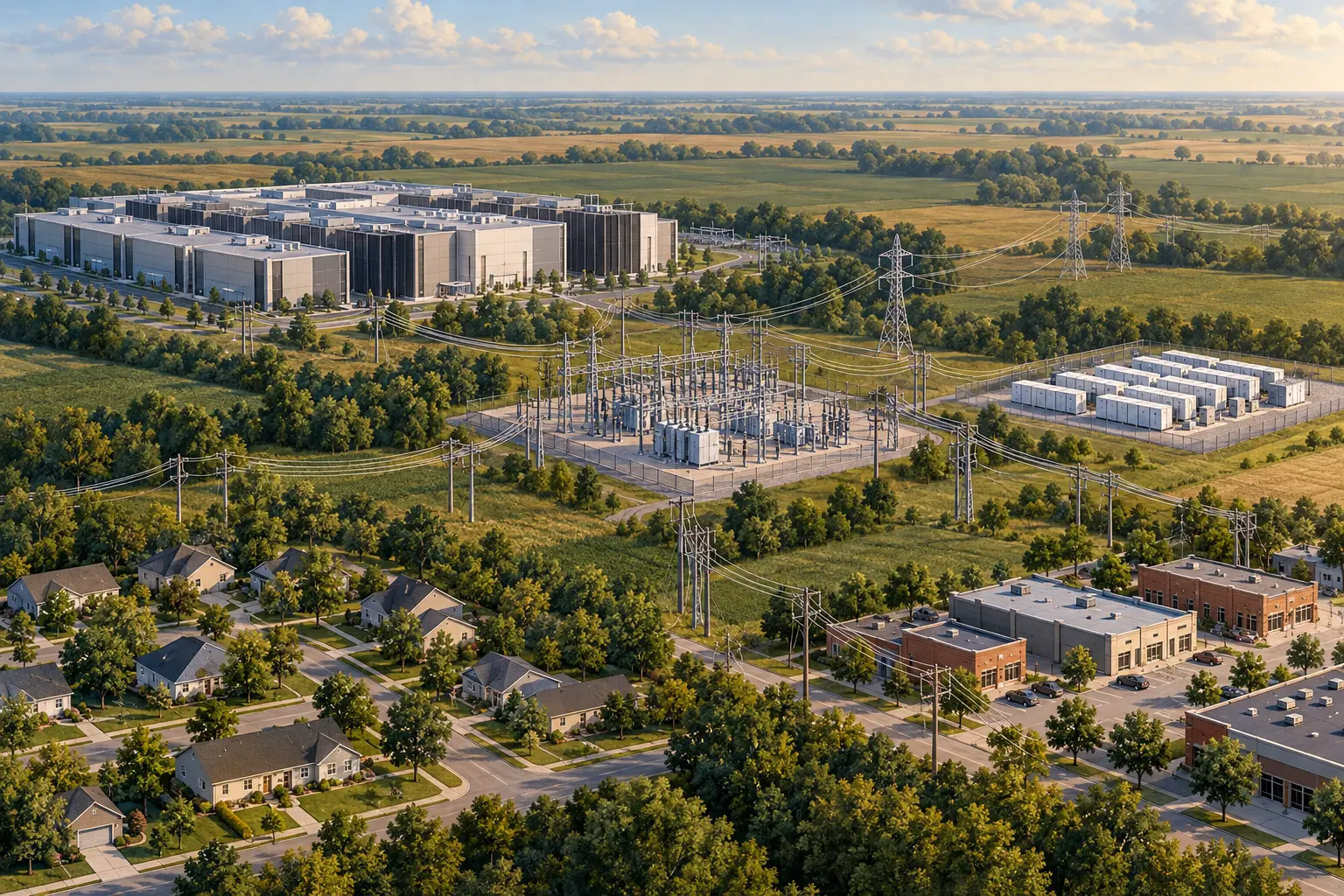
The original purchase agreement covered about 66.316 acres, equipment and a developing interconnection position intended to accommodate up to 164 MW of load. Its base price was $50 million, with a further payment keyed to the capacity ultimately established in a binding Interconnection Facilities Extension Agreement with Oncor, administered through ERCOT.
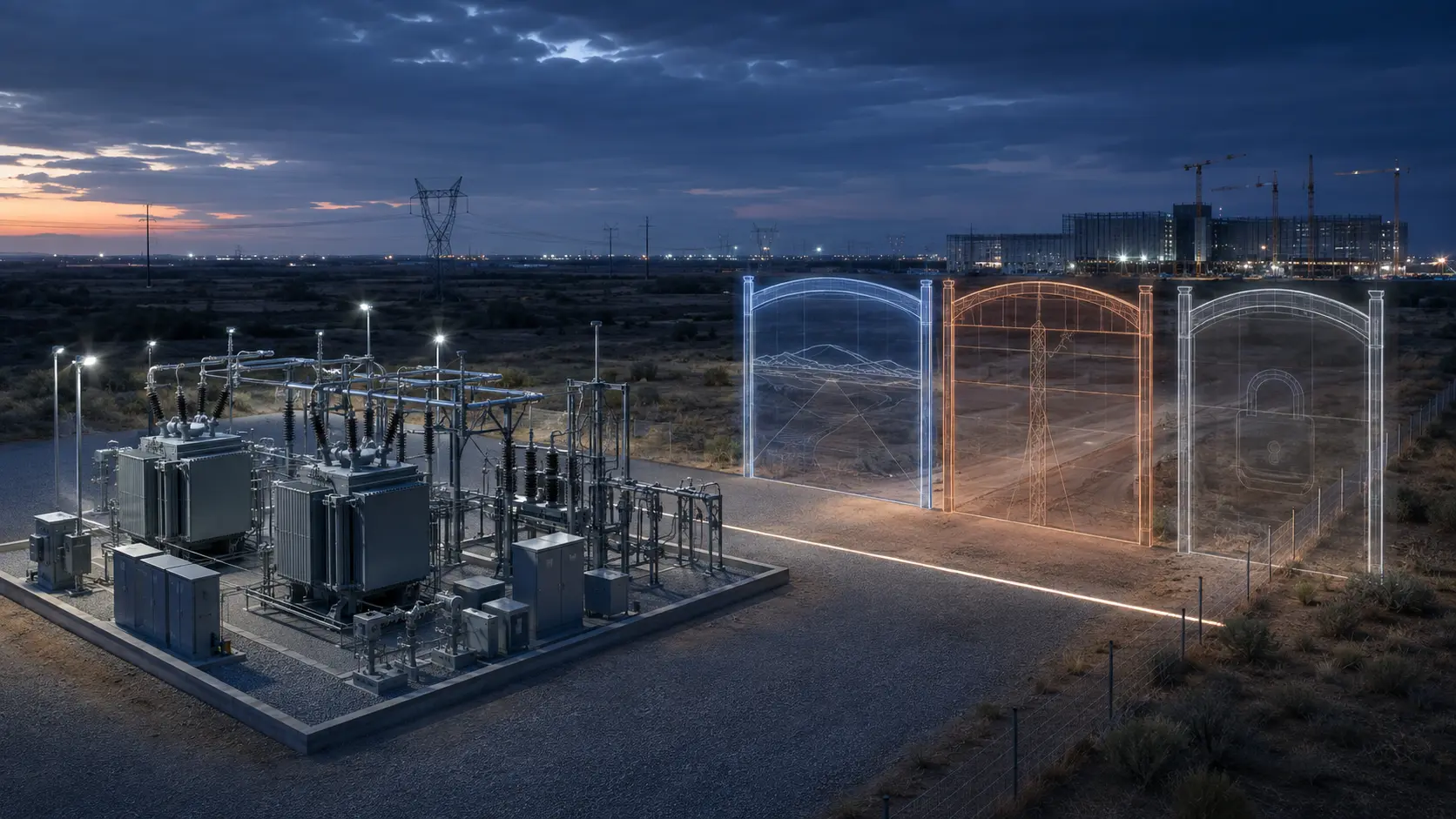
The transaction did not close on that form. The 7 August amendment carved out an “HV Closing”. Plug transferred transformers, circuit switches, breakers, buswork, disconnect switches, control and relay panels and related components. The title company released $40 million to Plug for those assets.
The legal separation matters. Plug’s second-quarter filing says the $40 million is non-refundable to Stream, subject to remedies for breaches of representations and warranties about the equipment. It also says Plug retains that amount if the later closing fails. If the rest of the property does close, the same $40 million is credited against the total purchase price. It is not an extra payment on top of the original $50 million.
What Stream bought in August was consequently valuable but bounded: physical high-voltage infrastructure and associated transfer rights. It did not yet buy the land and all remaining interconnection-related assets. Those pieces remain subject to closing conditions and a new outside date of 31 March 2027.
The $10 million belongs in escrow, not in cash
The amendment required Stream to increase its title-company deposit from $500,000 to $10 million. It calls that amount “Land Consideration”. The label can sound like completed sale proceeds. The cash status says otherwise.
Plug’s 10-Q states that the aggregate $10 million remains held in escrow pending the remaining closing. If the conditions have not been satisfied by the outside date, Stream may waive them and proceed, or terminate and have the land consideration released back to it. Plug cannot treat buyer-funded escrow as unrestricted corporate cash before release.
The conditions are not decorative. They include marketable title, specified easements, a Texas General Land Office consent for a river-crossing easement and closing documents for the remaining property. If Plug chooses to waive the required-easement condition or the GLO-consent condition, the purchase price can fall by $500,000 for each. The $10 million therefore has both a timing risk and a route-dependent value.
This is why “$50 million at closing” from July and “$40 million received” in August can both be accurate descriptions of different versions of the bargain. The amended transaction shifted $40 million into a completed equipment sale and $10 million into an unresolved land account. It did not turn both amounts into cash for Plug.
Capacity controls the earnout—and the closing controls its existence
The earnout has a simple formula and a difficult prerequisite. The original agreement takes $26.5 million, multiplies it by the final MW load in a binding IFEA, and divides by 164. At the reference capacity, the maximum is $26.5 million. A lower capacity produces a proportionately lower payment.
But even that arithmetic is not the first gate. The amendment says that if the remaining closing does not occur for any reason, the earnout provisions terminate. No closing means no capacity payment, even if earlier engineering work suggested useful load.
Public disclosures also do not say that a binding final IFEA has established the relevant capacity. July’s language was forward-looking: the final interconnection agreement could reduce or eliminate contingent consideration. The August subsequent-events note confirms the $40 million receipt but does not record the $26.5 million as a completed payment.
For an investor, the correct value is therefore neither zero nor $26.5 million. It is an option-like contractual amount whose expected value depends on at least two linked outcomes: completing the property transaction and securing a binding capacity number. Treating the maximum as cash collapses both risks.
Collateral release is a fourth category
The last approximately $14 million sits outside purchase consideration. In its 13 July release, Plug said the sale was expected to enable the release of cash collateral supporting letters of credit or security payments after the relevant interconnection obligations and arrangements transferred to Stream.
The agreements show what lies beneath the approximation. Plug had provided a $6.5 million interim interconnection deposit and a $7.75 million JPMorgan letter of credit, together $14.25 million. The amendment says the purchase price increases if the interim deposit is assigned to the buyer. It also requires Stream, following the remaining closing, to use commercially reasonable efforts to release the letter of credit; if it is drawn for the property’s benefit before release, Stream must make an economically equivalent payment under specified circumstances.
Those mechanics are useful protection. They are not evidence that approximately $14 million arrived with the $40 million. Assignment, closing, cancellation and potential reimbursement are different events. Until a filing identifies a release, the amount belongs in a collateral ledger, not the proceeds column.
Forty million dollars is meaningful without being a solution
Plug reported $161.894 million of cash and cash equivalents at 30 June and $155.523 million of current restricted cash. Its first-half operating cash use was $244.105 million, even after a separate $50 million customer-dispute receipt benefited operating cash flow. The first-half net loss was $436.139 million.
Against the June cash balance, the $40 million receipt is about 24.7%. Against first-half operating cash use, it is about 16.4%. Those comparisons establish materiality, not runway. One is a balance measured before the transaction; the other is a six-month flow containing working-capital movements and another unusual receipt. Asset-sale cash cannot be annualised as if it were operating improvement.
The same discipline applies to Plug’s $275 million-plus “infrastructure optimization” ambition. The company said that figure combines asset monetisation, releases of restricted cash and lower maintenance expense. Cash proceeds, the conversion of restricted cash and avoided future costs are three different contributions to liquidity. Adding them may be legitimate for programme management; it is not a cash-receipts statement.
Graham nevertheless demonstrates why grid-ready industrial assets can become financing instruments for data-centre developers. Stream was willing to pay $40 million for high-voltage equipment before the land and full interconnection package were ready to close. Scarce electrical infrastructure had separable value. The price of obtaining immediate cash was to divide the original transaction into components whose remaining value now depends on closing work that extends into 2027.
Sources
Member Briefing
Deeper Profile Context
Sign in with the right membership level to unlock the full briefing and source notes.
Only for Strategic Circle
Strategic Circle
Open to all readers. Unlock profile briefings after joining and signing in.
Join Strategic CircleOnly for Leadership Alliance
Leadership Alliance
For qualified IP-asset owners and management; sign in to unlock alliance briefings.
Join Leadership Alliance