
Summary
- PDN Intelligence has two B300 systems in two different contractual structures: a PDN-owned machine leased to Goodwill Labs, and a Goodwill-owned machine financed by a PDN loan.
- Rent on the first is not conditional on compute revenue, but the lease can end after two years and PDN retains residual-value exposure. Principal on the second has no scheduled cash amortization; ordinary equipment disposition can extinguish it regardless of value.
- The filings describe agreements, not delivered systems, live customer workloads, utilization, margins or cash returns.
Two similar machines, unlike claims
Two NVIDIA B300 eight-GPU systems sit at the center of Professional Diversity Network's new AI-infrastructure business. But the significant distinction in the company's October 6 filing is not the hardware model. It is who owns each machine, who owes money when compute revenue is weak, and whether principal must ever return in cash.
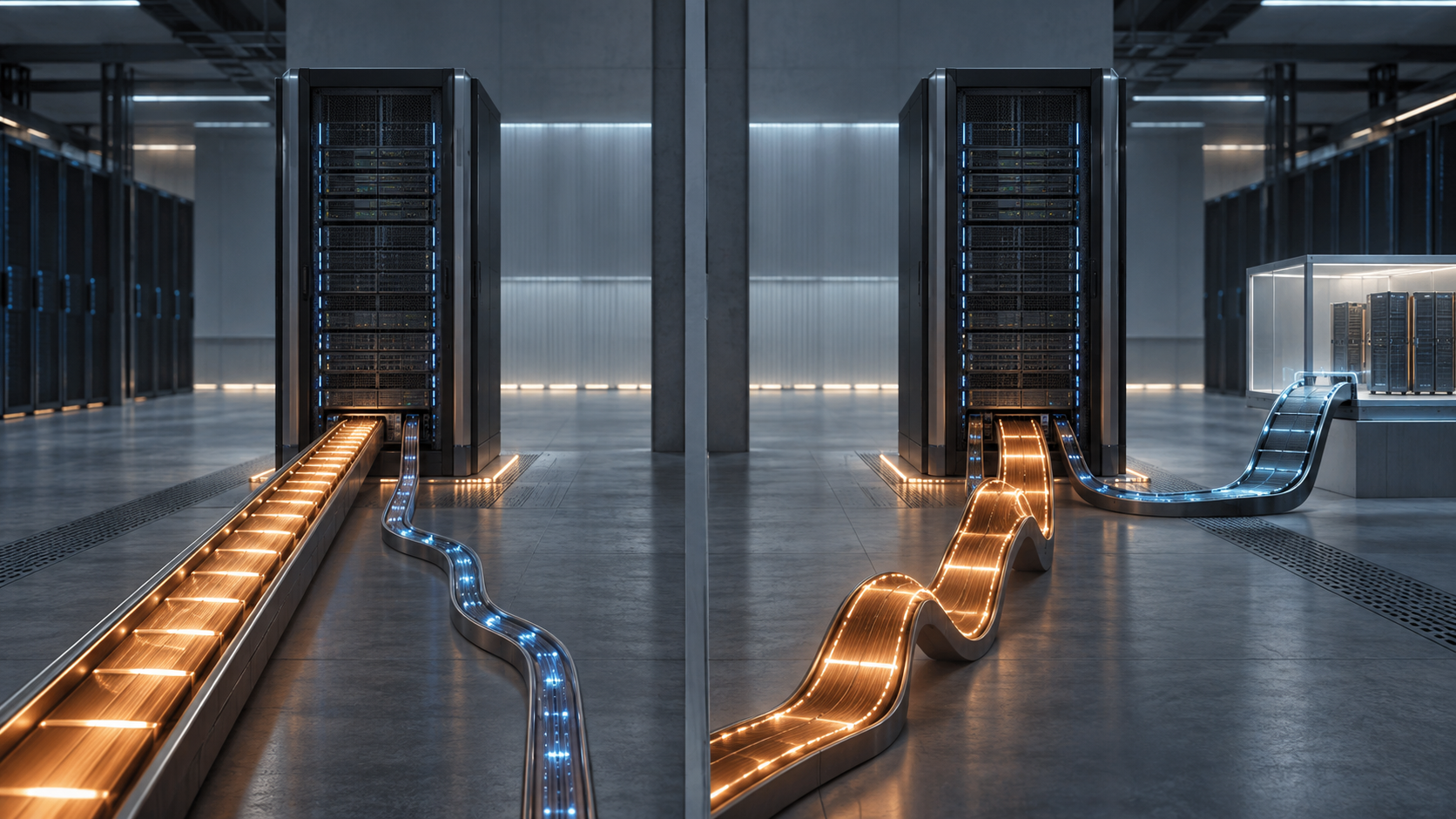
PDN Intelligence, the public company's wholly owned subsidiary, commits US$588,581.99 to buy one system from AMAX Engineering and lease it to Goodwill Labs. Separately, PDN agrees to lend Goodwill US$588,849.23 for a second system already secured in Goodwill's AMAX order. Together the two commitments are approximately US$1.177 million. The arrangements are economically adjacent, but not interchangeable: one is a lease on a PDN-owned asset; the other is a loan secured by an asset Goodwill owns.
The October 6 issuer release describes one system order as PDN's initial investment. The more detailed Form 8-K, reporting three agreements entered October 5, supplies the second system's financing path. That difference in scope does not establish a contradiction. The 8-K also says the contract summaries are incomplete and the company intends to file the agreements with its 2026 annual report, with permitted omissions. Until then, investors have the disclosed outlines, not every operating covenant or remedy.
Rent is steadier than usage, not than ownership
For the first system, PDN is to take title directly from AMAX. The parent company says it paid US$294,291 toward the purchase on September 30, with another US$294,290.99 due before shipment. The five-year base lease to Goodwill begins only after delivery, installation and acceptance at a Hillsboro, Oregon data centre. Its annual base rent is about US$117,716—20% of acquisition cost—and Goodwill's rent obligation is not contingent on compute-service revenue.
That feature gives PDN a more predictable contractual claim than a pure percentage of workload profit. It does not make the claim permanent. Either party may terminate for convenience after the second anniversary on 90 days' notice, without an early-termination fee. At expiry, Goodwill may return the system or buy it at appraised fair market value. If it is returned, PDN bears the residual-value risk. A 60-month rent schedule is therefore not the same thing as a five-year customer commitment or a guaranteed recovery of the purchase price.
There is also a second, separate source of possible receipts: the tri-party compute-services agreement. Goodwill operates the project and contracts with customers; HashForest provides technical support and billing; PDN supplies market-growth services. Seventy-five per cent of defined distributable project profit goes to PDN, with the rest allocated between Goodwill and HashForest. But base rent is credited against, not added to, PDN's share. Specified reimbursements and carryforwards may reduce later service fees. Counting the rent and 75% share as two independent yields would overstate the disclosed economics.
The collaboration covers only the leased system. It begins with a 24-month term from commercial-service commencement and ends after the lease ends. Following that initial term, any party may terminate on 90 days' notice; Goodwill's exit ends the agreement for everyone. Thus, the rent claim and the operating-profit claim are linked to the same equipment and counterparties, even though the rent itself is not linked to current revenue.
The second principal may leave as equipment
The second B300 follows a different design. Goodwill owns it, subject to PDN's stated first-priority security interest in the system and its proceeds. The US$588,849.23 loan has no fixed interest rate and no scheduled principal payments. Goodwill instead owes PDN 75% of positive distributable profit in specified bi-monthly periods; if a period has no positive profit, nothing is due for it.
The loan's first term is two years, starting no later than January 15, 2027. Neither party may terminate during that period; afterwards it renews in one-year increments unless a party gives at least 30 days' notice. On a non-renewal, PDN may take title to the equipment or direct its sale as Goodwill's agent, paying the disposition cost. Once the disposition is completed, the loan principal is discharged regardless of what the equipment is worth. The filing says PDN generally cannot require repayment of principal in cash.
That is a recovery path, but it is not principal certainty. PDN may receive operating profit while the machine is productive and an asset when the term ends. If the equipment's sale value is below the original loan, ordinary non-renewal can still leave the principal shortfall with PDN. The filing describes a Goodwill cash shortfall undertaking only when disposition occurs on or after October 1, 2031, or earlier after specified material defaults. The undertaking does not cover a normal disposition after non-renewal at the end of the initial two-year term when there is no material default.
A first-priority lien and a limited later guarantee are not equivalent to an unconditional cash repayment promise.
The commercial test remains open
The agreements concentrate exposure around Goodwill: it is the counterparty under the lease, the three-party collaboration and the equipment loan. HashForest has defined operating-support and billing roles, but the 8-K does not identify an end customer or publish workload commitments, utilization, pricing, power expense, customer collections or expected margin. Nor does it report delivery, acceptance or a start date for commercial service.
The supplier terms add another boundary. The parent had already paid half the first machine's price, with the balance due before shipment. If delivery misses January 15, 2027, PDN can cancel the lease as to undelivered equipment and seek a refund; the same filing says AMAX's purchase terms make GPU orders final. The summary does not establish that the refund is certain or that it covers all consequences of delay.
The market question is therefore not whether a B300 can be rented or financed. It is whether the two machines arrive, enter service, earn sufficient distributable profit, preserve residual value and perform through a concentrated set of contractual relationships. PDN has disclosed two paths to receipts. Only one has a rent obligation independent of usage; neither disclosure proves realized cash recovery.
Sources
Member Briefing
Deeper Profile Context
Sign in with the right membership level to unlock the full briefing and source notes.
Only for Strategic Circle
Strategic Circle
Open to all readers. Unlock profile briefings after joining and signing in.
Join Strategic CircleOnly for Leadership Alliance
Leadership Alliance
For qualified IP-asset owners and management; sign in to unlock alliance briefings.
Join Leadership Alliance