Summary
- Pål Spilling helped turn Norway from an overseas ARPANET endpoint into an active participant in experiments that made dissimilar networks interoperate.
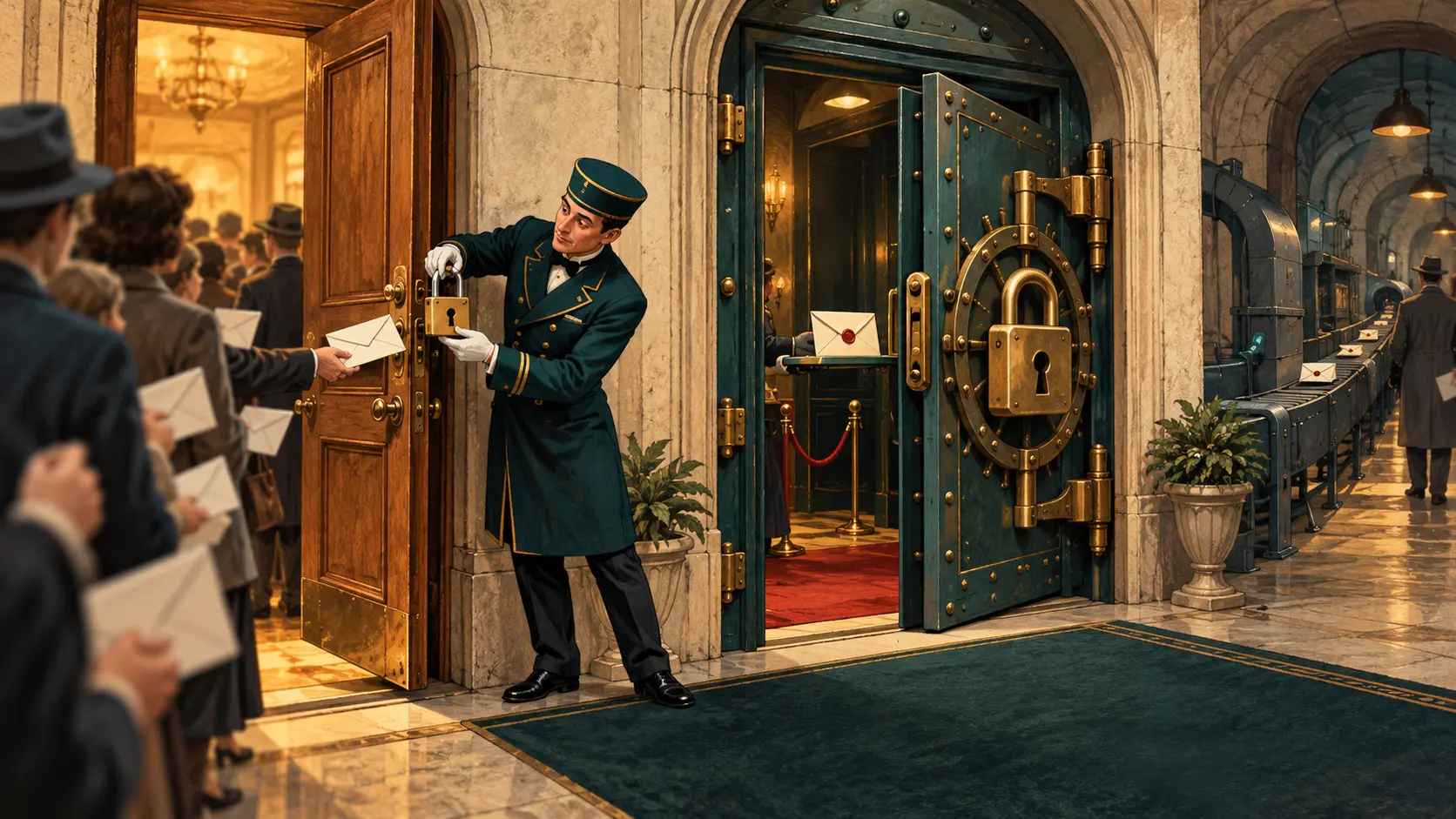
- A family account of his unplugging Norway’s sole external cable during the 1988 Internet worm illustrates a durable trade-off: concentrated connectivity can simplify containment while making an entire country dependent on one control point.
A warning arrived by telephone
The most memorable episode in Pål Spilling’s career is also the one that requires the most careful attribution. In a 2023 Internet Hall of Fame article, his son Pieter recalled colleagues warning that the Internet worm released on 2 November 1988 was moving towards Norway. His father, he said, calmly drove to the office and pulled the plug. At that moment, Pieter explained, Norway had one point of contact with the Internet: a single cable.
That recollection is not an independently corroborated incident log. It does not establish that every Norwegian machine escaped infection, how long the disconnection lasted, or exactly what procedure operators followed. Its value lies elsewhere. It captures, in one physical action, the double nature of an early international link. The cable was an instrument of reach. It was also a national dependency and, in an emergency, an unusually blunt control surface.
RFC 1135 describes the worm’s broader technical setting. It spread among vulnerable VAX and Sun systems running Berkeley Unix, using weaknesses in sendmail and fingerd, trusted-host relationships and guessed passwords. Replication overloaded machines, while response teams exchanged analysis and patches through the same open communications culture that the incident threatened. The episode was not solved by one person or one severed circuit. It became a case for distributed technical response and better institutional coordination.
From an endpoint to an experiment
Spilling’s importance begins well before the worm. On 15 June 1973, a terminal at Kjeller connected to ARPANET, making the Norwegian site the network’s first node outside the United States. FFI’s institutional history places that moment inside a longer collaboration among Norway’s defence research establishment, the NORSAR seismic array, ARPA and researchers on both sides of the Atlantic. Yngvar Lundh was central to creating the opportunity; Spilling helped make the connection operational and extend the work.
The distinction matters. “First online” can sound like the planting of a flag. In practice, the node emerged from shared infrastructure and overlapping purposes. The satellite link served research connected with monitoring nuclear tests. International networking was not a detached consumer service but a capability assembled from defence funding, scientific cooperation, leased capacity, hardware maintenance and the trust needed to let different institutions experiment together.
Spilling had trained as a nuclear physicist. In a 2007 Computer History Museum discussion, he recalled being drawn into packet communications without an established computing career behind him. By early 1975 he was working full time on TCP/IP and the packet-switched satellite network. He described watching an early TCP test between Stanford and University College London fail because implementations calculated checksums differently. The problem was mundane and decisive: a protocol exists operationally only when independently built systems agree on the details.
That experience helps explain his real contribution. Spilling did not invent TCP/IP alone, nor did he write every gateway. He worked inside a community that included Vint Cerf, Bob Kahn, Peter Kirstein, Virginia Strazisar Travers, BBN, SRI, UCL, Linkabit and many others. The celebrated 1977 three-network demonstration was the work of more than 35 people across eight institutions. Its achievement was not a solitary flash of invention but verified interoperability across packet radio, satellite and ARPANET segments.
The power hidden in topology
Norway’s early connection concentrated several kinds of power. Whoever maintained the path could admit a country to a research network, diagnose incompatible implementations and, under pressure, remove reachability. Those powers did not arise from a constitutional mandate. They arose from the physical and operational architecture.
Concentration made the 1988 gesture imaginable. If there truly was one international point of contact, disconnecting it was legible and fast. The same fact meant a fault, funding dispute or operator error at that point could isolate legitimate users as surely as it could interrupt hostile code. Containment and outage were the same operation, distinguished only by purpose and timing.
Spilling’s later work points towards a more durable form of stewardship. Internet Hall of Fame credits him with obtaining support from the Norwegian Telecommunications Administration to connect Norwegian research centres and with using a working TCP/IP demonstration in a contested standards environment. Norid records that the .no domain was delegated in 1987 to Spilling and Jens Thomassen before responsibility moved to UNINETT. Each step converted experimental access into repeatable institutions: routes, names, operators and succession arrangements.
The transition also reduced the plausibility of personal control. A national network with many links, autonomous operators and critical users cannot responsibly depend on one expert driving to one office. Scale demands selective controls, documented authority, shared situational awareness and ways to preserve unaffected traffic. Redundancy removes the simplicity of the single cable, but it also removes the cable’s catastrophic monopoly over availability.
What the cable still teaches
The useful lesson is not that modern networks need a national off switch. It is that emergency powers are always embedded somewhere. They may sit in physical circuits, routing policy, DNS operations, cloud control planes, access credentials or automated security systems. If operators do not identify those control points before a crisis, the first real incident will reveal them under the worst possible conditions.
Spilling’s career joins two stories often told separately: the opening of a network and the control of its boundaries. The first celebrates connection; the second asks what connection permits to travel. Norway’s early topology made the answer stark. Reachability arrived through one path, and the authority to remove it sat close enough to touch.
Sources
- https://archive.computerhistory.org/resources/access/text/2018/01/102738363-05-01-acc.pdf
- https://computerhistory.org/blog/born-in-a-van-happy-40th-birthday-to-the-internet/
- https://computerhistory.org/press-releases/30th-anniversary-internet-milestone/
- https://datatracker.ietf.org/doc/html/rfc943
- https://www.ffi.no/en/news/from-the-us-to-ffi-kjeller-was-first-online
- https://www.ffi.no/om-ffi/75/70-arene
- https://www.ffi.no/publikasjoner/historiehefter/arkiv-historiehefter/ffis-historie-nr3.pdf
- https://www.gao.gov/products/imtec-89-57
- https://www.internethalloffame.org/2023/07/26/pal-spilling-norwegian-internet-pioneer/
- https://www.internethalloffame.org/inductee/pal-spilling/
- https://www.internetsociety.org/blog/2018/01/remembering-pal-spilling/
- https://www.norid.no/en/omnorid/historie/
- https://www.rfc-editor.org/rfc/rfc1135.html
Member Briefing
Deeper Profile Context
Sign in with the right membership level to unlock the full briefing and source notes.
Only for Strategic Circle
Strategic Circle
Open to all readers. Unlock profile briefings after joining and signing in.
Join Strategic CircleOnly for Leadership Alliance
Leadership Alliance
For qualified IP-asset owners and management; sign in to unlock alliance briefings.
Join Leadership Alliance