Summary
- NVIDIA’s Australian announcement combines a build-out of up to 2GW by 2027 with an ambition to accommodate successive generations of its computing infrastructure.
- That puts the cost and control of later fit-outs in focus. Multiple operators and a common platform do not establish cost-free upgrades or interchangeable hardware suppliers.
The building has a longer job
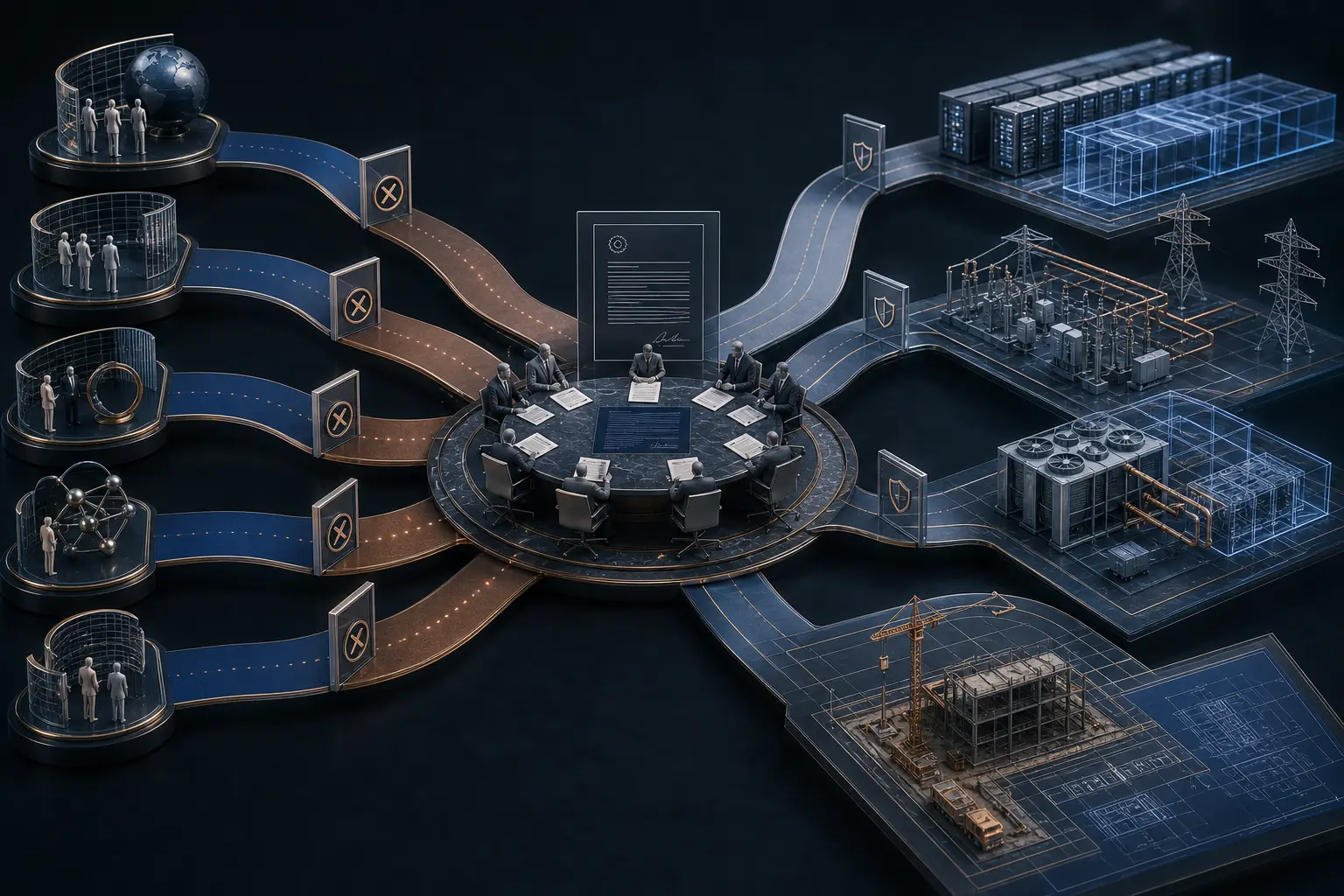
The first equipment order is not the last important decision in an AI factory. A developer choosing electrical distribution, cooling connections and floor space is also deciding how difficult the next installation might be. NVIDIA’s 9 September Australian announcement makes that future use part of the present proposition: land, power and shells are intended to accommodate multiple generations of DSX infrastructure.
The headline is a development objective, not a measurement of computing already in service. Nor is it an order value or a disclosed allocation of capacity to individual partners. Its more interesting commercial implication is that the same physical estate is being presented as useful beyond one equipment cycle. That usefulness needs a price, a practical design and someone responsible for delivering it.
NVIDIA says the participating providers will operate the factories while it supplies the platform, computing, networking, software and ecosystem support. The grouping spans different services. AirTrunk is described in terms of powered shells and liquid-cooling infrastructure; ResetData offers computing through an AI cloud platform. A customer buying space and a customer buying an online service do not necessarily purchase the same protection against an expensive refresh.
A common design is not an unchanged design
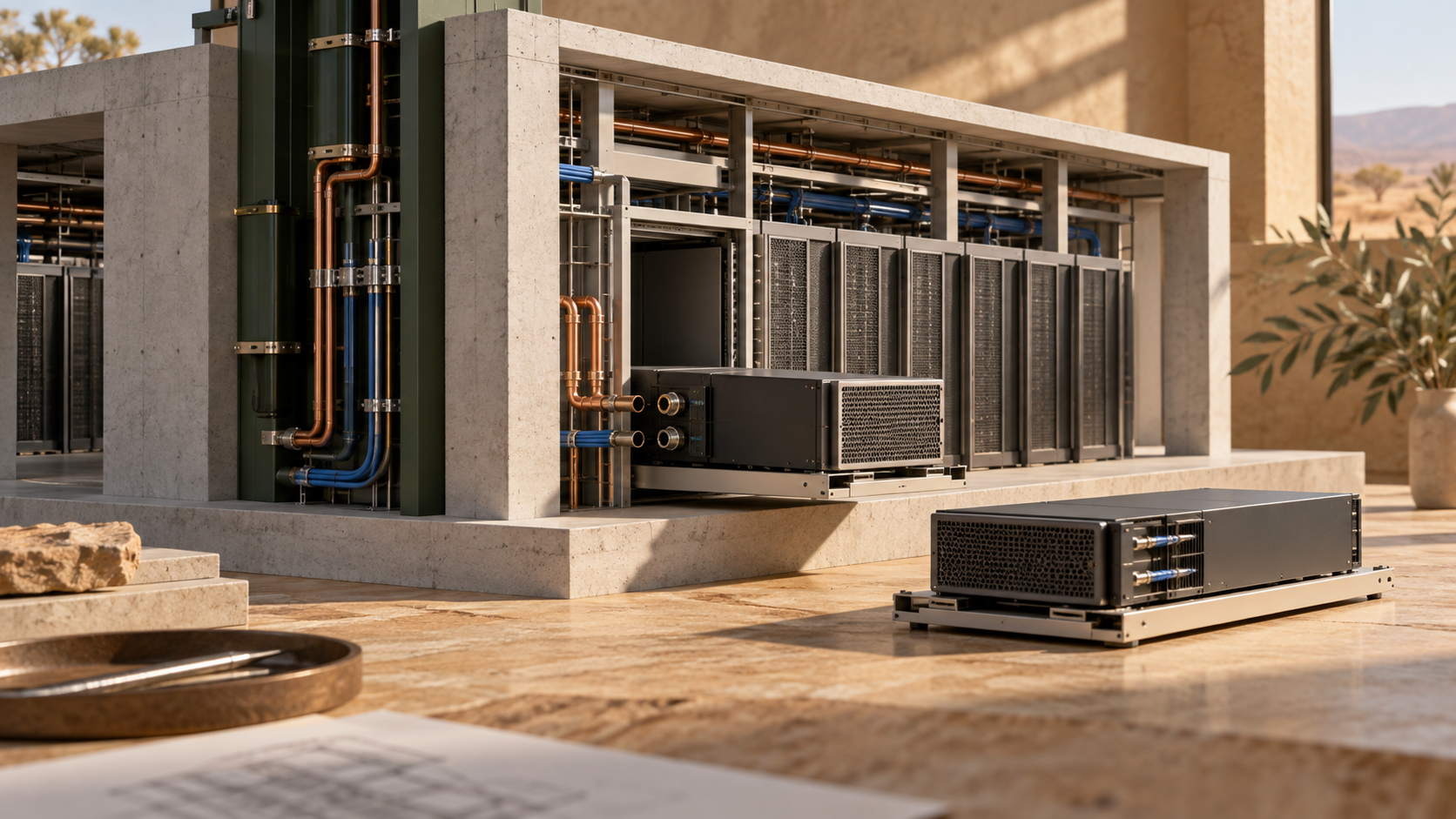
There is a useful qualification in NVIDIA’s DSX platform description: its validated reference architectures are generation-specific. They cover facilities as well as computing, networking, storage and cluster design. This is consistent with planning a building for several generations. It is not evidence that every cable, cooling circuit or rack arrangement remains suitable without alteration.
Consider a hypothetical second fit-out. The shell may remain useful while internal distribution needs work; cooling equipment may be retained while its connections change. Planning spare capacity could reduce that disruption. It also commits money and space before anyone knows whether the allowance will be used. The relevant saving is therefore the cost avoided at a later refresh, after allowing for the initial provision and any interruption—not simply the fact that the walls are still standing.
This is not a September invention of the platform. NVIDIA’s 31 May DSX announcement already described a combined software, reference-design, computing and partner offering. The Australian news extends that proposition across a local infrastructure ecosystem. The economic test is how the shared architecture behaves over time, not how many partners can be placed beneath one name.
Who has the right to refit?
A change can be technically possible and commercially awkward. An operator may need to agree a shutdown with customers, coordinate a landlord’s work or decide whether a new system warrants additional facility spending. These are questions raised by the structure, not terms disclosed for the Australian projects. The announcement does not set out refresh obligations, ownership of individual systems, cost-sharing rules or service interruption allowances.
For a buyer, the useful distinction is between permission to install a later generation and an obligation on another party to make that installation affordable. For an infrastructure owner, a long-lived shell has greater practical value if future equipment can use it without turning each refresh into a bespoke construction project. Neither side can settle that issue with a general claim of compatibility.
There is a second distinction. Several operators using a common platform may offer customers more places to buy service. That is not the same as proving an inexpensive switch to a different accelerator architecture. A common technical foundation can ease repeated deployment and make more businesses dependent on the same design decisions. The Australian programme gives that trade-off a larger physical setting; its announcement does not yet put a price on either side.
Member Briefing
Deeper Profile Context
Sign in with the right membership level to unlock the full briefing and source notes.
Only for Strategic Circle
Strategic Circle
Open to all readers. Unlock profile briefings after joining and signing in.
Join Strategic CircleOnly for Leadership Alliance
Leadership Alliance
For qualified IP-asset owners and management; sign in to unlock alliance briefings.
Join Leadership Alliance