
North America Institutional Trends
North America Institutional Trends
Institutional trend intelligence tracks institutional market trends, regulatory pressure, standards activity, public-sector digital policy, governance reform, and infrastructure funding in North America, giving readers a fuller view of the demand shifts, capacity constraints, platform strategies, capital timing, regulatory pressure, and operating assumptions behind the market.

Latest Coverage
Latest from North America Institutional Trends
361 articles

North America Institutional Trends
The FCC's Real Scarcity Problem Is Commissioners, Not Spectrum
Trump's nomination of Danielle Thumann Severs would hand the FCC a fourth commissioner — and a one-seat cushion above the quorum line that decides whether US spectrum policy moves at all.

North America Institutional Trends
NSF Puts $100m Behind Regional AI Hubs. The Computers Are Your Problem.
Washington will pay for the coordination, the training and the partnerships. The GPUs, the storage and the cloud bills are somebody else's line item — and that gap is exactly where this programme will be judged.

North America Institutional Trends
America’s polysilicon floor is a customs price rule, not an instant factory boom
The United States has moved polysilicon policy from a threat of future action to four explicit price floors and a downstream tariff. From 4 December, covered imports will face minimum values ranging from USD21 per kilogram of polysilicon to USD0.38 per watt of solar modules…

North America Institutional
AS393598 and Affinity Credit Union: A Registry Card Is Not a Heartbeat
AS393598 and Affinity Credit Union: A Registry Card Is Not a Heartbeat intelligence summary explains the development, the public evidence available to readers, the organisations involved, the regional context, market exposure, and the infrastructure consequences that may follow.…

North America Institutional Trends
4,407 Rockwell Controllers Are Answering the Internet. That's a Routing Problem, Not a Victim Count
Forescout's August 3 Shodan query found 4,407 internet-facing Rockwell controllers speaking EtherNet/IP to anyone who asks — 65% of them in the United States, and most of those behind mobile-carrier networks. Reachability is not compromise. The value of the number is that it…

North America Institutional Trends
China’s US countermeasures turn compliance into a chain of bottlenecks
Beijing’s response to new US restrictions is not one embargo. It combines case-by-case drone export review, named-company prohibitions, a change in who may inspect American factories for Chinese certification and an investigation into printing technology. The economic effect will…
North America Institutional Trends
David Ulevitch and the Public-Safety Capital Test
David Ulevitch’s post-Cisco record poses a harder question than whether a software investor can spot promising technology: what must capital become when the buyer is a public institution, the operating environment is an emergency, and legitimacy is part of the product rather than…

North America Institutional Trends
Yechiam Yemini and the Long Argument for Self-Managing Infrastructure
Long before AIOps became a sales category, Yechiam Yemini's Columbia research circle was asking a harder question: could complex infrastructure diagnose faults and allocate resources with less human intervention? The path from that question to SMARTS and VMTurbo/Turbonomic shows…
Global National Telecom Trends
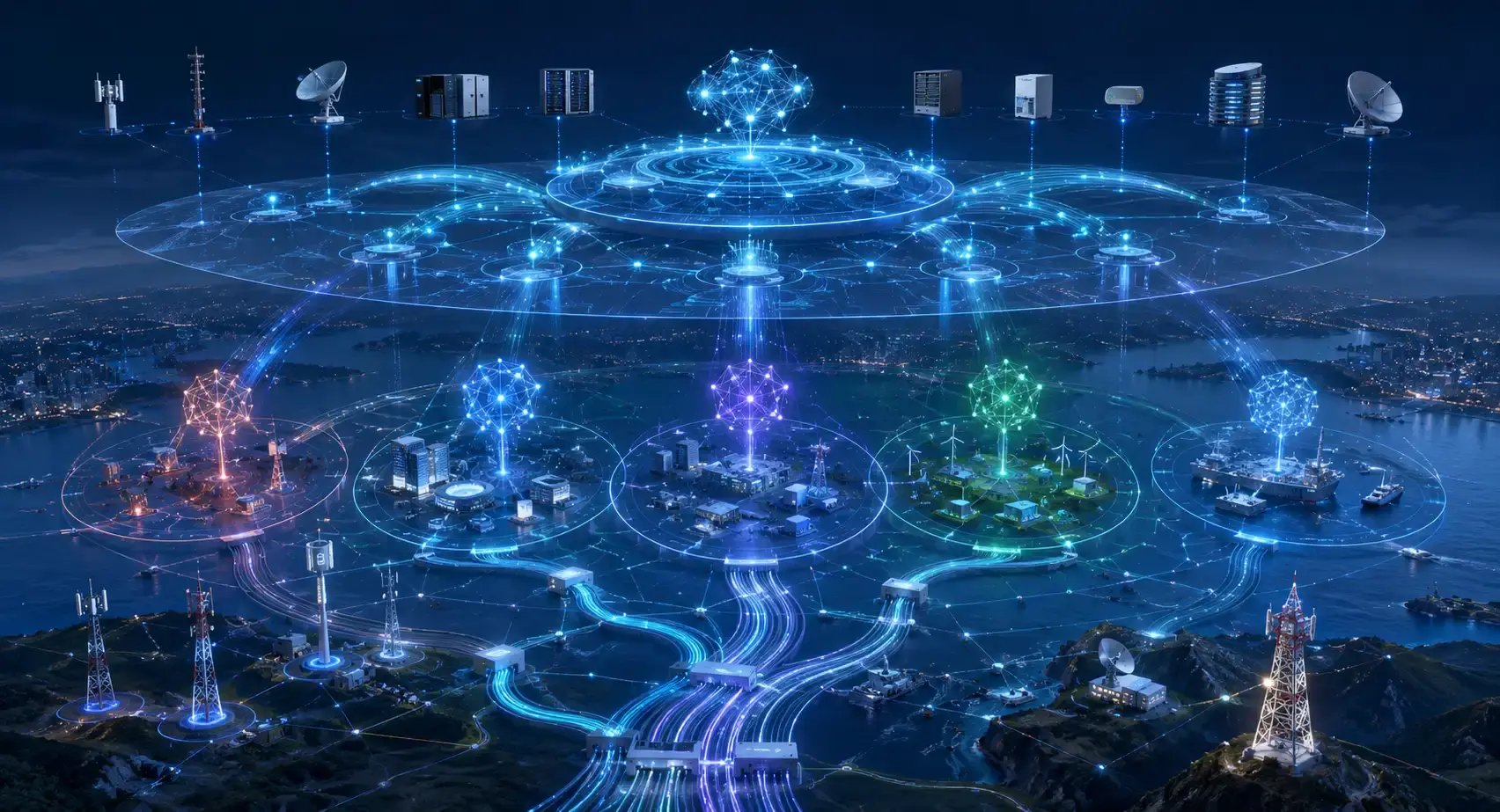
Huawei promotes a layered autonomous network model
Huawei remains a major telecom network vendor whose automation architecture and standards positions can influence operator deployment models.

North America Regional ISP Trends
Ezee Fiber underground fibre work angers Salem residents
Ezee Fiber faces Salem complaints after underground fibre work allegedly damaged driveways and waterlines.

North America Institutional Trends
PennDOT fibre theft disables Parkway East message boards
PennDOT says fibre theft disabled Parkway East message boards and cameras, affecting Pittsburgh traffic alerts during repairs.

North America Institutional Trends
EU squeezes US satellite operators from spectrum
The Commission shapes European telecommunications, satellite communications and digital sovereignty strategy.

North America Institutional Trends
US takes equity stakes in quantum firms with $2bn CHIPS Act awards
The US plans $2bn in quantum funding tied to government equity stakes across nine companies.

North America Institutional Trends
Clarifai deletes OkCupid data after FTC probe
Clarifai has deleted millions of OkCupid images and AI models after US regulator scrutiny over data use.

North America Institutional Trends
SpaceX files for IPO with Mars investment opportunity
Elon Musk’s SpaceX moves toward IPO, opening access to satellite networks and deep-space plans, including lunar and Mars missions.
North America Institutional Trends
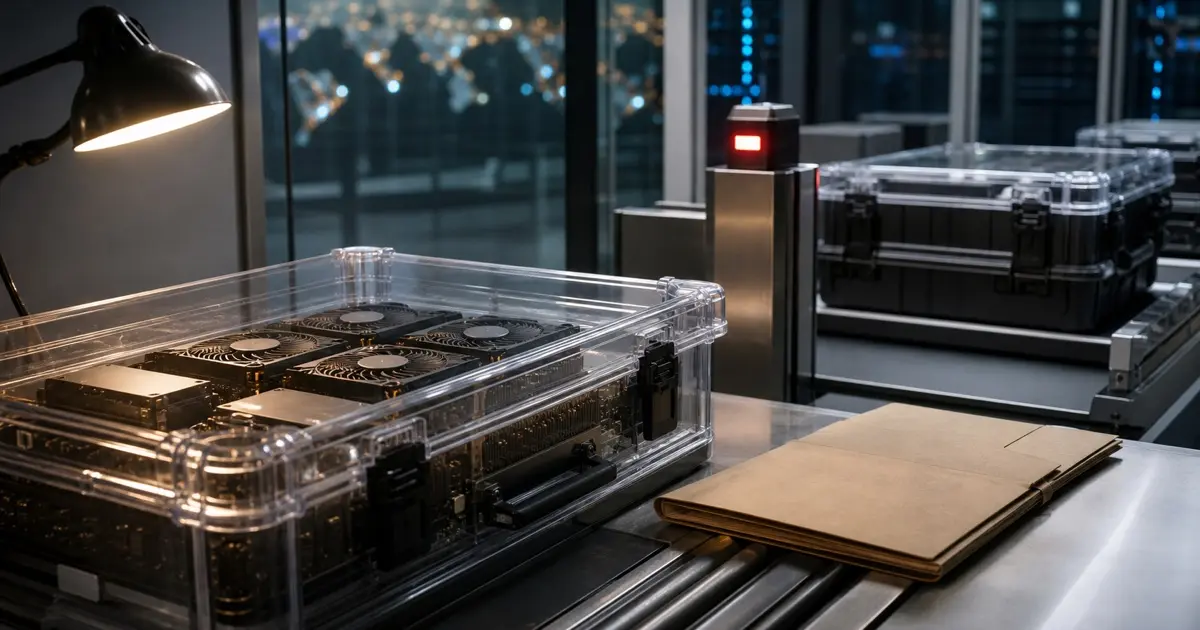
US withdrawal stalls the next AI-chip rule, not existing controls
The Commerce Department pulled an unpublished AI-chip export draft from interagency review on 13 March 2026. The move delayed a replacement framework but did not erase existing licence requirements.

North America Institutional Trends
Atoms turns City Storage Systems into a three-part robotics bet
Travis Kalanick did not launch a blank-sheet robotics startup. Atoms expands and renames City Storage Systems across food, mining and transport, with proof still uneven between the three divisions.

North America Institutional Trends
US regulator convenes robotaxi safety summit with industry chiefs
US auto safety regulator will hold a self-driving safety forum with Waymo, Zoox and Aurora leaders as robotaxi deployment expands.

North America Institutional Trends
Europe and the US redefine a fraught digital partnership
Europe seeks a recalibrated partnership with the US as digital and trade tensions shape telecom policy in early 2026.

North America Institutional Trends
Nokia and Hypertec deploy AI-powered supercomputer in Canada
Nokia and Hypertec deploy the Nibi supercomputer at the University of Waterloo to expand AI and HPC research capacity across disciplines.