
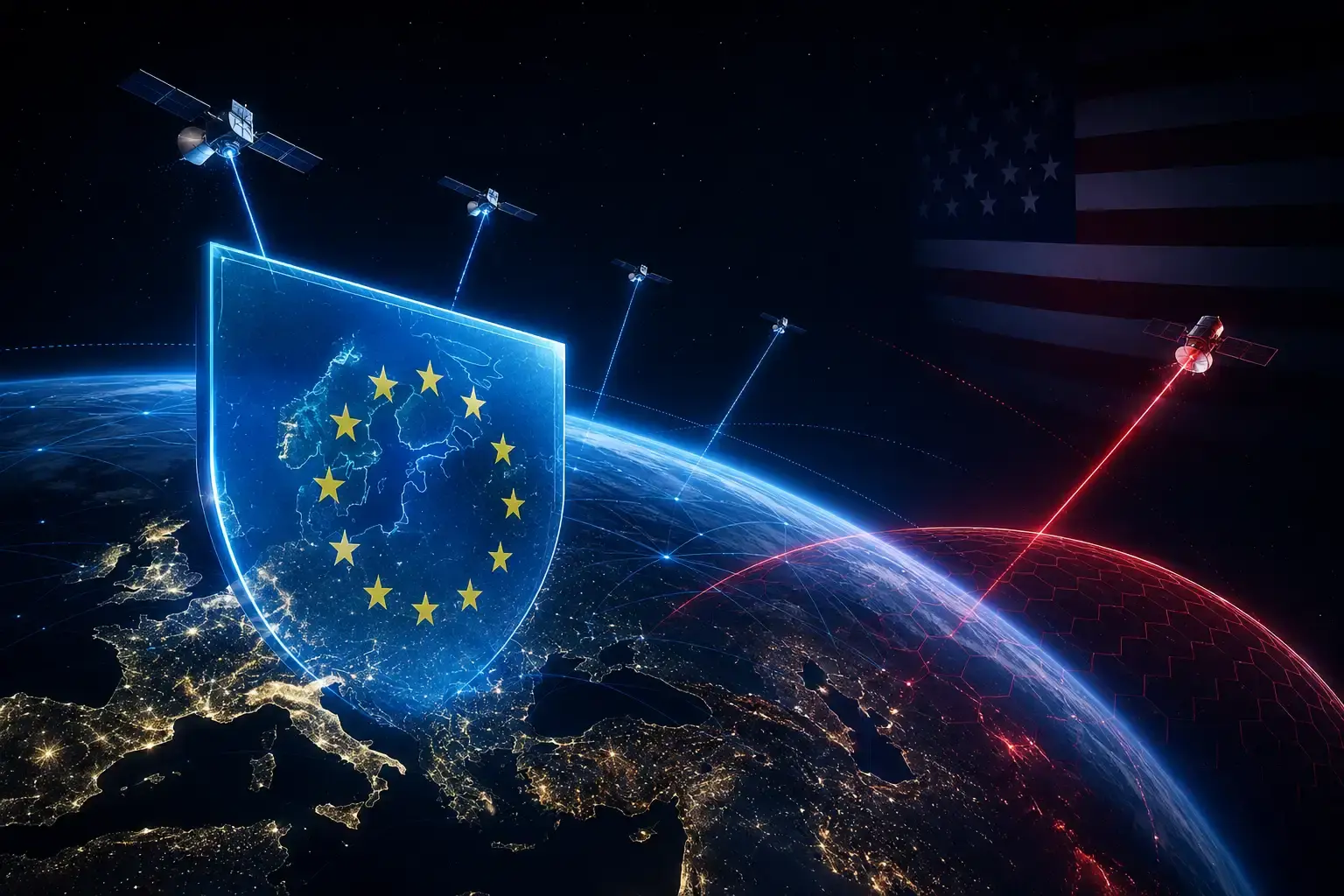
The European Commission has proposed reserving two thirds of a valuable satellite spectrum band for European operators after current licences expire. The measure is designed to support IRIS², strengthen European strategic autonomy and reduce long-term dependence on foreign satellite infrastructure providers.
• Two 10MHz blocks ring-fenced for IRIS² constellation and European start-ups
• Spectrum reservation sets sovereignty template for European satellite policy
The fact
The European Commission has agreed on a proposal that would reserve two thirds of a strategically important satellite spectrum band for European operators when existing mobile satellite licences expire. The spectrum would be divided into three 10MHz blocks over a twenty-year period. One block would support secure government communications, including the EU's IRIS² constellation, another would be reserved for European start-ups, while a third could be awarded to either European or non-European operators.
The Assessment
The proposal shifts spectrum access from a market-driven regime to one built on strategic autonomy. Brussels is treating satellite connectivity as a sovereignty asset, not a telecoms resource. For BTW readers, the signal is clear: spectrum allocation is becoming a geopolitical filter. US operators such as SpaceX and Amazon Kuiper face constrained European expansion, while domestic start-ups gain a ring-fenced corridor. The measure also creates fresh transatlantic tension over spectrum access and technology policy.
What to Watch
Whether EU member states preserve the two-thirds European allocation past 2027, and whether Washington responds with reciprocal spectrum or trade measures.
Signal Brief
- Signal: EU squeezes US satellite operators from spectrum
- Region: Europe & Middle East
- Market Class: North America Institutional Trends
Market Context
- The proposal could alter satellite competition, spectrum access and technology sovereignty policy in Europe.
- Operational relevance: High
- Time Horizon: Next 30 days
Member Briefing
Deeper Trend Context
Sign in with the right membership level to unlock the full briefing and source notes.
Only for Strategic Circle
Strategic Circle
Open to all readers. Unlock trend briefings after joining and signing in.
Join Strategic CircleOnly for Leadership Alliance
Leadership Alliance
For operators, investors, and policy teams that need relationship evidence, failure paths, and source notes. Sign in to unlock.
Join Leadership AllianceSnapshot
Category
North America Institutional TrendsEU executive body responsible for digital, spectrum and connectivity policy
Region
Europe & Middle EastContent Type
EventPrimary Domain
MarketTopic
PolicyImpact
HighThe proposal could alter satellite competition, spectrum access and technology sovereignty policy in Europe.
Confidence
High confidence (91%)Confidence score guide
Several public sources
