
Europe and Middle East Trends
Europe and Middle East Trends
Europe and Middle East market trend intelligence tracks cloud service, regional ISP, national telecom, data centre, and institutional infrastructure signals across European and Middle Eastern internet infrastructure markets. BTW.

Latest Coverage
Latest from Europe and Middle East Trends
1,418 articles

Europe and Middle East National Telecom Trends
4iG plans Starlink Mobile launch in Hungary and Albania
4iG will start with Hungary and Albania, then extend a later 2GHz 5G NTN service to Montenegro and North Macedonia.

Europe and Middle East Regional ISP Trends
Region Svyaz Konsalt: matching registry records still leave the service controller to prove
Region Svyaz Konsalt: matching registry records still leave the service controller to prove intelligence summary explains the development, the public evidence available to readers, the organisations involved, the regional context, market exposure, and the infrastructure…

Europe and Middle East National Telecom Trends
Elliott urges Deutsche Telekom to drop T-Mobile merger
Elliott is pushing Deutsche Telekom to abandon a potential T-Mobile US combination and favour larger share buybacks instead.
Europe and Middle East Institutional
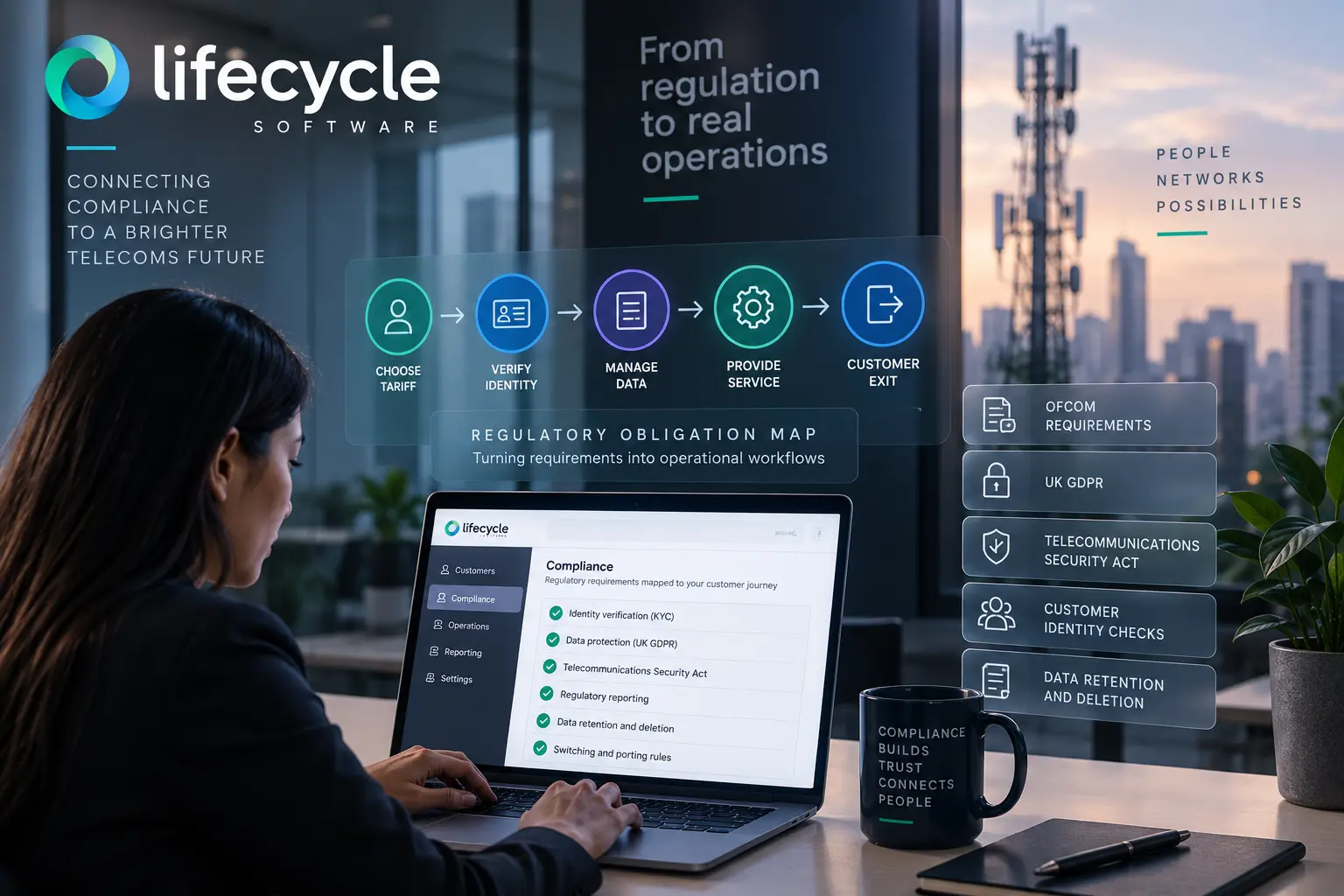
Lifecycle launches telecom compliance service
The service maps regulatory obligations to customer workflows, bringing compliance into the BSS processes used to launch and operate mobile services.

Europe and Middle East Institutional Trends
Charging Robotics’ US$4m Deal Is Subsidiary Capital, Not Parent Cash
The signed package would send US$2.5 million of equity and a US$1.5 million loan into Charging Robotics Ltd. It would not put US$4 million into the listed parent’s bank account. If closing occurs, Clearmind Medicine takes 51% of the subsidiary, the parent keeps 49%, and an…

Europe and Middle East National Telecom Trends
AST’s US$23.5m SatCo Contribution Now Sits in Three Ledgers
A European satellite distribution venture can look straightforward in a partnership announcement: a company contributes rights, receives a stake, and gains a route to mobile-network operators. AST SpaceMobile’s latest filing makes the arrangement more useful—and more…

Europe and Middle East Regional ISP Trends
RCNTEC’s smart PDU moves outage recovery into the rack—but not beyond its control boundary
When a remote rack loses its preferred power input, the decisive question is not whether a device carries a “resilient” label. It is which recovery actions remain executable, observable and safe without an engineer on site. RCNTEC’s RPCM places several of those actions at the…

Europe and Middle East Regional ISP Trends
Ray-Svyaz's 500 Mbit/s promotion leaves the post-promotion price unverified
MyCentra’s Sheregesh offer puts a 500 Mbit/s headline beside a 50% discount. The same official page says the discount lasts three months and then gives way to the main tariff agreed at connection. That makes the post-promotion price—not the launch price—the first economic fact a…

Europe and Middle East Regional ISP Trends
RSI-NET's maintenance notice reveals a continuity evidence gap
A dated RSI-NET notice tied possible service interruption in two named areas to power work at Moscow's MMTS-9. The notice is unusually useful because it exposes a concrete dependency and a bounded window. It still does not show the complete delivery path, the fallback design or…

Europe and Middle East Regional ISP Trends
RIPE membership does not explain RALF RINGER's retail continuity
RALF RINGER MANAGEMENT LLC appears in the RIPE NCC member directory, while the RALF RINGER brand describes factories, stores, ecommerce and an automated logistics complex. Those facts reveal organisational scale, but they do not show which network resources support which business…

Europe and Middle East Regional ISP Trends
R-TEL's 99.7% availability claim needs a measurement boundary
R-TEL publishes a precise network-availability figure alongside a broad business-service catalogue. The number is useful as a promise, but not yet as evidence: the public page does not define what was measured, over which period, with which exclusions or who owns restoration…

Europe and Middle East Regional ISP Trends
QuickSoft: peering breadth is not the same as service accountability
QuickSoft LLC presents a compact but geographically varied public network footprint. Six operator-maintained exchange records and six prefixes visible to RIPEstat are useful evidence of reachability options. They are not, by themselves, evidence of how a customer service is…

Europe and Middle East Institutional Trends
Qatar Central Bank: payment scale deserves a recovery evidence ledger
Qatar Central Bank publishes enough transaction data to show that national payment rails matter every day. The next useful disclosure is not another general assurance of resilience, but a bounded record of how each rail is tested, interrupted and restored.

Europe and Middle East Institutional Trends
WTC Moscow: convenience can hide a shared digital failure domain
A multifunctional business complex is designed to make many services feel like one. That convenience has value. It can also blur who controls connectivity, power, recovery and customer remedies when a tenant’s digital work stops.

Europe and Middle East Regional ISP Trends
RUTELEKOM: eighteen routes are not eighteen independent networks
RUTELEKOM: eighteen routes are not eighteen independent networks intelligence summary explains the development, the public evidence available to readers, the organisations involved, the regional context, market exposure, and the infrastructure consequences that may follow. The…

Europe and Middle East Institutional Trends
Center-invest: a routing object is not a resilience audit
A single public routing record can contain a strikingly complete resilience story: three upstreams, RPKI controls and regulatory framing. Center-invest Bank's record is useful precisely because it shows where a due-diligence checklist begins—and where proof still has to come from…

Europe and Middle East Regional ISP Trends
PS Processing: an unobserved registered block is not spare capacity
An address range can sit in a registry without appearing in the same public routing view as its neighbours. PS Processing’s records show why the gap belongs in a reconciliation ledger, not in a capacity forecast.

Europe and Middle East Regional ISP Trends
Protelecom: two ASNs do not prove two failure domains
Two autonomous systems can make a network look diversified before anyone has shown that the underlying infrastructure is independent. Protelecom’s public records offer a compact example of why buyers should separate routing identities from tested resilience.

Europe and Middle East National Telecom Trends
A priority telecom restoration register is not a local continuity plan until eligibility, escalation and service recovery are verified
The outage call begins with confidence. Someone opens the “priority sites” spreadsheet. The rows name a civic coordination room, two health facilities and a transport control point. Then the useful questions begin. Which access service serves each building? Has the provider…

Europe and Middle East Regional ISP Trends
Pronet: why a 14-day route window beats a static footprint
Pronet: why a 14-day route window beats a static footprint intelligence summary explains the development, the public evidence available to readers, the organisations involved, the regional context, market exposure, and the infrastructure consequences that may follow. The Europe…