
Academics
Academics
Academics people intelligence profiles the leaders, operators, researchers, creators, investors, and policy actors shaping internet infrastructure strategy. The category connects interviews, public profiles, company links, role changes, governance exposure, affiliation context, and related articles so readers can follow decision-makers by operating role rather than by isolated article chronology.

Latest Coverage
Latest from Academics
75 articles

Academics
Mark Nottingham and the Working-Group Boundary Behind HTTP/3
The 2018 proposal did more than replace “HTTP-over-QUIC.” Mark Nottingham tied a clearer name to a quieter governance change: finish the transport group’s HTTP mapping, then let the group responsible for HTTP maintain it.

Academics
Toerless Eckert’s AI4AN draft moves the trust question into the router
AI4AN offers a different place to put an AI system in network operations: let a model help write and test automation software, then let that software run on network devices. In Toerless Eckert and Alexander Clemm’s current IETF draft, the difficult question is no longer only…

Academics
Kurtis Heimerl’s Community Cellular Model Drew a Line Between Local Service and Carrier Control
Community cellular networks promise something larger than a cheaper signal: a place can shape how communications work where a national carrier sees too little commercial return. Kurtis Heimerl’s deployments show the opportunity—and the boundary. Local operators can tailor…

Academics
David J. Farber’s Interesting People List Made Debate Visible, Not Representative
A 1993 note from the mailing list’s moderator records both an open invitation and a retained editorial gate. The archive makes selected arguments inspectable; it does not measure what Internet users thought.
Academics
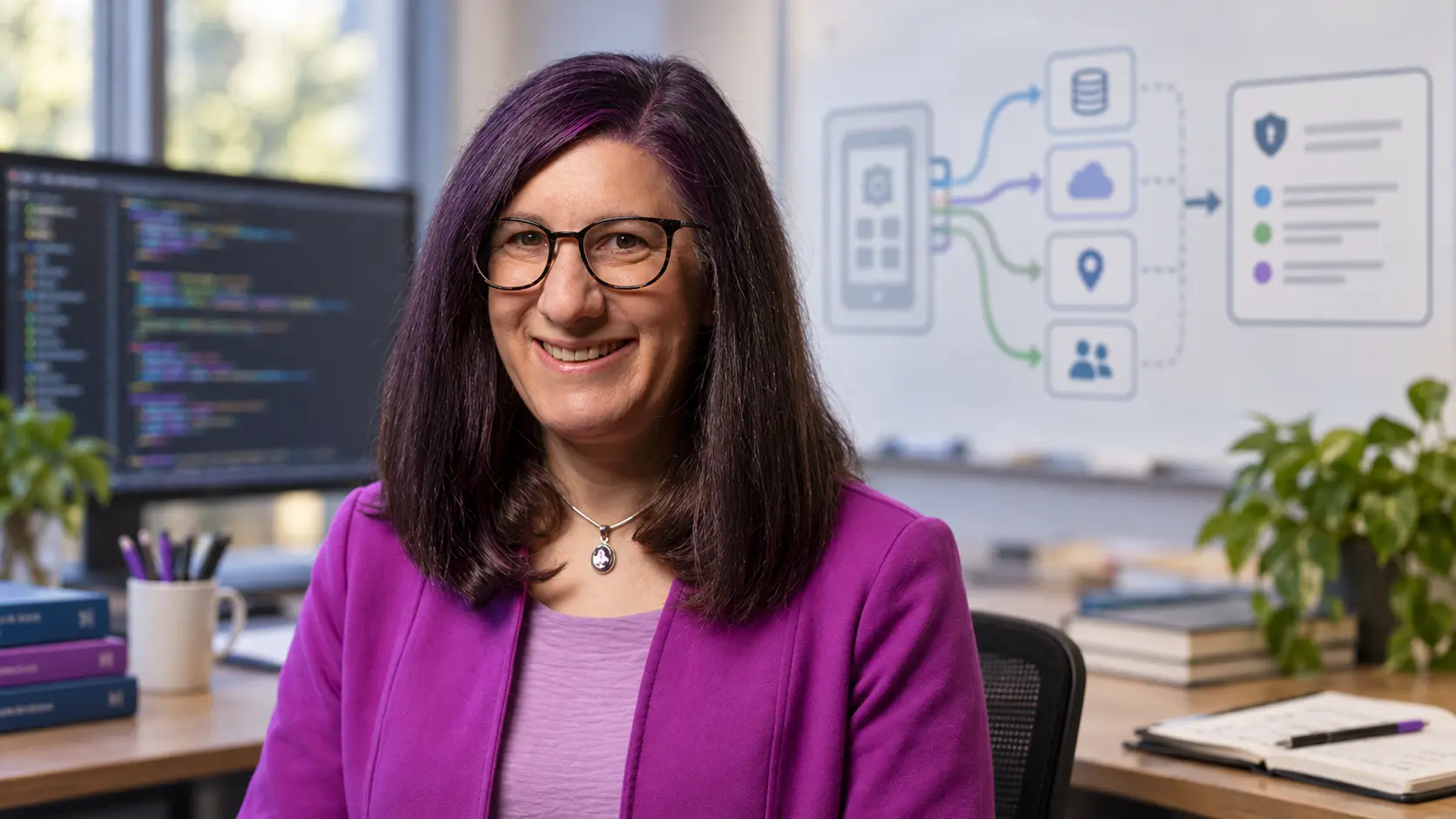
Lorrie Cranor’s Privacy Labels Need a Trail From Code to Store
The work around Google Play’s Data safety section points to a practical question: can a developer trace each store declaration back to code and SDK behavior? Lorrie Cranor’s research on usable privacy puts that translation problem inside the software workflow.

Academics
Elinor Ostrom and the Difference Between a Principle and a Prescription
In her Nobel interview, Elinor Ostrom paused over a question that had already turned her research into advice: did her work show how common resources *should* be governed? “I was not doing the ‘should’,” she replied. The qualification is more than a scholar’s modesty. It marks…

Academics
Robin Milner and the theorem that search could not mint
A proof tactic may explore thousands of branches and announce success. In the LCF architecture, that announcement is not the acceptance event. The decisive entity is a theorem value that can be created only through a protected set of axioms and inference-rule functions. Robin…

Academics
Nancy Leveson and the Accident With No Broken Part
A system can do exactly what its components were built to do and still put people in danger. Nancy Leveson's work asks who was meant to keep that system within safe bounds, what they knew when they acted, and which feedback failed to correct a mistaken picture of the world.

Academics
Colin Perkins: How Real-Time Media Learned to Share the Internet
Colin Perkins did not invent RTP, WebRTC or Internet congestion control. His more defensible contribution is also more revealing: over three decades, he helped develop the repair, feedback, signalling, safety and governance mechanisms that allow voice and video to remain useful…

Academics
Laurent Vanbever and the network that must be tested while it changes
Laurent Vanbever’s work treats network configuration as executable software whose failures can emerge before, during or after deployment. From safe routing migrations and configuration synthesis to runtime BGP detection and energy-aware operations, his research at ETH Zurich asks…
Academics
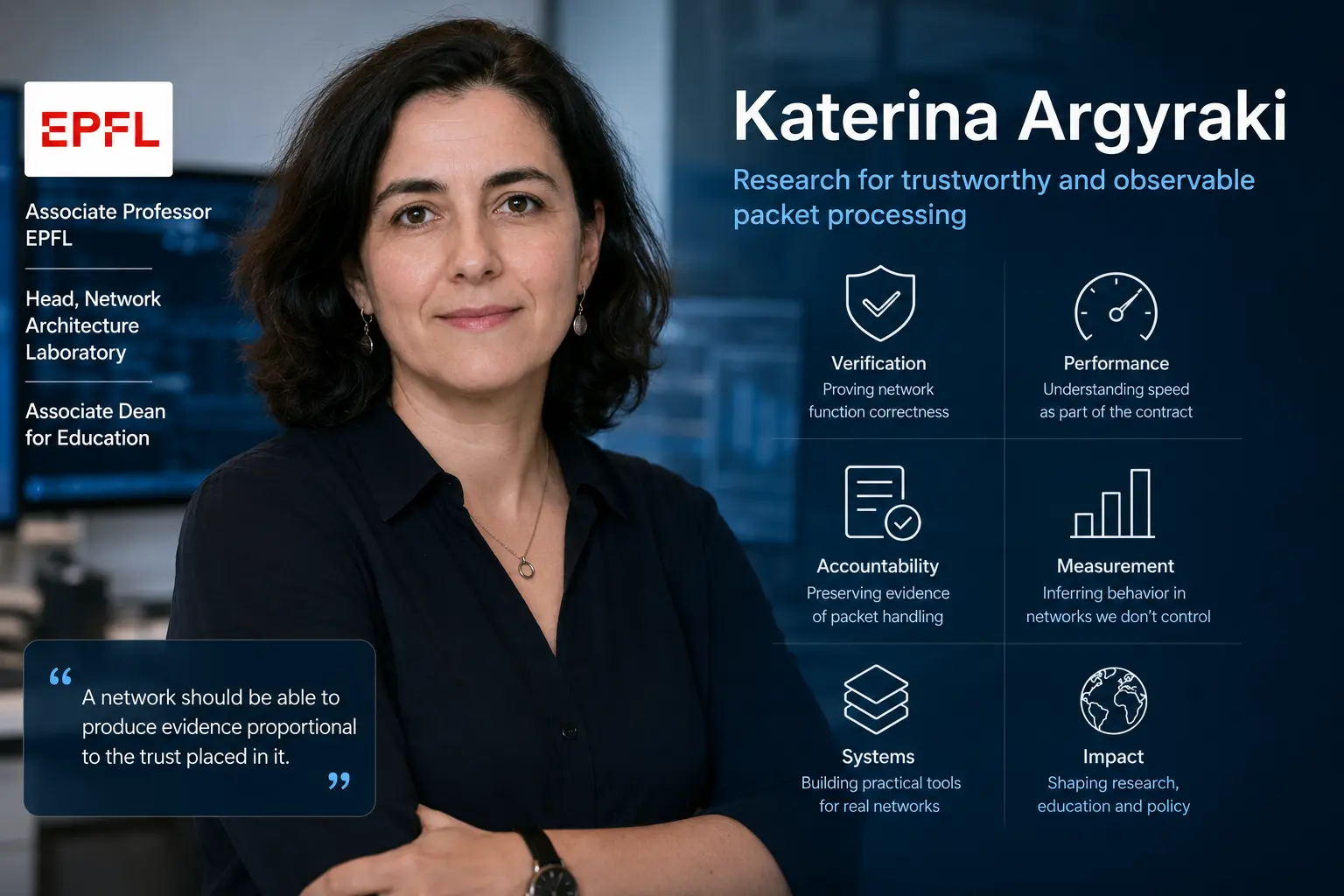
Katerina Argyraki and the search for proof in packet forwarding
Katerina Argyraki’s research follows a problem that becomes harder as networks become more programmable: a packet-processing system may be fast and flexible, yet operators and users often have little evidence that it behaved correctly. Her work at EPFL connects software-router…

Academics
Kathleen Nichols and the queue delay a fast link cannot hide
Kathleen Nichols’ best-known work changed the variable used to judge a network queue: time, rather than packet count. CoDel made persistent waiting measurable, while leaving deployment dependent on bottleneck placement, responsive senders and maintained implementations.

Academics
Sally Floyd made congestion control accountable to evidence
Sally Floyd linked router queues, transport feedback, traffic models and standards into a discipline of shared-network responsibility. Her legacy lies less in one celebrated algorithm than in a method for testing throughput, delay, fairness, stability and deployment assumptions…

Academics
Every network metric needs a failure model
Nick Feamster’s work made configuration, broadband and censorship measurable. A metric becomes operational evidence only when it states how it can be wrong.
Academics
Network tools need reproducible limits
A useful checker can reveal hidden configuration faults. Its result remains trustworthy only when others can reproduce its scope and misses.
Academics
Network observation is not causation
Nick Feamster’s tools made hidden faults visible across routing, spam, broadband and censorship. Measurement still needs a causal boundary.

Academics
Nick Feamster: making networks explain themselves, and exposing the limits of measurement
In 2005, a checker he co-developed reported over 1,000 previously undetected faults in 17 autonomous systems. Since then, his effort to make hidden infrastructure explainable has extended to spam, broadband, censorship, smart homes, and machine learning, repeatedly showing that…

Academics
Nick Feamster Created Tools to Explain Networks — and Exposed Their Limits
In 2005, a co-authored verifier reported over 1,000 previously undetected faults in 17 autonomous systems. The same effort to make hidden infrastructure legible later extended to spam, broadband, censorship, connected homes, and machine learning — and repeatedly showed that an…

Academics
Nick Feamster built tools to explain networks and showed their limits
In 2005, a checking tool he co‑authored reported over 1,000 previously undetected faults from the configurations of 17 autonomous systems. The same effort to make invisible infrastructure legible later extended to spam, broadband, censorship, smart homes, and machine learning…
Academics
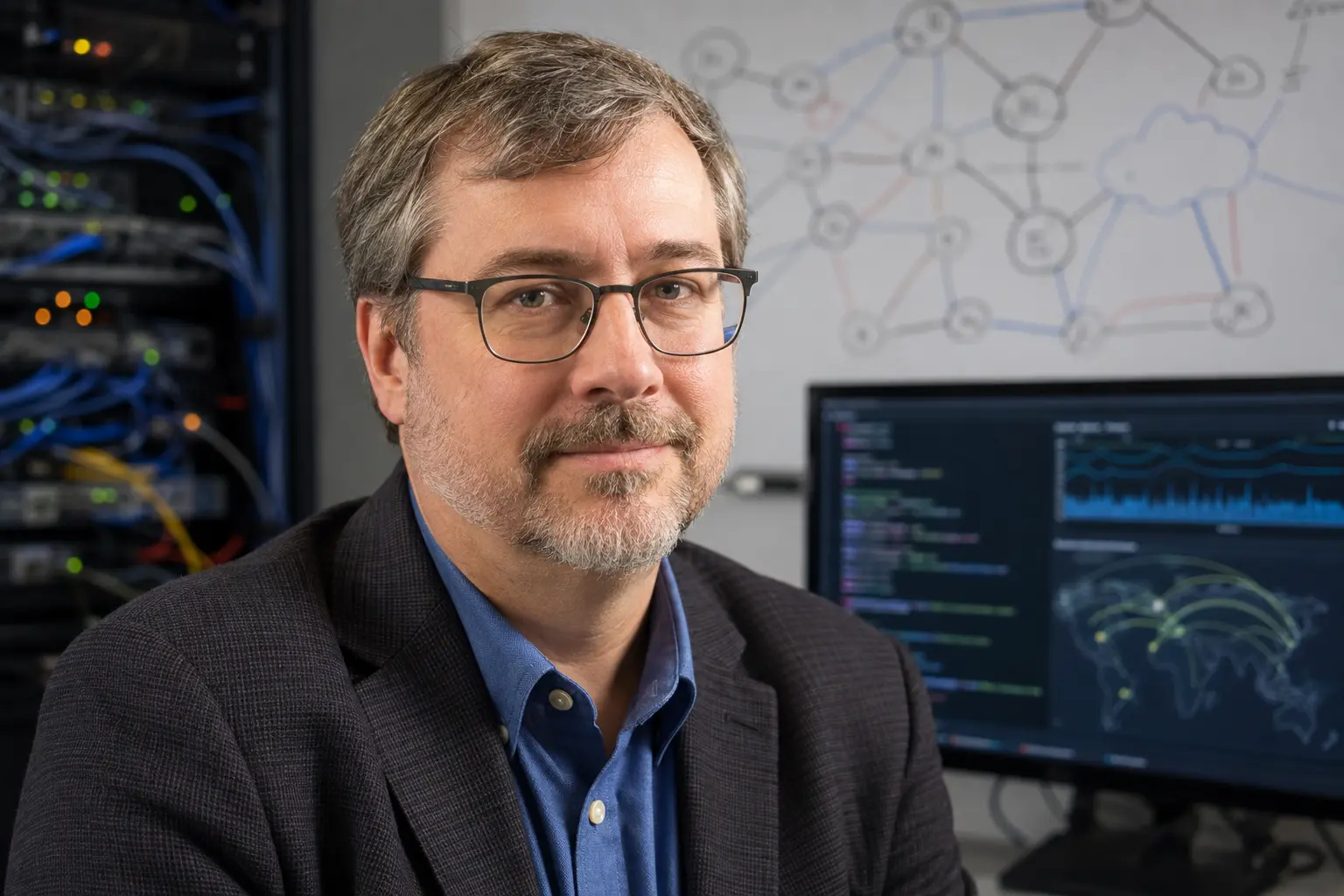
Nick Feamster designed tools to explain networks – and revealed their limits
In 2005, a tool he co-wrote flagged over 1,000 previously undetected faults in the configurations of 17 autonomous systems. The same drive to make hidden infrastructure legible was later applied to spam, broadband, censorship, connected homes and machine learning – while showing…