
Europe and Middle East Companies
Europe and Middle East Companies
Europe and Middle East company intelligence maps internet infrastructure operators, cloud service providers, telecom networks, data centre companies, registries, alliances, standards bodies, and institutional market actors across European and Middle Eastern internet infrastructure markets.

Latest Coverage
Latest from Europe and Middle East Companies
1,330 articles

Europe and Middle East Institutional
SIDN Labs and the research platform behind a national domain registry
SIDN Labs occupies an unusual position between academic inquiry and the live operation of the Netherlands’ `.nl` domain ecosystem. Its importance comes from converting registry, DNS, routing and time-service visibility into measurements, prototypes and standards work, while its…

Europe and Middle East Regional ISP
IIJ Europe's European Network Handoff Is Visible, but Its Physical Boundaries Are Not
IIJ Europe helps businesses connect their internal networks to Internet backbone services across Europe. Its public pages say it helps customers choose, implement and operate network services, while a 2018 IIJ Group announcement described dedicated connections from London…
Europe and Middle East National Telecom
Belgacom's 2013 Intrusion Made Roaming-Router Access an Operator Accountability Test
The lasting issue in the Belgacom case is whether an international carrier could substantiate its assurances with preserved evidence about privileged access, running router state, customer-traffic effects and operational continuity.

Europe and Middle East Institutional
dot Webcam Limited and the .webcam Control Plane: Delegation, RDAP, DNSSEC, and Registry Continuity Costs
dot Webcam Limited is the accountable registry operator for .webcam, while the namespace visible to users depends on delegation records, DNS and DNSSEC, WHOIS and RDAP, registrar interfaces, escrow, reporting, provider boundaries, and recoverable operating responsibility…

Europe and Middle East National Telecom
LINX's 2023 LON2 Incidents Made Lab-to-Production Network State an Accountability Test
When a router moves from a laboratory into a live Internet exchange, a clean configuration file is not enough. LINX's public account of its 2023 LON2 incidents shows why operators must verify the identity and forwarding state that the device is actually running, especially when a…

Europe and Middle East Institutional
Philips' Dual Brand-TLD Control Surface: DNS Delegation, Connected-Care Security, and Continuity Costs
**By Theo March, Technology and AI Correspondent**
Europe and Middle East National Telecom
Virgin Media's 2023 AS5089 Outage Made Route Withdrawal and Edge Isolation an Accountability Test
Virgin Media's 2023 AS5089 Outage Made Route Withdrawal and Edge Isolation an Accountability Test intelligence summary explains the development, the public evidence available to readers, the organisations involved, the regional context, market exposure, and the infrastructure…

Europe and Middle East National Telecom
Telia Carrier's 2016 Routing-Policy Error Made Tier-1 Transit Failover an Accountability Test
A routine routing-policy update inside a major transit network blackholed traffic for contained prefixes. The incident showed that backbone accountability depends on what packets can reach, how quickly customers can withdraw a failing path, and whether an operator can prove that…
Europe and Middle East National Telecom
AMS-IX's 2023 LACP Leak Made Peering-Fabric Isolation an Accountability Test
A link-local control frame escaped one customer boundary, disturbed other customers' aggregated links, and exposed how provisioning intent, switch behavior, control-plane coupling, and alternate paths divide responsibility at a major Internet exchange.

Europe and Middle East Institutional
dotKoeln GmbH's .KOELN and .COLOGNE Registry Control Surface: DNS Delegation, Continuity, and Failure Costs
dotKoeln GmbH operates two city-linked generic top-level domains whose public records reveal how a registry actually works: `.koeln` and `.cologne`. The names may look like digital branding products, but their operating surface is a chain of delegated authority, DNS publication…
Europe and Middle East Institutional
DENIC's 2026 .de DNSSEC Failure Made Signing-System Parity an Accountability Test
A routine .de ZSK rollover showed that geographic and hardware redundancy cannot preserve DNS availability when systems distributing a shared zone do not share the same valid cryptographic state.

Europe and Middle East Regional ISP
Irtelcom must turn local repair speed into contribution, not an open-ended service obligation
A fault ticket only becomes profitable when the connection that created it carries enough monthly revenue to pay for transit, field labour, spares, payment friction and the next round of network renewal; Limited Liability Company Irtelcom has local brand evidence, routing assets…

Europe and Middle East Regional ISP
Kursktelecom must make dense local take-up pay for a network that cannot stop ageing
Limited liability company Kursktelecom sits in the hard middle of regional broadband economics: it has enough plant, licences, public address space and local recognition to matter in Kursk, but its real question is whether each access segment can keep enough paying homes, offices…

Europe and Middle East Regional ISP
Infolink Must Make Resilience Revenue Exceed the Cost of Keeping a Ukrainian Network Available
A protected Odesa connection is not simply a fast broadband line; it is a claim that a customer who powers the terminal and router can still reach a working optical network, live upstream routes, reachable support and repaired field plant when electricity, labor access and…

Europe and Middle East Regional ISP
MVM Technology must prove local service margin can survive the pass-through stack
MVM Technology, the company behind Tushino Telecom, is not a software-scale story hidden inside a small Moscow broadband operator; its economics look like a neighborhood access network where recurring value depends on retaining buildings, keeping support utilization high…

Europe and Middle East Regional ISP
TeleTower must keep occupied infrastructure ahead of fixed site and replacement costs
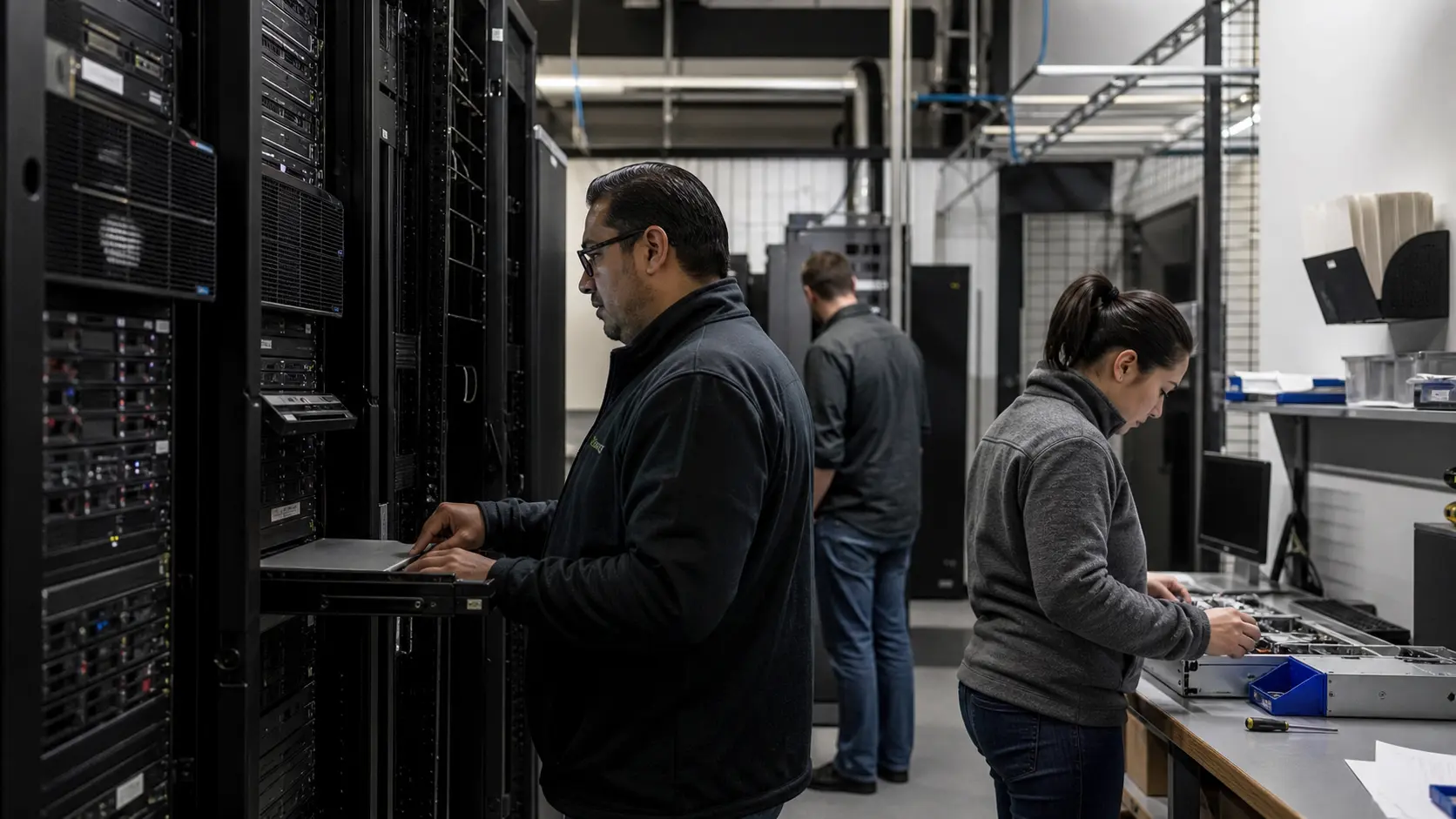
One Moscow data-center rack is enough to expose the economics of Limited Liability Company "TeleTower": the revenue line can look resilient when colocation, cloud, software rental and connectivity are bundled, but the judgment turns on whether recurring customer demand stays…
Europe and Middle East Regional ISP
RTS-tender's Margin Test: Can Platform Fees Outrun Regulated Workflow Cost?
A completed procurement on RTS-tender is not just a buyer choosing a supplier; it is a regulated message chain, a payment event, a support obligation, a security promise and a customer-acquisition test that only becomes attractive if the platform earns more from transaction fees…
Europe and Middle East Regional ISP
RELCOM-SPB must turn network position into cash after upstream and equipment costs
RELCOM-SPB is not a story about a new challenger buying scale; it is a test of whether an old Saint Petersburg network position, a live LIR function, scarce IPv4 inventory and a small set of colocation, access and telephone services can still produce retained cash after upstream…
Europe and Middle East Regional ISP
VolgoGazTelecom must make local reliability pay beyond an industrial anchor
VolgoGazTelecom looks less like a scale broadband story than a test of whether a small Samara operator can turn old fixed-line rights, scarce local field knowledge and a modest IP network into enough recurring contribution to cover wholesale capacity, truck rolls and renewal…
Europe and Middle East Regional ISP
Linet must make local service revenue outrun wartime network replacement
Linet, LTD is visible in the public internet evidence as a small Zaporizhzhia fixed-access operator with real address space, real BGP history and a long local record, but the investable question is whether cheap monthly service revenue can keep covering transit, support labour…