
Summary
- SAMA matters to a Saudi bank, merchant acquirer, payment company or government biller because the paid unit is not a normal vendor relationship. It is the domestic payment, supervision and monetary-infrastructure continuity account that lets retail payments, instant transfers, bill payments, settlement, liquidity operations and regulated confidence keep working during stress.
- The visible record is unusually concrete. SAMA owns national rails such as mada, SADAD, sarie and Esal; supervises banks and payment providers; issues payment regulations; runs monetary and reserve functions; and publishes official payment and banking indicators that show how deeply the Saudi economy now relies on electronic payment continuity.
- The price is not only a tariff or license fee. It is the cost of 24/7 operations, cyber resilience, business-continuity governance, compliance staffing, bank integration, merchant and biller dependence, telecom and vendor redundancy, data-locality discipline, liquidity management and public communication when private facts are incomplete.
- Substitutes exist, but each is partial. Cash fallback, bilateral bank workarounds, international-card dependency, delayed merchant settlement and liquidity buffers can reduce damage in a specific disruption. None replaces the combined authority of SAMA's mandate, domestic rail ownership, bank supervision, settlement discipline and public confidence role.
- The judgement would change if private incident records showed repeated national-rail downtime, weak fraud response, poor bank or merchant fallback playbooks, concentrated telecom or vendor failure points, unresolved data-locality exposure, liquidity stress hidden by aggregate ratios, or credible non-SAMA routes that could clear domestic obligations without raising cost, legal risk or public uncertainty.
The stress moment is a domestic confidence account
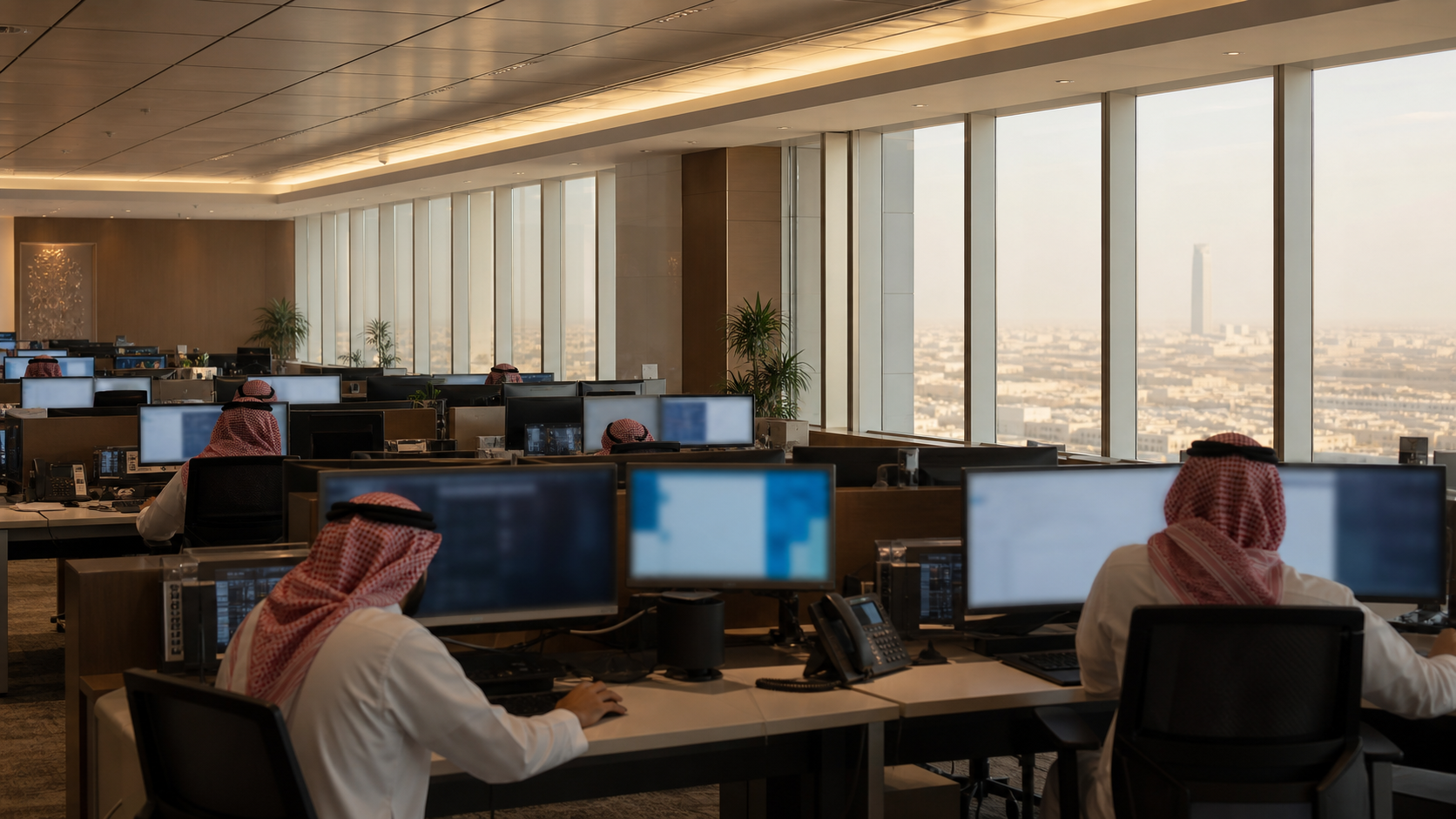
Imagine a Thursday night operations bridge at a Saudi bank. The weekend is close, fraud monitoring is noisy, card spending is still running, a ministry-related biller expects files to reconcile, merchants want settlement certainty, customers are moving money through instant transfers, and treasury staff are checking liquidity before markets reopen. No one in the room describes this as a product demo. The question is simpler and more expensive: if one domestic payment chain starts to fail, how much confidence can the Saudi system preserve before households, merchants and banks begin to doubt the rails underneath daily commerce?
That is the unit SAMA prices. The paid unit is the Saudi payment, supervision and monetary-infrastructure continuity account: confidence that a card purchase, mada e-commerce transaction, sarie transfer, SADAD bill payment, Esal invoice flow, bank liquidity movement and central-bank oversight channel can continue to operate through stress. It is not a single screen, single account number or single connection interface. It is the bundle of authority, rules, infrastructure, bank dependence, merchant habit, liquidity discipline, incident response and public legitimacy that gives a Saudi payment its ordinary meaning.
The substitutes must be named at the beginning because they set the price. Cash fallback can keep some retail spending alive, but it cannot settle a national e-commerce economy, reconcile a government biller or move high-value interbank liquidity at scale. A bilateral bank workaround can solve a specific corporate or interbank obligation, but it cannot absorb mass point-of-sale, instant-payment and bill-payment traffic without creating new credit and operational exposures.
International-card dependency can route some commerce through global schemes, but it shifts economics, data, foreign-network reliance and merchant fees away from the domestic account. Delayed merchant settlement can buy time, but it pushes working-capital pressure to merchants, acquirers and banks. Liquidity buffers help treasury desks survive a delay, but idle liquidity is expensive and does not restore customer trust at the checkout or in a bank app.
This is why SAMA should not be read only as a central-bank nameplate. It is the authority behind a domestic confidence account that many private actors use at once. Saudi banks need it because their deposits, credit, instant transfers, card issuing and settlement positions depend on a trusted national layer. Merchants need it because card acceptance and settlement are only valuable if the money arrives predictably. Payment companies need it because licensing and access to domestic payment systems are part of their market permission.
Government and large billers need it because electronic bill presentation, payment and reconciliation reduce friction only when the national rail stays available. Households need it because digital payment convenience becomes a public expectation once cash is no longer the default method for many everyday transactions.
The stress moment therefore prices more than uptime. Uptime is necessary, but the real asset is confidence under uncertainty. A public notice can calm a market only if the private operating reality is strong. A business-continuity manual can satisfy a control requirement only if staff have rehearsed the failure. A liquidity buffer can prevent a missed payment only if the settlement rail and account structure still permit controlled movement. A domestic payment rail can be cheap at the transaction level and still be expensive at the system level, because the scarce input is not message transport. It is trusted coordination.
The public record that supports this judgement is broad enough to matter but still bounded. SAMA's institutional surface begins at https://www.sama.gov.sa/en-US/Pages/default.aspx, while its sixtieth annual report at https://www.sama.gov.sa/en-US/Publications/EconomicReports/AnnualReport/Sixtieth_Annual_Report-EN.pdf ties the central bank to national payment, settlement and supervisory responsibilities. The 2025 financial-stability report at https://www.sama.gov.sa/en-US/Publications/FinanceReports/Financial%20Stability%20Report/Financial_Stability_Report_2025_En.pdf and Q1 2026 economic indicators at https://www.sama.gov.sa/en-US/Publications/EconomicReports/DevelopmentReports/Key_Economic_Developments_Q1_2026-EN.pdf show the banking and electronic-payment dependence that turns a rail failure into a confidence event. SAMA's mada page at https://www.sama.gov.sa/en-US/payment/Pages/mada.aspx, SADAD page at https://www.sama.gov.sa/en-US/payment/Pages/SADAD.aspx, sarie page at https://www.sama.gov.sa/en-US/payment/Pages/Sarie.aspx and Esal page at https://www.sama.gov.sa/en-US/payment/Pages/Esal.aspx expose the daily rails. The resilience obligations sit in the business-continuity framework at https://rulebook.sama.gov.sa/en/business-continuity-management-framework-1, the cyber framework at https://rulebook.sama.gov.sa/en/cyber-security-framework-2 and the payment-systems rulebook at https://rulebook.sama.gov.sa/en/payment-systems-and-payment-services-providers. Licensing and market expansion signals at https://www.sama.gov.sa/en-US/News/Pages/news-1003.aspx and https://www.sama.gov.sa/en-US/News/Pages/news-997.aspx complete the picture: the system is expanding, and the cost of keeping it trusted is expanding with it.
SAMA's value rises as Saudi Arabia's own payment behaviour becomes more electronic. The official economic indicators for the first quarter of 2026 show consumption through electronic payment channels continuing to grow, with mada e-commerce transactions rising sharply year on year, point-of-sale activity still expanding and cash withdrawals declining. That is a market signal, not a proof of perfection. It says the public is leaning harder on the digital account. Once consumers, merchants, billers and banks behave as if electronic money movement is normal, a domestic payment interruption is no longer a back-office inconvenience.
It is a visible confidence event.
Mandate authority makes the account scarce
SAMA's scarcity begins with mandate. The central bank traces its institutional origin to 1952 and, under the law approved in 2020, operates as the Saudi Central Bank with direct reporting to the King and financial and administrative autonomy. Its objectives include maintaining monetary stability, promoting financial-sector stability and confidence, and supporting economic growth. Those words can sound broad until they are applied to payment confidence. A private processor can sell speed, acceptance or price.
SAMA can combine payment-system authority with bank supervision, monetary operations, reserve management, crisis measures, licensing, client protection and financial-sector stability.
That bundle is hard to substitute because each piece reinforces the others. Payment rails matter more when the same authority can regulate payment providers and designate important systems. Bank supervision matters more when the same authority understands the payment flows that generate liquidity pressure. Monetary stability matters more when the domestic unit of account, bank reserves, settlement habits and exchange-rate credibility are connected. Client protection matters more when consumer complaints, fraud exposure and market confidence feed back into payment behaviour.
SAMA's account is valuable because it sits at the intersection of these powers.
The official function list is broad but not ornamental. SAMA issues and regulates currency, supervises financial institutions, issues regulations and directives, conducts monetary policy and foreign-exchange operations, manages and invests foreign reserves, acts as banker and adviser to the government, establishes and operates national payment, settlement and clearing infrastructure, licenses and oversees payment and settlement systems, works on fintech platforms, protects clients and takes prudential measures in crises. A Saudi payments executive buying into this environment is not merely buying a connection.
The executive is buying a rule-of-law and crisis-coordination layer that a private route cannot replicate.
The 2023 implementing regulations for the Law of Payments and Payment Services show the same point in regulatory form. SAMA's board approved implementing regulations intended to support the integrity and adequacy of payment infrastructure, protect and stabilize the financial sector, align with international principles and provide rules on payment services, participant obligations, systemically important payment systems and finality. Finality is the quiet premium. In a stress event, the market needs to know not only that a message moved but that the obligation has legal and operational certainty.
Mandate authority also creates a discipline problem for participants. Banks and payment companies cannot treat SAMA as an optional vendor whose requirements can be shopped around. If they want to operate in the regulated Saudi financial system, their internal controls, continuity plans, cyber posture, customer handling and payment integrations must be legible to SAMA. That raises operating cost. It also raises the credibility of the market. A payment ecosystem where every actor chooses its own tolerance for resilience would be cheaper until the first weak participant turns an incident into a public failure.
SAMA's rules and supervision attempt to make that underinvestment less attractive.
The mandate does not remove uncertainty. It does not tell outsiders the precise uptime of each rail, the complete incident history, the vendor concentration of every component, the telecom route diversity of each participant or the amount of private operational loss during a disruption. It does, however, define who is responsible for keeping the national account credible. That responsibility is what the bank operations team is pricing on the Thursday night bridge. The team can replace a supplier more easily than it can replace the authority that makes a Saudi domestic payment final, supervised and socially trusted.
Domestic rails make confidence tangible
SAMA's domestic rail portfolio turns the abstract mandate into daily dependence. mada, launched in 1990, is described by SAMA as one of the national payment systems it owns. It connects point-of-sale devices, ATMs and e-commerce channels to a central payment system that redirects transactions to card issuers for completion within seconds. The public page describes services such as point-of-sale acceptance, contactless payments, a point-of-sale app on Android devices, e-commerce transactions using 3D Secure, mada Pay and support for major mobile wallets. It also describes a benefit of transactions completed in less than three seconds.
For a household, that sounds like convenience. For a bank, merchant acquirer or large retailer, it is a dependency map. The card, terminal, merchant system, acquirer, central payment system, issuer decision, fraud control, customer notification and settlement process all have to work within a narrow time expectation. When consumers become accustomed to sub-three-second domestic card authorization, a slowdown can become a trust problem before it becomes a legal problem. The account is valuable because it makes domestic acceptance ordinary.
SADAD makes the same point from the bill-payment side. Launched in 2004 and owned by SAMA, SADAD electronically presents and pays invoices, including government-service invoices, through banking channels and licensed digital wallets. It connects billers with banking and nonbanking entities and supports consumers, establishments and government agencies. Its services include invoice submission and payment, refunds, automatic payment notices, periodic reports for billers and banks on reconciled and settled transactions, and a portal for transaction detail, complaints and inquiries. This is not a small convenience layer.
It is an administrative trust layer between citizens, companies, banks, wallets and government-facing services.
Sarie changes the time expectation. Launched in 2021, the instant-payment system supports local-bank transfers equal to or below SAR 20,000, works around the clock throughout the year and allows users to send money using alternative identifiers such as mobile number, national ID, residence permit, email or unified commercial number. For transfers up to SAR 2,500, the service allows direct transfer without adding and activating a beneficiary.
It includes account verification and corporate account verification and is positioned as scalable, compliant with international standards and interoperable with regional and global instant-payment systems according to ISO 20022.
Instant payment reshapes confidence because it collapses the time available to hide weakness. A batch system can defer some pain to the next file. A branch-based process can explain delay as operating hours. A 24/7 instant rail tells users that domestic money movement is continuous. Once that expectation forms, an interruption becomes visible at once. It also changes fraud and identity risk. Alternative identifiers make the service easier to use, but ease of use requires stronger verification, fraud monitoring and complaint handling. The faster the payment, the more expensive the control environment around it.
Esal extends the domestic account into business invoicing. Launched in 2019 and owned by SAMA, it links suppliers and buyers, supports invoice presentation, payment and reconciliation, and is designed to reduce cost and time for issuing invoices while improving financial management and transparency. Its features include multiple invoice forms, beneficiary invoice summaries, automatic reconciliation, group payment and reporting on invoices and payments. For firms, this is not only a payment button. It is a cash-conversion and working-capital mechanism.
If the payment and reconciliation layer is weak, suppliers face collection uncertainty, buyers face control issues and finance teams lose the automation benefit they were promised.
The official transaction numbers show how broad this reliance has become. In the first quarter of 2026, SARIE transaction value reached about SAR 17.8 trillion, with customer payments around SAR 4.5 trillion and interbank payments about SAR 12.7 trillion. Point-of-sale terminal transactions were about 3.0 billion, with sales near SAR 189.7 billion. ATM transactions were about 359 million, with cash withdrawals around SAR 136.8 billion. These figures should not be mixed carelessly, because wholesale payment values and retail card transactions measure different things.
Together, however, they show why SAMA's payment account is a national confidence account rather than a technology side project.
Bank and merchant dependence turns uptime into trust
Payment confidence depends on banks because banks are where liquidity, customer relationships, credit, deposits, fraud controls and settlement obligations meet. SAMA's official indicators for the first quarter of 2026 show bank deposits above SAR 3.0 trillion, bank credit above SAR 3.3 trillion and continued growth in both deposits and private-sector credit. The 2025 Financial Stability Report shows a banking sector with assets of about SAR 4.5 trillion in 2024, total credit near SAR 3.0 trillion, improved asset quality and a non-performing loan ratio down to 1.2 percent.
It also shows capital and liquidity ratios above requirements, while noting a decline in some funding buffers that SAMA continues to monitor.
Those aggregate figures matter because they set the background for payment stress. A well-capitalized banking system can absorb more trouble than a weak one, but payment stress is not always a solvency event. It can be an operations, liquidity and confidence event. A bank may be solvent and still have a serious problem if instant transfers are unavailable, merchant settlement files are delayed, billers cannot reconcile receipts, card fraud spikes, customers flood call centers, or liquidity staff cannot see whether payment queues are moving normally. Payment continuity is the practical surface through which many users judge bank safety.
The merchant dependence is equally direct. A retailer accepts cards and wallets because it expects authorization, settlement and reconciliation to work. A small merchant may not have the working-capital space to absorb a long settlement delay. A large merchant may have treasury capacity, but a national card or bill-payment interruption can still damage sales, customer service, inventory flow and fraud control. Merchant acquirers sit between the payment rail and the merchant balance sheet. If confidence in the domestic rail weakens, the acquirer is no longer selling a payment service. It is defending the credibility of its settlement promise.
This is why point-of-sale and e-commerce growth are not just adoption statistics. They are dependence indicators. A rise in mada e-commerce transactions means more spending depends on domestic digital acceptance, online authentication, issuer decisions, acquirer routing, fraud controls and customer notification. A decline in cash withdrawals suggests users are accepting electronic payment as normal, but it also reduces the everyday habit of cash fallback. The more successful the digital account becomes, the more expensive a visible interruption becomes.
Bank dependence also ties payment confidence to liquidity management. The Financial Stability Report shows average liquidity coverage and net stable funding ratios still above regulatory minimums, while noting that deposit composition has shifted and funding metrics have declined from earlier levels. This does not mean the system is fragile. It means buffers are part of the price. A bank with stronger liquidity can survive delayed settlement more comfortably. A bank with weaker operational visibility may need more idle liquidity to feel safe.
At the system level, SAMA's monitoring of capital, liquidity, funding and stress scenarios matters because payment continuity can convert quickly into questions about which institutions can keep meeting obligations.
The domestic merchant and bank account also has a reputational surface. Consumers and businesses do not usually distinguish between a bank-app bug, acquirer outage, issuer decline, national switch issue, telecom problem, wallet problem or fraud-control false positive. They experience payment success or failure. That means SAMA's role is partly to prevent technical fragmentation from becoming public confusion. The central bank does not operate every private component, but its ownership of core national rails, supervision of banks and payment providers, and rule-setting authority make it the public reference point when confidence is tested.
The market signal to watch is not only whether volumes grow. It is whether volume growth is matched by resilience growth. More POS transactions, more e-commerce, more instant transfers and more licensed payment companies expand the surface that must be monitored. A system can handle ordinary growth and still be underprepared for a compound stress: a cyber alert, telecom degradation, fraud campaign, public rumor and liquidity timing problem in the same weekend. The price of SAMA's account is the cost of being ready for compound stress, not merely average-day throughput.
Liquidity buffers are substitutes, not replacements
Saudi banking-system buffers make the domestic confidence account more credible. The Financial Stability Report describes banks as well capitalized, with profitability robust and asset quality improving. It shows an average capital adequacy ratio of 19.6 percent in 2024 and states that SAMA stress testing under an adverse scenario, including geopolitical tensions, trade fragmentation, weaker growth, oil weakness and tighter domestic funding, would leave the banking sector's common equity tier one ratio at about 15.0 percent after three years.
It also notes SAMA's countercyclical capital buffer decision, with a 1 percent rate announced in May 2025 and effective in May 2026.
That is a strong backdrop. But the substitute question is narrower. Can liquidity buffers replace payment-rail continuity? Only partly. A bank with more cash and high-quality liquid assets can pre-fund obligations, absorb delayed inflows, reassure treasury clients and avoid forced asset sales. It can also give operations teams time to diagnose a problem without immediately turning an outage into a funding crisis. But a buffer is a balance-sheet instrument. It does not make a card terminal authorize, a SADAD bill reconcile, a sarie transfer complete, an Esal invoice match or a customer complaint disappear.
Liquidity buffers therefore price the account from below. They reduce the damage if SAMA-owned rails or bank-side integrations are disrupted, but they do not recreate the public confidence created by a working domestic payment system. A buffer is also costly. The more a bank distrusts real-time payment continuity, the more idle liquidity it may want to hold. That increases opportunity cost and can reduce profitability or credit capacity. If the system is highly trusted, participants can run with lower precautionary frictions. The value of SAMA's account includes that reduction in defensive cost.
Bilateral bank workarounds behave in a similar way. A bank can call another bank, prioritize a corporate payment, use a correspondent relationship, agree a manual confirmation, or settle a specific obligation later. Those arrangements are useful during an incident. They are not a national substitute. They do not provide mass consumer reach, merchant acceptance, automatic reconciliation, instant availability or broad legal certainty across all participants.
They also introduce bilateral credit and operational questions: who carries the exposure while the workaround runs, who reconciles the exception, who tells the customer, and who explains the legal status of the payment?
Cash fallback is the politically visible substitute, but it is also partial. Cash can preserve some retail exchange when electronic payments fail. It is especially important for inclusion, emergency preparedness and households that cannot easily use digital channels. Yet cash distribution relies on ATMs, branches, cash logistics, bank systems and merchant cash handling. A large-scale shift back to cash during a digital incident can itself become an operational load. It also does little for e-commerce, government-bill reconciliation, business invoicing, interbank payments or high-value treasury movement.
International-card dependency is another substitute with hidden costs. Global card schemes can provide cross-border reach, fraud controls, brand trust and technical resilience. They can also keep some transactions moving if a domestic path is impaired, depending on the failure. But dependence on international schemes changes the economics and governance of the account. It can raise merchant costs, move data and operational dependence outside the domestic control surface, create foreign-scheme exposure and complicate the national policy goal of domestic payment autonomy.
For a Gulf economy managing local digital-payment growth, international-card backup is useful precisely because it is not the same as domestic control.
Delayed merchant settlement is the final substitute that often looks harmless until it is repeated. A one-day settlement delay may be manageable for a large retailer. It can be painful for a small merchant, a platform seller or a supplier with tight working capital. If delayed settlement becomes a regular contingency, merchants will price it into fees, discounts, cash policy or working-capital borrowing. That is why the substitute judgement is blunt: buffers and workarounds can reduce loss, but they cannot replace a trusted domestic account. They are shock absorbers, not engines.
The cost stack is governance, resilience and integration
The cost of SAMA's account is paid through people and controls before it is paid through visible transaction fees. The central bank's Business Continuity Management Framework applies to banks, finance companies, payment systems and payment service providers, among others. It states that financial institutions in the Kingdom need 24/7 availability of business operations, and it sets expectations for organizational resilience, continuity and availability of operations and services.
It assigns board and senior-management responsibility, requires governance structures, budgets, a continuity committee, qualified functions, cross-functional teams, policy, strategy, communication and periodic evaluation.
Those requirements sound administrative until a payment incident arrives. In that moment, governance is speed. A bank needs to know who can declare an incident, who can approve a fallback, who calls SAMA, who contacts key merchants, who communicates with customers, who prioritizes liquidity, who freezes a risky channel, who authorizes a manual workaround and who decides when normal processing can resume. A continuity framework does not prevent every failure. It prevents the organization from improvising its decision rights while the public is already watching.
The Cyber Security Framework adds the technology and data layer. SAMA's rulebook describes a digital society that expects a flawless customer experience, continuous availability and protection of sensitive data. It says online services are strategically and systemically important to the economy and national security, and that safeguarding data, transactions and confidence in the Saudi financial sector is required. The framework covers electronic and physical information, applications, software, e-services, databases, computers, ATMs, storage devices, premises, equipment and communication networks.
It applies across organizations, subsidiaries, staff, third parties and customers.
This breadth is the cost stack. A payment institution cannot secure only its own code. It has to understand customer devices, identity controls, merchant equipment, bank connections, third-party processors, telecom paths, data stores, ATMs, monitoring systems, staff access, incident reporting, vendor contracts and recovery procedures. A bank cannot secure only a data center. It must connect fraud teams, cybersecurity, branch operations, contact centers, treasury, compliance, legal and executive communications. SAMA can define expectations, but each participant pays through internal coordination.
The dedicated cost paragraph is straightforward. The account requires 24/7 staffing, real-time monitoring, bank and merchant integration work, data-center and network redundancy, cyber analysts, fraud operations, red-team exercises, continuity rehearsals, incident communications, customer-contact capacity, compliance review, privacy and data-locality controls, liquidity planning, legal review of finality and settlement obligations, vendor assurance, telecom resilience, board reporting, audit evidence, regulatory submissions, complaint handling and post-incident remediation. The cheapest visible transaction is not the cheapest true system.
The true system is the one that can still make decisions when the failure is ambiguous.
SAMA's own annual reporting on cyber risk reinforces the point. It describes a comprehensive cybersecurity strategy for the financial sector, critical systems analysis, scenario-based assessments of advanced cyber threats, regulatory frameworks for critical systems and common infrastructure risk, a forward-looking cybersecurity center, information coordination, red-team exercises and supplier or external-party risk work. The details do not disclose private findings, but the direction is clear: payment confidence is now priced through the quality of the shared defensive posture and the weakest external dependencies.
The cost stack also includes consumer and merchant handling. SAMA Cares processed hundreds of thousands of complaints in 2023 and handled close to a million call-center contacts, according to the annual report. That does not mean those contacts were all payment incidents. It does show the scale of public expectation around financial-sector treatment. In a payment-stress moment, complaint capacity, dispute handling and public explanation are not soft factors. They are how confidence is preserved while technical teams work.
Vendor, telecom and cloud dependence stay inside the price
SAMA's domestic authority does not mean the payment system is free from external dependencies. The Cyber Security Framework explicitly includes communication networks, third parties and customer-facing services within the control surface. The Business Continuity Management Framework requires governance to be communicated to employees and third parties and expects cross-functional continuity. The annual report refers to supplier and external-party risk work. These references matter because modern payment confidence is built from components that no single institution wholly owns.
Telecom dependence is the easiest example. A card terminal, ATM, bank app, wallet, merchant gateway, issuer system, acquirer connection, fraud platform and customer notification channel all rely on network availability. A domestic payment rail can be healthy while a telecom fault damages reachability for a subset of merchants or customers. Conversely, a telecom provider can be healthy while a bank-side integration fails. For the public, the distinction is often invisible. The payment did or did not work.
SAMA's account is therefore priced partly through the resilience of telecom and connectivity layers that sit outside the central bank's direct operations but inside the user's experience.
Vendor dependence is broader. Payment systems use hardware, security modules, message gateways, authentication controls, monitoring platforms, fraud engines, data stores, terminal software, card-processing components, app stacks and reconciliation systems. Some vendors may be global. Some may be local integrators. Some may sit inside banks or acquirers rather than the national rail. Public pages do not reveal the concentration map. That uncertainty is itself a watchpoint. A system can look diversified at the institution level while depending on a common technology provider, common telecom path or common outsourced process.
Cloud and data-center dependence should be framed carefully. Public material does not show SAMA's full internal architecture, the exact hosting location of every payment component, the resilience design of each participant or the recovery-time and recovery-point objectives that would apply in a national incident. The right conclusion is not to speculate about hidden architecture. The right conclusion is that participants must price what cannot be seen.
If a bank or payment company cannot prove its own data locality, failover and vendor-exit posture to itself and its supervisor, then the domestic account is weaker than the official rail name suggests.
Data locality has a control value beyond privacy. A domestic payment account creates public-policy benefits because data, decision rights, legal obligations and incident response can remain closer to Saudi authority. If critical logs, fraud models, customer-support systems or settlement records depend heavily on foreign infrastructure, the domestic account may still work on ordinary days but become harder to govern during geopolitical, sanctions, legal-order or cross-border outage stress. This is why data-locality expectations and vendor concentration sit inside the price even when the visible payment is local.
International-card fallback sharpens the point. International schemes can provide useful redundancy and global acceptance. They also create reliance on rulebooks, risk engines, dispute processes, sanctions screening, foreign network operations and brand policies outside SAMA's domestic control. That reliance is not inherently bad. In many cases it increases reach and resilience. But it is not a substitute for a domestic account whose political and economic value lies in Saudi control of payment confidence.
The more domestic commerce relies on foreign fallback in a stress moment, the more SAMA's account is being repriced downward as a control asset.
The private facts that matter are operational rather than rhetorical. Which telecom paths carry the highest-value payment traffic? Which banks share the same managed-service provider? Which payment companies depend on one cloud region, one authentication provider or one fraud engine? Which merchants have offline acceptance capability, and for how long? Which acquirers can reroute without losing reconciliation integrity? Which vendors have local support staff during a weekend incident? Which contracts give SAMA-regulated firms enough audit, access and exit rights?
Public frameworks require this discipline; public frameworks do not disclose whether every participant has achieved it.
Data locality and compliance pressure raise the floor
Saudi payment confidence is also priced through compliance pressure. SAMA's payment-system rulebook includes laws and regulations, licensing provisions, oversight of payment systems and operators, anti-money-laundering and counter-terrorist-financing rules, cyber-risk controls, governance and internal control. This matters because a payment rail is not simply a transport layer. It is a regulated channel through which sanctioned, fraudulent, suspicious, high-risk, cross-border and politically sensitive flows may attempt to move.
Compliance pressure has two sides. On the first side, strict rules raise operating cost. Banks and payment companies need screening, monitoring, reporting, governance, customer due diligence, suspicious-activity escalation, fraud operations, sanctions-policy interpretation, staff training and audit evidence. They must keep payment speed from becoming compliance weakness. Instant payments are especially demanding because the time between initiation and finality is short. A system that promises real-time movement must make risk decisions quickly enough to be useful and accurately enough to be trusted.
On the second side, compliance raises the value of the domestic account. A weak compliance environment can cause correspondent banks, foreign schemes, merchants and customers to discount a market's payment reliability. It can also invite financial-crime risk that damages public trust. SAMA's supervisory role and rulebook discipline help make domestic payment growth credible to counterparties who cannot inspect every Saudi participant. The market is not only buying speed. It is buying assurance that speed sits inside a regulated financial system.
Sanctions and cross-border pressure belong in this account without being overstated. Saudi domestic payments are not the same as cross-border correspondent banking, and SAMA's domestic rails are not simply sanction-screening utilities. But a Gulf financial center operates in a world where dollar liquidity, global card schemes, correspondent relationships, trade finance, remittances, geopolitical headlines and regulatory cooperation affect confidence. A domestic payment system with weak compliance would face a higher external cost of trust.
A domestic payment system with strong compliance still faces external dependencies, but it has a stronger base from which to negotiate them.
Data locality affects that external pressure. If customer data, transaction logs, fraud signals, dispute records, sanctions-screening evidence or operational telemetry are dispersed across jurisdictions without clear control, an incident can turn into a legal and sovereignty problem. If the relevant records are available, protected, auditable and governed under Saudi expectations, SAMA-regulated firms can respond more coherently. The value is not only confidentiality. It is the ability to investigate, prove, recover and communicate under national authority.
The compliance floor also protects innovation. SAMA's annual report describes a payment industry undergoing fundamental changes, licensed payment companies, e-wallet providers, point-of-sale, bill-payment aggregation, e-commerce services and fintech sandbox activity. Innovation increases competition and user choice, but it also increases the number of firms whose operational quality affects public confidence. A sandbox or license can encourage new services only if the public believes the new entrant is inside a credible supervisory perimeter.
The more payment companies and wallet providers operate around domestic rails, the more valuable a consistent compliance floor becomes.
There is a risk of overburdening the market. If compliance, cyber, continuity and data-locality requirements are too costly or unclear, smaller payment companies may struggle, merchants may pay more, and innovation may slow. But the opposite risk is worse for a national account. Underpriced compliance can produce fast growth with hidden fragility. When the hidden fragility appears, the public does not blame an obscure control failure. It questions the payment system. SAMA's challenge is to keep the floor high enough to protect confidence while not turning every new service into a licensing endurance test.
Public network signals prove a surface, not the rail
Network-resource evidence is useful only if it is kept in its lane. SAMA's public website, rulebook and publication channels show that the central bank maintains a visible digital surface for laws, rules, payment-system descriptions, reports, news and institutional communication. That surface matters because the public, banks, payment companies, merchants and researchers need a dependable place to read official material. A central bank with a weak public digital surface would damage confidence before any payment rail failed.
But public web reachability is not payment-rail proof. A website domain, mail record, content-delivery path, public rulebook page or publication download can show that SAMA has an outward-facing network presence. It cannot show the internal topology of mada, SADAD, sarie or Esal. It cannot prove settlement-system uptime, bank connection diversity, data residency, disaster-recovery capacity, telecom route independence, private vendor concentration or incident-response speed. Treating a public website record as proof of national payment resilience would be a category error.
The same caution applies to SAMA's official pages. The pages are strong for role, ownership, rail function and published volumes. They say mada is owned by SAMA, links POS, ATM and e-commerce channels to a central payment system and completes transactions within seconds. They say SADAD is owned by SAMA and connects billers with banks and licensed digital wallets for payment and reconciliation. They say sarie is owned by SAMA and provides 24/7 instant transfers within local banks. They say Esal is owned by SAMA and links suppliers and buyers through invoicing, payment and reconciliation. Those are meaningful public statements.
They do not disclose the operational stress history behind them.
The article's price therefore has to separate public accountability from private performance. Public accountability is visible in SAMA's mandate, rulebooks, payment pages, annual reports, financial-stability reports and economic data. Private performance would require incident logs, recovery-time statistics, bank-by-bank exception rates, vendor audits, telecom-diversity maps, fraud loss by channel, complaint root causes, merchant settlement delays and payment-company examination findings. Those records may exist inside institutions or supervisory files. They are not visible in the public account.
This boundary is not a weakness in the argument. It is the argument. SAMA's account is valuable because much of the public must trust a system whose private operations they cannot see. The visible record can tell a bank, merchant or investor where authority sits and what the main rails do. It cannot eliminate the need to ask harder private questions before making a fully priced judgement. Confidence is not blind belief; it is a disciplined willingness to rely on a system whose public authority and private controls appear strong enough for the stress being faced.
The network watchpoint is especially important for data-locality and substitution analysis. If a domestic payment appears local to the user but depends on a narrow foreign service, foreign network path or external operational support team, the domestic account is less local than it looks. If the public website is resilient but the payment rail depends on a different set of vendors and telecom paths, the public website tells only a small part of the story. Serious pricing of SAMA's account must avoid both extremes: dismissing public network signals as irrelevant, and overreading them as proof of internal resilience.
Competition is substitution under stress
SAMA does not compete like a private company, but the domestic confidence account still faces competitive pressure. The pressure comes from substitutes, user habits, foreign networks, fintech entrants, bank workarounds and the possibility that the public will shift trust away from a domestic rail if the domestic rail performs poorly. Competition is not simply lower price. In payment infrastructure, competition is the ability of another route to keep confidence alive when the primary route is stressed.
Cash remains the first public substitute, and SAMA's role in currency issuance keeps it inside the same central-bank account. Cash has resilience value because it can function without a successful online authorization at the moment of purchase. It also has limits. Cash cannot support online commerce, instant remote transfers, automated bill reconciliation, business invoicing and high-value bank settlement in the way electronic rails can. It is a safety valve and inclusion mechanism, not a full competitor to SAMA's digital payment account.
Banks can create bilateral workarounds for selected flows. Large corporates can prearrange liquidity, maintain accounts at multiple banks, split acquirer relationships, or design settlement priorities. Payment companies can build redundancy across processors and telecom providers. Merchants can accept more than one wallet or card route. These are rational forms of operational competition. They reduce dependence on a single implementation path. They also depend on the same national account for final confidence.
A bilateral workaround may get a payment recognized between two parties, but broad public trust still asks whether the regulated system will settle, reconcile and protect users.
International-card and wallet networks are the more strategic substitute. They can add acceptance, global reach, dispute systems and user familiarity. They may be essential for travel, cross-border commerce and international merchant connectivity. Yet they can also dilute domestic control if local commerce relies on them as the main resilience route. The domestic payment account is strongest when international networks complement it rather than rescue it. If international-card dependency becomes the only credible fallback for routine Saudi commerce, then the local system has ceded part of its control premium.
Delayed merchant settlement is the least glamorous substitute but often the most likely short-term response. Acquirers and banks can slow disbursement, hold reserves, delay reconciliation, widen dispute windows or ask merchants to wait until the rail is stable. This protects the bank or acquirer, but it shifts cost to merchants. Over time, merchants may demand lower fees, higher settlement guarantees, cash alternatives, multiple acquirer relationships or more working-capital credit. The substitute then changes pricing across the market.
Liquidity buffers are the institutional substitute. A bank can hold more liquid assets, pre-fund positions, reduce intraday risk and maintain contingency funding plans. The Financial Stability Report suggests the Saudi banking system has aggregate strength, but buffers are not free and they are unevenly useful. They buy time for treasury and supervision. They do not repair customer experience at the payment edge. If a customer cannot pay a merchant or send an instant transfer, a strong bank liquidity ratio is necessary comfort but insufficient service.
The strongest competitive pressure on SAMA's account is therefore not a single rival rail. It is the combined expectation that every actor can keep some form of payment alive when the primary path is impaired. SAMA's account remains central if it coordinates and disciplines those substitutes. It weakens if substitutes become the only credible continuity plan. The policy and market task is to keep substitutes strong enough to reduce fragility but not so necessary that they reveal the domestic account as unreliable.
The private metrics that would change the price
The public record supports a favorable baseline: a powerful central bank, owned domestic rails, growing electronic use, broad payment and cyber rulebooks, bank capital and liquidity buffers, and official attention to cyber and supplier risk. It does not settle the final price. The final price depends on private metrics that determine whether the account works under compound stress.
The first metric is rail availability by function, not as a blended annual number. Mada authorization, e-commerce authentication, ATM switching, sarie instant transfer, SADAD bill payment, Esal invoice reconciliation, settlement reporting and complaint handling can fail in different ways. A single uptime figure may hide user pain if short outages occur during peak retail hours, salary periods, holiday travel, government-payment deadlines or merchant settlement windows. The relevant question is not only how often a rail is down.
It is when it is down, who is affected, how quickly fallback starts and whether customers receive accurate information.
The second metric is incident recovery quality. Recovery time, recovery point, backlog clearance, reconciliation accuracy, duplicate-payment handling, false-decline management, merchant settlement catch-up and post-incident complaint volume matter as much as the initial disruption. A system that recovers technically but leaves merchants with unreconciled files or customers with disputed transfers has not fully recovered. SAMA's frameworks imply that member organizations should plan for this. Private incident records would show whether the planning works.
The third metric is fraud and cyber signal quality. Instant payments and digital commerce reduce friction, but fraudsters exploit the same speed. The quality of account verification, alternative-identifier controls, transaction monitoring, mule-account detection, issuer decisioning, merchant screening, wallet security and customer alerts affects confidence. A low public fraud number can be misleading if losses are being absorbed privately, if customer friction is rising, or if complaint backlogs are masking root causes. The paid account is strongest when fraud control is fast, explainable and fair.
The fourth metric is supplier and telecom concentration. A payments sector can appear diversified because many banks and payment companies operate in it, while the actual resilience depends on a few common vendors, networks or managed services. Private concentration maps would change the price immediately. So would evidence that weekend support is thin, local engineering capacity is limited, or failover depends on a provider outside the relevant jurisdiction. SAMA's supplier-risk emphasis is therefore central to the account's value.
The fifth metric is bank and merchant fallback behavior. A continuity plan is useful only if it has been practiced. Which merchants can accept offline or alternative payments without creating fraud and reconciliation problems? Which banks can prioritize critical payments manually? Which acquirers can communicate settlement delay clearly? Which billers can reconcile late files? Which call centers can absorb a surge? Which treasury desks can distinguish rail failure from liquidity stress quickly enough? The answers are mostly private, and they determine whether substitutes remain orderly or become rumors.
The sixth metric is data locality and legal control. If critical records can be retrieved, audited and protected under Saudi expectations during an incident, SAMA-regulated firms have more room to respond. If records or operational controls sit across foreign services without clear access and exit rights, the domestic account is less sovereign than it appears. The public rulebooks tell participants what kind of posture is expected. Private audits would show the actual posture.
The seventh metric is regulatory feedback speed. When SAMA observes a weakness, how quickly do banks and payment companies remediate it? How many findings repeat? How many payment companies exit or improve after supervisory engagement? How often do incident lessons become sector-wide guidance? A central bank's authority matters most when it is converted into changed behavior. Without that conversion, mandate becomes posture. With it, mandate becomes resilience.
Conclusion: confidence is priced by the substitutes it avoids
SAMA's network account is valuable because Saudi payment confidence has become both ordinary and strategic. Ordinary, because households tap cards, merchants expect settlement, users send instant transfers, billers reconcile electronically and companies automate invoices without thinking about central-bank architecture. Strategic, because those ordinary habits depend on a public authority that owns core national rails, supervises banks and payment providers, sets continuity and cyber expectations, manages monetary credibility and can coordinate the sector when private facts are incomplete.
The strongest case for SAMA is not that every risk is solved. It is that the public architecture gives Saudi Arabia a domestic place to solve them. Mada, SADAD, sarie and Esal make the account tangible. Bank capital and liquidity buffers make it more credible. Business-continuity and cyber frameworks make the hidden control work explicit. Payment regulations and finality provisions raise the legal floor. Compliance and data-locality expectations protect the account from becoming a fast but weak channel. Official volume and banking indicators show why the stakes are already national.
The strongest watchpoints are equally clear. Public material does not disclose rail-by-rail incident history, private uptime, exact recovery objectives, vendor and telecom concentration, bank-by-bank payment exception rates, merchant settlement pain, fraud loss distribution, data-residency architecture or the real quality of weekend fallback playbooks. Those private facts could raise or lower the price materially. A system can have a strong central-bank mandate and still have weak participants. It can have growing electronic use and still underinvest in compound-stress resilience.
It can have official ownership of rails and still rely on external vendors that change the control surface.
The substitute judgement should be repeated without softness. Cash fallback matters, but it cannot replace digital settlement, e-commerce, bill payment and business reconciliation. Bilateral bank workarounds matter, but they cannot scale into national public trust without new credit, legal and operational risk. International-card dependency matters, but it shifts economics and control outside the domestic account. Delayed merchant settlement matters, but it transfers working-capital cost to merchants and acquirers. Liquidity buffers matter, but they buy time rather than restore the user experience or final settlement certainty.
SAMA's account is therefore priced by the failures it can keep from becoming public doubt. If Saudi banks, merchants, payment companies and billers believe SAMA-owned rails will continue to clear, reconcile and recover under pressure, they can run a more electronic economy with less defensive friction. If they lose that belief, every substitute becomes more expensive at once: more cash handling, more bilateral exception work, more foreign-network reliance, more merchant float, more idle liquidity and more customer uncertainty. The domestic payment account is worth paying for because the alternatives are not cheap.
They merely hide their cost until the weekend stress moment arrives.
Public Evidence Notes
The article relies on public materials that are strong enough to identify the operating unit and its constraints, but not strong enough to prove private unit margin or service quality. The sources below are included so the reader can distinguish official mandate, product, regulatory, technical and substitute evidence from inference. They support the public record; they do not replace private metrics on economics, reliability or retention.
Key public materials used for this judgement include:
- https://www.sama.gov.sa/en-US/Pages/default.aspx
- https://www.sama.gov.sa/en-US/Publications/EconomicReports/AnnualReport/Sixtieth_Annual_Report-EN.pdf
- https://www.sama.gov.sa/en-US/Publications/FinanceReports/Financial%20Stability%20Report/Financial_Stability_Report_2025_En.pdf
- https://www.sama.gov.sa/en-US/Publications/EconomicReports/DevelopmentReports/Key_Economic_Developments_Q1_2026-EN.pdf
- https://www.sama.gov.sa/en-US/payment/Pages/mada.aspx
- https://www.sama.gov.sa/en-US/payment/Pages/SADAD.aspx
- https://www.sama.gov.sa/en-US/payment/Pages/Sarie.aspx
- https://www.sama.gov.sa/en-US/payment/Pages/Esal.aspx
- https://rulebook.sama.gov.sa/en/business-continuity-management-framework-1
- https://rulebook.sama.gov.sa/en/cyber-security-framework-2
- https://rulebook.sama.gov.sa/en/payment-systems-and-payment-services-providers
- https://www.sama.gov.sa/en-US/News/Pages/news-1003.aspx
- https://www.sama.gov.sa/en-US/News/Pages/news-997.aspx