
Intelligence
Latest Articles
Latest intelligence on infrastructure operators, policy decisions, market moves, and digital power shifts.

History
Kiribati’s 128 kbps Backbone Had Only 32 Dial-up Ports, 1999–2001
Kiribati’s first reported commercial Internet service paired a narrow international link with a small dial-up modem bank. A 2001 account suggests that the connection people could actually obtain mattered more than the headline capacity.

History
NUNet Routed Nigerian University Mail Through Abuja and Trieste
Nigeria’s university network was designed as a route to full Internet connectivity, but its early operating path was much narrower: campus mail servers called Abuja by modem, and Abuja relayed their messages to ICTP in Trieste.

History
When Bulgaria’s Research Network Lost Its External Link, 1997
A research network can have international circuits on a chart and still lack a usable path to the Internet. Bulgaria’s academic network makes that distinction visible across a decade of changing names, technologies and funding.

History
SezamPro Needed More Than a Dial Tone to Become an ISP
SezamPro began as a dial-up online service. Connecting its users to the Internet took a separate chain: a BBS, an academic-network handoff, an email gateway, a public café, more telephone lines and, eventually, a provider circuit.

History
Squid Began as a Fork to Keep Harvest’s Cache Running, 1996
When the Harvest research project was winding down, its cache code still had work to do. Duane Wessels took the last pre-commercial version, continued it as a separate open project, and called the fork Squid.
History
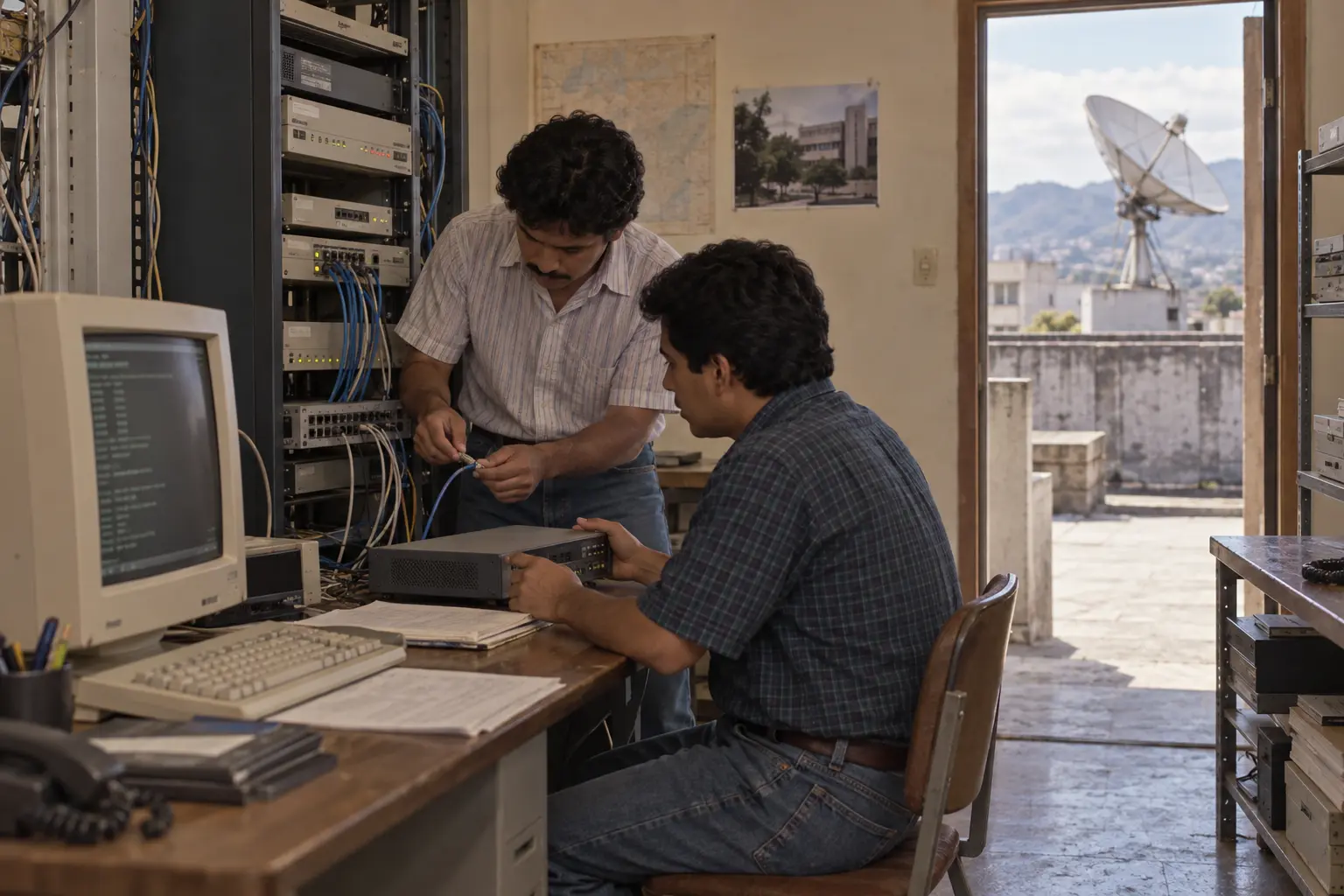
Honduras Reached the Internet by Satellite. A .hn Dispute Split HONDUNet
A June 1995 announcement said a satellite link had connected Honduras to the Internet. A later history dates the link five days later. Between the project plan and that route sat a dispute over who should administer `.hn`—one that paused HONDUNet and sent its organizers to a…

Story
LACNIC links an operator’s ASN to the freedom to change providers
LACNIC links an operator’s ASN to the freedom to change providers intelligence summary explains the development, the public evidence available to readers, the organisations involved, the regional context, market exposure, and the infrastructure consequences that may follow. The…

History
The Mail Stayed on the Server; Pine Put the Reader at the Terminal, 1992
At the University of Washington, Pine began as a replacement for an administrative mainframe mail program. Its 1992 public release marked a new client; the mailbox could remain on a shared server.
History
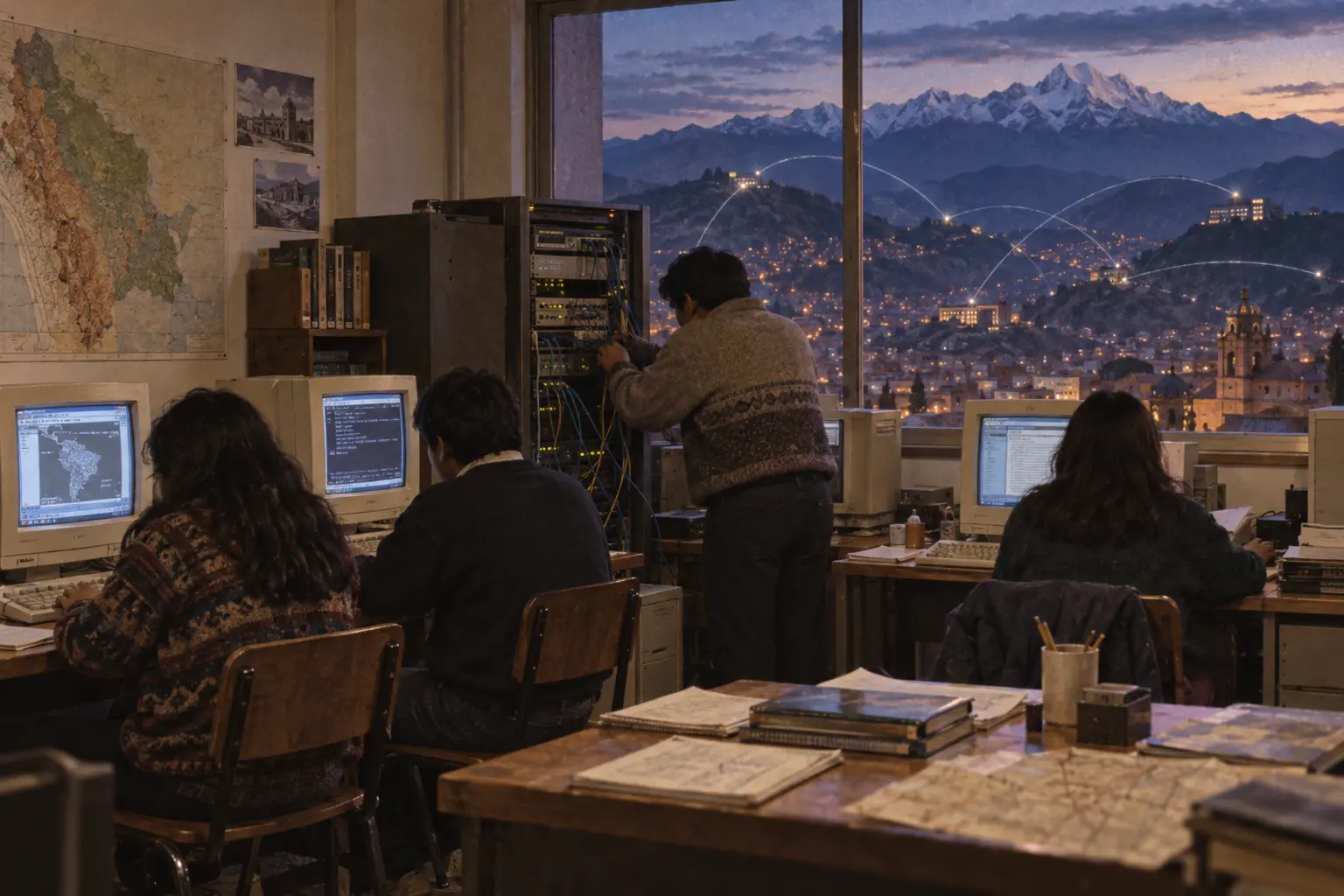
BolNET Reached Every Academic Network University by 1999. Access Remained an Open Question
Bolivia’s early Internet story is often dated to 1989, yet the institutional record describes a project that changed form as it moved from campus research into a national data service. By 1999 the university links were in place; the history that records that milestone also says…

Leaders
Alain Durand Made IANA’s Work Visible, One Request Type at a Time
In May 2015, just months into a new role at ICANN, Alain Durand tried to answer a practical question before the IANA stewardship transition was complete: what work did the operator actually perform, and how often did the three communities that relied on it use those services? His…

History
The Source Shipped in March; Mozilla’s Independence Took Five Years
Netscape announced an open source plan in January 1998, but a source archive was only the first deliverable. Contributors still needed a way to build, combine and release their work; Netscape kept product and licensing rights that the public source did not erase. The Mozilla…

History
Angola’s First Internet Link Went Quiet: The 1996 Gap Between Connection and Service
A university could be called connected in August, yet a November report said the local route carried no connectivity. A commercial provider’s test came in October, but its December account still described a licence as unfinished. Angola’s first Internet year had more than one…

IETF
UDP ECN Depends on the Socket API
An ECN mark can survive every router on a path and still be invisible to the UDP application expected to report it. RFC 10055 documents the operating-system interface between an IP-layer congestion signal and user-space transports such as QUIC.

History
A Country Code Became a Registry Product: Tuvalu’s .tv Deal, 1999–2000
In 1999, Tuvalu agreed to let a U.S. company commercialize registrations beneath its country-code top-level domain. Company and government records describe different parts of the arrangement: a global registry business, a government stake and board seat, and cash payments. They…

North America Institutional Trends
GlobalFoundries’ $21bn Fab Plan Puts Fees Before the First Wafer
GlobalFoundries says Japan will fund a new Malta, New York, fab while a U.S.–Japan government-owned project vehicle funds and owns the infrastructure. GF’s investor presentation schedules technology fees from 2027; the first wafer is expected in 2029. The forecast rests on a…
History
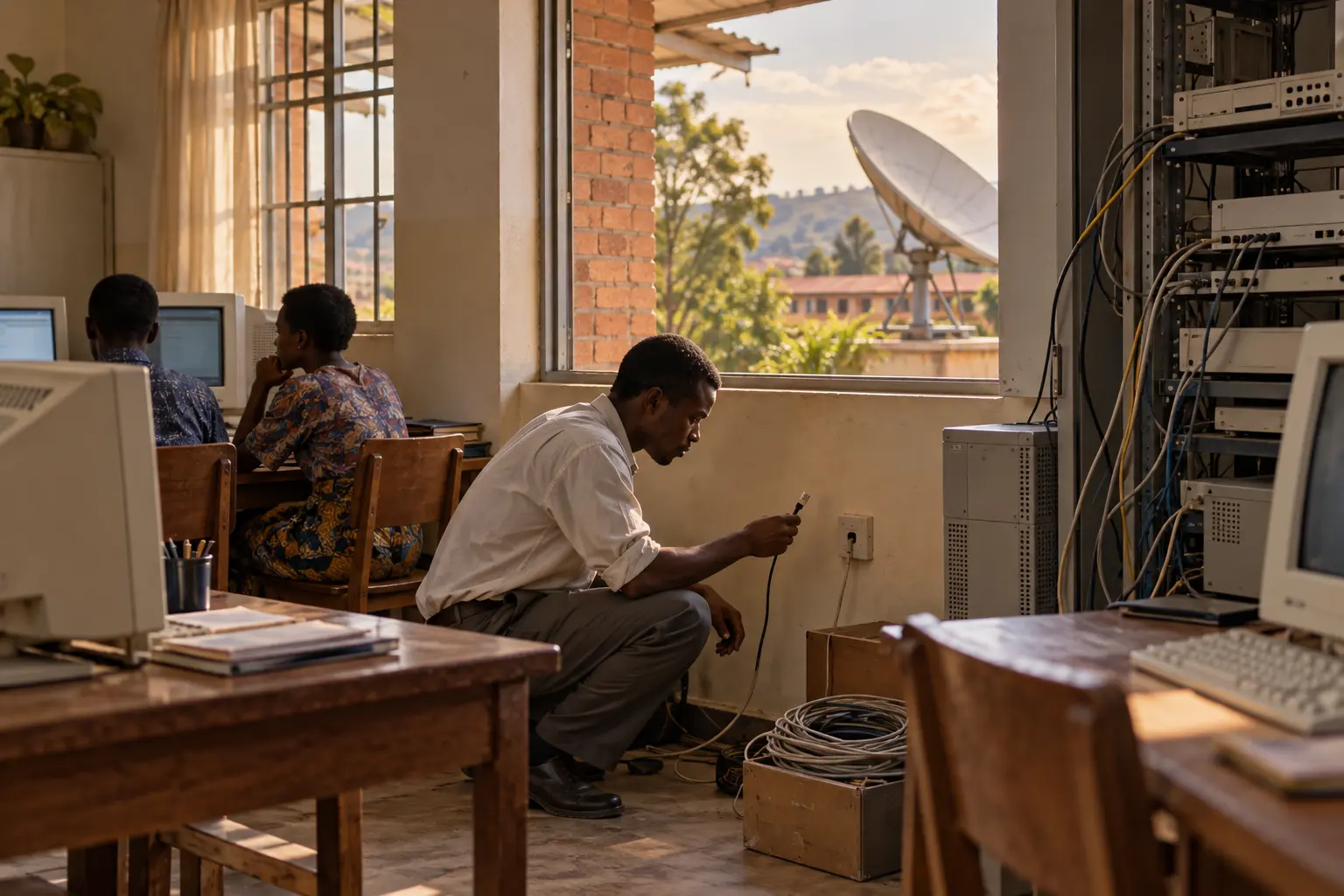
Rwanda Received the VSATs Before the ISP Market Opened, 1996–2001
A gateway, an Internet service, a university connection and a competing provider were different things in Rwanda’s late-1990s network. The record becomes clearer when each is dated separately—and when later accounts that use “service” differently are left visibly unresolved.

History
TANet’s No-Transit Boundary: ISP Interconnection Rules, 1996–2006
Taiwan’s education network allowed commercial providers to interconnect on conditions that kept its own backbone and international circuits outside their carriage plans. The surviving versions show how that boundary was reviewed, measured and revised.

History
Ecuanex Sent the Mail; Ecuanet Routed the Packets: Ecuador’s Two Internet Paths, 1991–93
Ecuador’s early Internet story is often reduced to a single arrival date. The surviving messages describe something more useful: Ecuanex was already exchanging mail and conference traffic over UUCP, while a separate, bank-backed network began carrying live Internet service over a…

Story
ARIN’s survey separates attribution from personal identity
ARIN’s second community-platform survey asks whether discussion should be public and whether entities should use personal names or aliases. Its existing policy-development rules make author-attributable feedback relevant, but do not answer that separate identity question.

History
Ankabut Took Four Years to Become a Network: The UAE’s Research Backbone, 2006–10
Research networks are built in stages. In the UAE, a 2006 university agreement began Ankabut; funding, a carrier contract and campus decisions took until 2010 to turn the proposal into reported connections.