
Intelligence
Latest Articles
Latest intelligence on infrastructure operators, policy decisions, market moves, and digital power shifts.

History
Wellington Opened City Net to the Public—and Put Its By-Laws on Gopher, 1992–93
A council dial-up system and an Internet Gopher menu made Wellington’s local records easier to reach by different routes. Richard Naylor’s 1993 account shows how the experiment depended on existing municipal computers, staff willing to publish, and a registration process that…

Number Resource Society
The Number Resource Organization: How Five Registries Coordinate the Internet's Address Space
The Number Resource Organization: How Five Registries Coordinate the Internet's Address Space intelligence summary explains the development, the public evidence available to readers, the organisations involved, the regional context, market exposure, and the infrastructure…

Story
RIPE’s space-address draft names the NRO. Who sets the policy?
A September Internet-Draft requests IPv6 space for use beyond Earth and gives the NRO a role in structuring and distributing it. The institutional handoff remains unspecified: how would that coordination connect to the separate policy processes of five RIR communities, including…

History
Stanford Ran 18 IP Subnets Before the Standard, 1984
In October 1984, RFC 917 described subnetting as a proposal. Stanford had already used IP subnets since early 1982, adapting an older Pup network and routing system rather than waiting for a common Internet procedure.

History
SMTP Made Mail a Relay Conversation Across Networks, 1982
RFC 821 treated mail delivery as a command-and-reply transaction over a reliable stream. Its relay model could bridge different transport-service environments, while sender and recipient paths stayed in the SMTP envelope and message text had its own format standard.

History
Sweden’s EUnet Email Route Preceded Its IP Link, 1983
A test message that reached Enea Data in April 1983 joined a Swedish Unix host to an international mail service. It did not make that host a TCP/IP node, and it was not the first electronic message ever handled in Sweden.

History
HEPnet Sought a Distinct Identity as ESnet Expanded, 1987
As the Department of Energy planned a more coordinated research network, high-energy physicists faced a governance question: could a shared backbone serve their community without absorbing its identity or local operating authority? HEPnet’s 1987 committee record shows both…

Story
AS48019 and Terra-Telecom LLC: A Registry Record With an Unanswered Question
AS48019 and Terra-Telecom LLC: A Registry Record With an Unanswered Question intelligence summary explains the development, the public evidence available to readers, the organisations involved, the regional context, market exposure, and the infrastructure consequences that may…
History
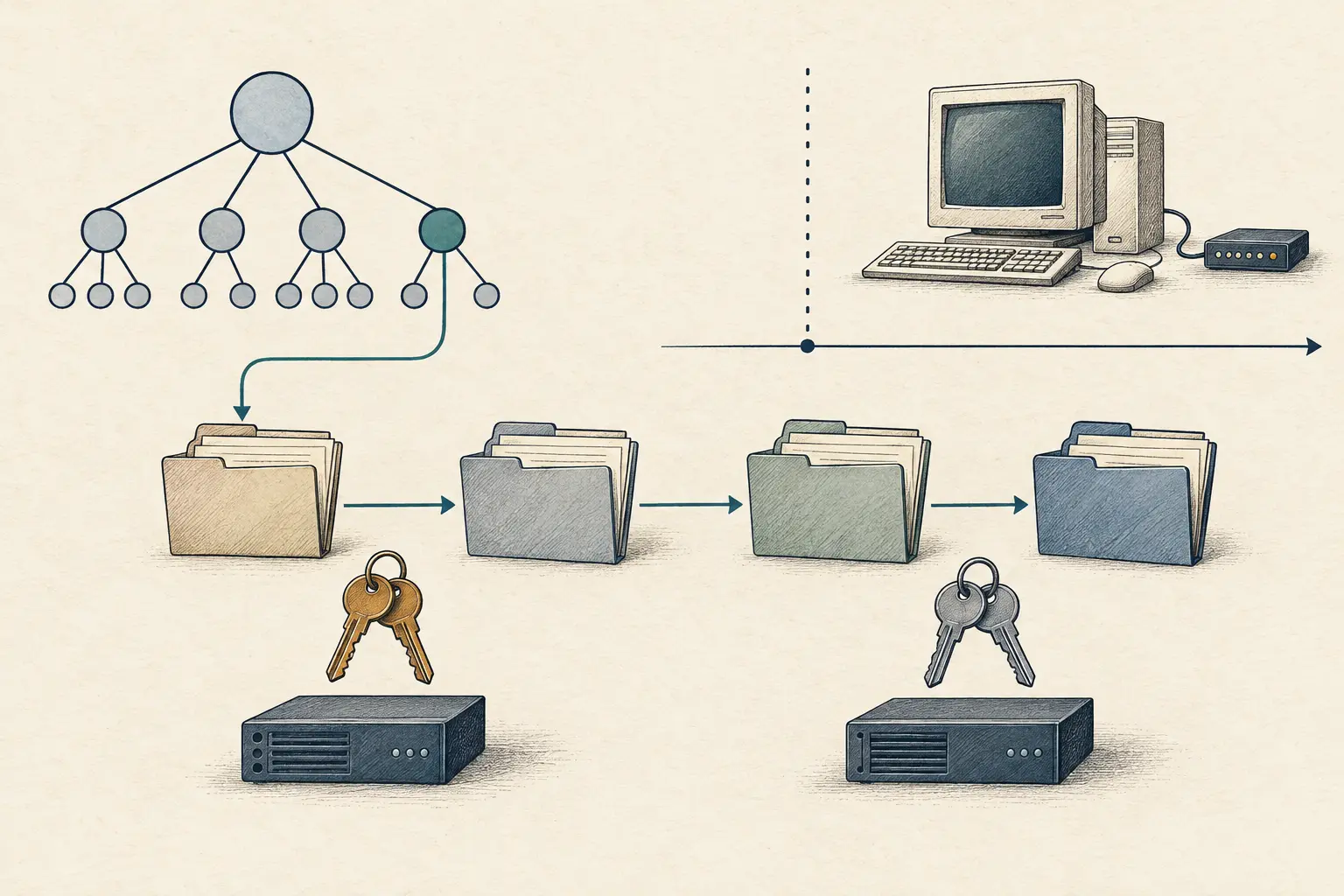
Bhutan’s .bt Changed Hands Before the Internet Arrived
Bhutan’s country-code domain was already recorded in the global naming system before the country opened Internet service to its citizens. Its early history was not a simple handoff from one national operator to another: a retrospective describes an initial private arrangement, a…
History
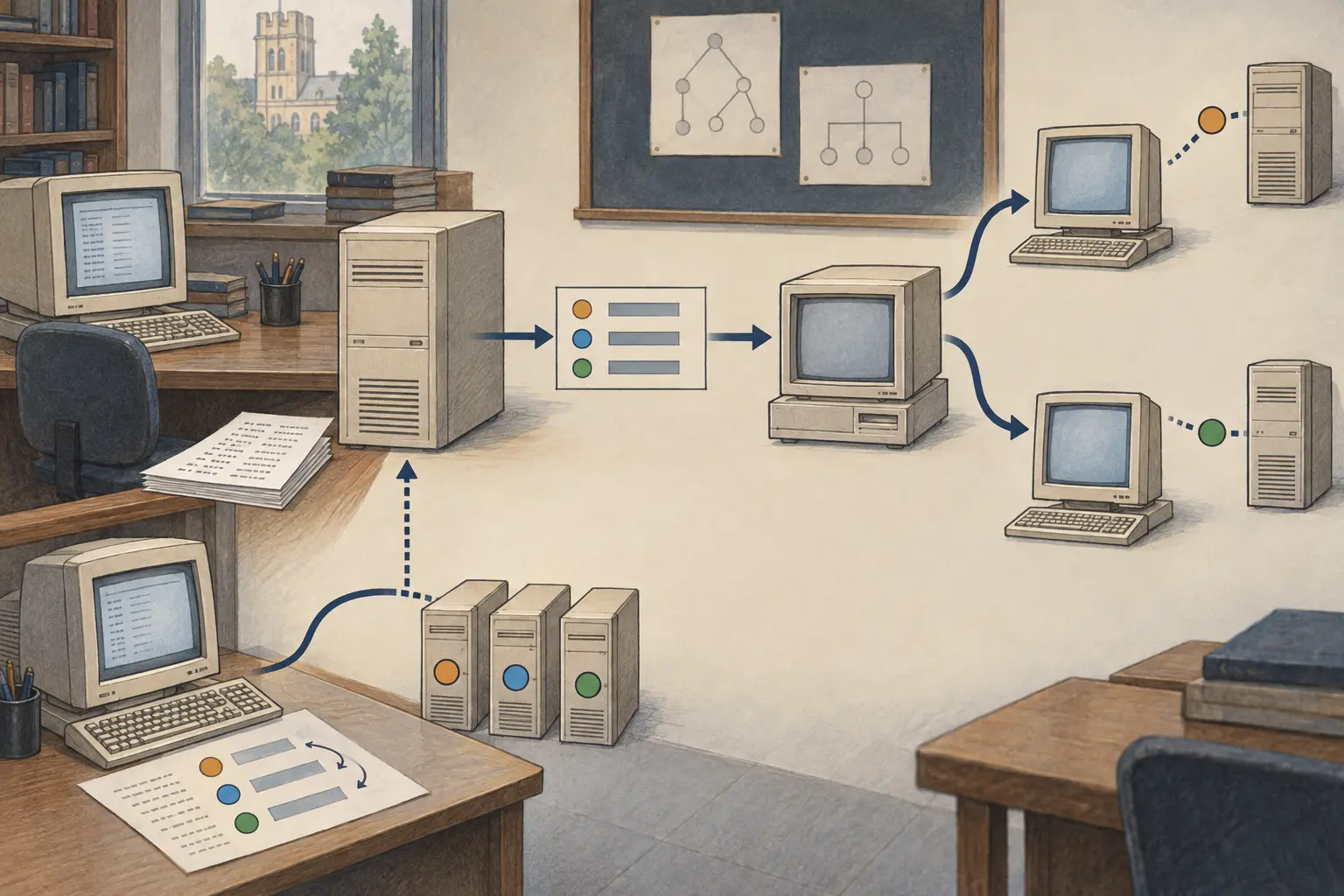
The DNS Answer Had an Order. The Client Kept the Choice: RFC 1794
In 1995, engineers wanted DNS to steer requests toward a less-loaded machine without changing the protocol or breaking the installed base. The compromise could rank addresses before a reply went out. It could not make every resolver or application obey that ranking.

History
WIDE Put IPv6 on Half a T1 Before It Used Tunnels, 1996–98
The first WIDE 6bone packet crossed a serial circuit. Splitting a T1 let IPv6 begin without another leased line or direct interference with the existing IPv4 network.

History
SSL Worked Before It Had a Stable Reference
Netscape’s secure connection protocol reached commercial software while its public specification was still a vendor document and working draft. That sequence exposes a gap between deployment, an engineering description and a durable standards citation.

History
Six Sites, One 56 kbps Line: NSFNET Before the T1 Upgrade, 1986–1988
Before NSFNET became shorthand for a national high-speed backbone, it was a deliberately small bridge between six scientific computing sites. Its first 56 kbps links exposed a mismatch: access to supercomputers had been funded, but useful access depended on moving data between…

History
The .hk Registry Changed Hands in Stages: Hong Kong, 2000–2002
Hong Kong’s domain-name handover was not a midnight switch in the Internet’s root. It was a sequence of policy, service and corporate changes: a public consultation, new registration rules, a nonprofit registry, and a transfer of the operating company and its records.

History
Poland’s Internet Began with a Borrowed Line: Warsaw to Copenhagen, 1991
Poland’s celebrated Internet milestone did not begin with a new national circuit. It used one channel on a leased line already serving BITNET, a 9,600-bit-per-second modem, and a PC configured to route TCP/IP. The important question is what that connection made possible—and what…

History
Guatemala’s Mayanet Reached the Internet Only After a GUATEL Contract, 1995
How Mayanet’s 1995 Internet link depended on a GUATEL–CONCYT agreement, local lines and shared costs.

History
India Funded NIXI in 2003. By 2007, 27 of 135 ISPs Had Joined Its Nodes
India Funded NIXI in 2003. By 2007, 27 of 135 ISPs Had Joined Its Nodes intelligence summary explains the development, the public evidence available to readers, the organisations involved, the regional context, market exposure, and the infrastructure consequences that may follow.…

History
IRC Grew by Adding Servers Before RFC 1459 Described It, 1988–93
Internet Relay Chat moved from an unreliable feature on OuluBox to a network of independently run servers before RFC 1459 described its operating rules in 1993.

History
Tonga’s .to Records Reached Abroad While Its 64 kbps Link Was Still Planned, 1996–97
A country-code name could be visible to the world before the island had a documented public Internet route of its own. Tonga’s early records show two different infrastructures moving on different clocks: .to nameservers and hosts already operating overseas in April 1996, and a…

History
The Backup Used the Same Cable: Iceland’s CANTAT-3 Failure, 2002
In August 2002, an undersea-cable failure exposed a quiet weakness in Iceland’s international connectivity: RHnet’s reserve route through Síminn depended on the same CANTAT-3 system as its usual route. The incident log makes a useful distinction between a second route on a…