
Intelligence
Latest Articles
Latest intelligence on infrastructure operators, policy decisions, market moves, and digital power shifts.

Global Institutional
Who can prove that ISC’s safeguards endure?
Internet Systems Consortium’s influence over internet infrastructure is visible in more than the software it maintains. It also appears in the processes around vulnerability disclosure, supported releases, root-server operations, monitoring and open development. Those processes…

History
The Address Changed. The References Did Not: RFC 1900 and the Hidden Cost of Renumbering
In 1996, the Internet Architecture Board described a task that sounded almost clerical: replace one set of IP addresses with another. Then RFC 1900 followed the old numbers out of the router and into configuration files, applications, licences and human-maintained lists. The…

CASE FILE
The Draft Was New. Its Dependency Had Expired Six Years Earlier
Revision 09 gave an L2VPN snooping draft a fresh date without changing its mechanism. The document can still be useful, but its own import graph shows why leaders must demand an executable dependency receipt before treating standards activity as implementation readiness.

History
The Old Address Fit Inside IPv6. Its Routing Model Did Not: RFC 1888
A twenty-octet address can be placed beside a sixteen-octet one, sliced, tagged and reconstructed. That arithmetic says nothing about whether the route hierarchy survives the move. RFC 1888 recorded this distinction in 1996: its encodings could preserve address bits, while the…

ICANN
Allison Mankin and the Name-Collision Sample That Could Not Prove Its Cause
A root server can record a query for a private-looking name with great precision. The record still cannot say which application produced it, who owns the broken dependency, how many users rely on it or what a future delegation would harm. Allison Mankin’s work on RFC 8023 helps…

Story
ARIN Adopted an Amended IPv6 Task Force Charter. The Public Index Does Not Show It
ARIN’s Board minutes record the creation of an IPv6 Task Force, an amendment that shortened its planned life, and three people who volunteered to do the work. What the public record does not yet supply is the operative text that joins those facts into a mandate. The missing…

Story
LACNIC Whois routing-c Can Register Routing Policy, Not Prove Who Operates BGP
LACNIC Whois routing-c Can Register Routing Policy, Not Prove Who Operates BGP intelligence summary explains the development, the public evidence available to readers, the organisations involved, the regional context, market exposure, and the infrastructure consequences that may…
History
The Test Address Came With Its Eviction Notice: RFC 1897 and the 6bone
In 1996, an IPv6 address could be useful, globally coordinated and routable across an experimental backbone while still carrying no promise of permanence. RFC 1897 made that distinction explicit: its addresses were for prototype testing, would be reclaimed and required their…
CASE FILE
A Celestial Name Is Not a Network Address: The Authority Split TIPTOP Has to Preserve
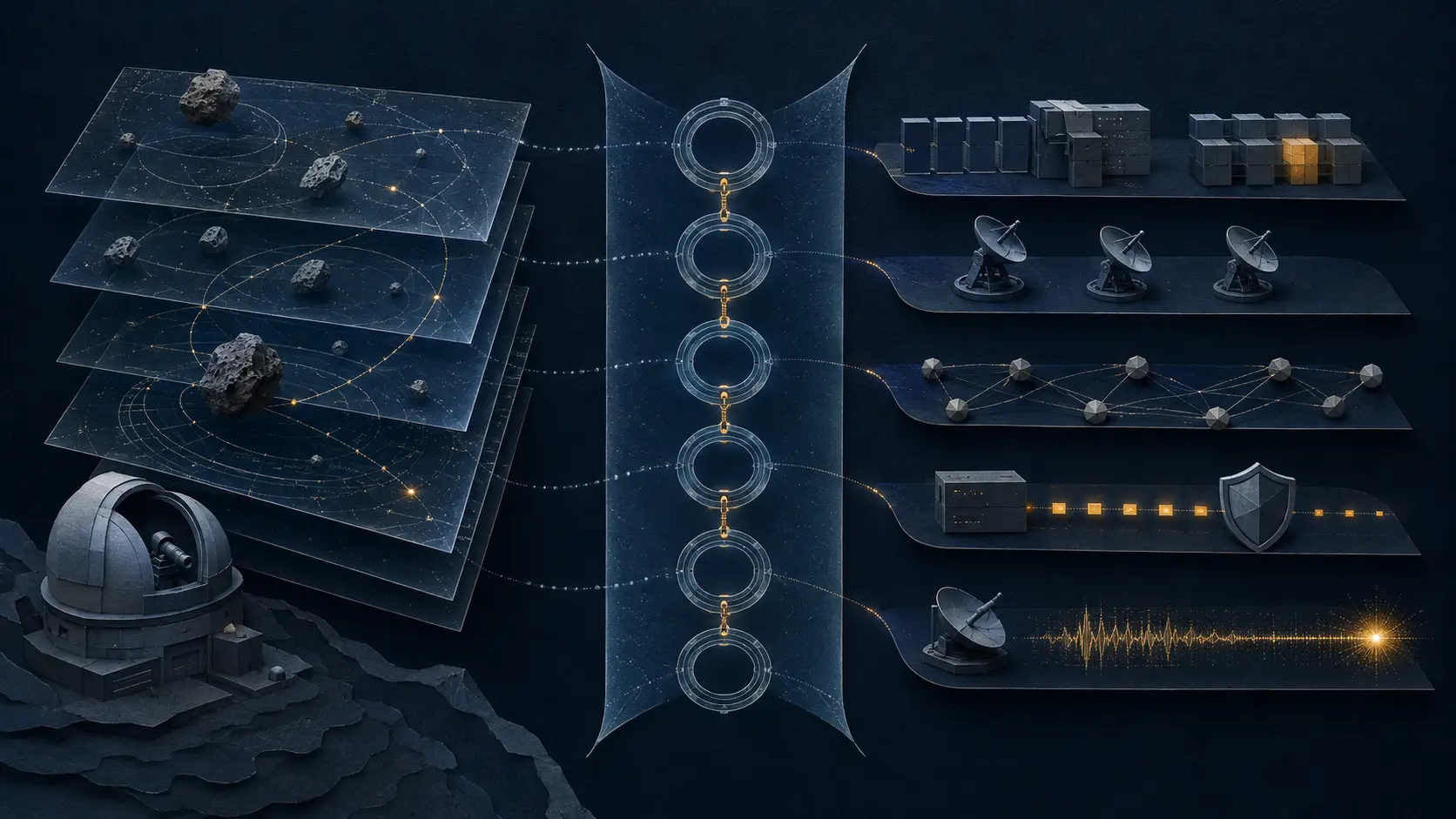
One entity can be discovered under a temporary tag, receive several provisional designations, gain a permanent number and acquire a name years later. A route cannot afford to mistake any one of those labels for proof of where a packet should go.

History
The Route the Sender Tried to Choose: How IPv4 Source Routing Lost Its Default Trust
IPv4 once carried a small, mutable itinerary inside the packet itself. The history of source routing is the history of how that sender-supplied path changed from a protocol feature into an explicitly configured exception.

History
The Peer Returned a DNS Address. It Had Not Proved Names Would Resolve: RFC 1877
The useful answer in a 1995 dial-up exchange could begin with a deliberately useless address. A PPP client placed zero in an IPCP name-server option precisely so the remote peer would reject the value and suggest another. That suggestion could become negotiated configuration only…

History
The Address That Meant Everyone: How IPv4 Broadcasts Chose Ones Over Zeroes
IPv4 did not gain broadcasting through a new flag. It gained it by teaching hosts and gateways that some destination values did not name one machine at all. A field of ones came to mean everyone within a scope, while receivers carried an awkward obligation to understand the…

IETF
Radia Perlman and the Appointed Forwarder That Had to Stop Forwarding
A TRILL switch may still hold the appointment for a VLAN while its safest legal action is to drop the native frames it would normally handle. That is not a contradiction in the standard. It is the moment when recorded authority and permission to act must be read as separate…

Leaders
Hisham Ibrahim and the Measurement Problem Inside Community Building
When RIPE NCC reorganised its community work in 2021, Hisham Ibrahim inherited more than a collection of events and services. He inherited a harder management question: how can an institution tell whether community activity creates lasting value rather than merely producing a…

Story
AFRINIC Whois mnt-domains Authorizes Reverse-Domain Records, Not DNS Service Operation
A database key can authorize the creation of a reverse-domain record while every DNS query to the supposed service still times out. In the AFRINIC Database, `mnt-domains` identifies a maintainer with authority over child domain-entity creation. It is evidence about registry…

CASE FILE
The IAB Gave Post-Quantum Authentication Evidence Another Week. It Still Needs a Chain of Custody
The extended deadline invites one more week of operational evidence. The harder task begins after a paper arrives: keeping measurements, disclosure choices, workshop synthesis and eventual standards work from collapsing into one unsupported claim.

History
The Bit That Made Routers Report Their Limits: IPv4 DF and Path MTU Discovery
One IPv4 flag began as a prohibition: do not split this datagram. Path MTU Discovery turned that refusal into a measurement loop. An oversized packet would be discarded, a router would report the narrow link, and the source would learn what the path could carry—provided the error…

History
Readable Without a Parser Did Not Mean Safe to Parse: RFC 1874
In 1995, one MIME label tried to preserve two truths about the same structured document. A person without SGML software might still read its general meaning; a machine with SGML software might interpret far more than the visible lines. RFC 1874 called the first case `text/sgml`…

Story
RIPE assignment-size Describes Aggregated IPv6 Assignments, Not Active Subscribers
A `/46` contains 1,024 possible `/56` prefixes. When a RIPE Database entity pairs that aggregate with `assignment-size: 56`, the arithmetic is exact—but the tempting subscriber count is not. The field records the size used for End User assignments inside an aggregate…

CASE FILE
The Message Was Encrypted. Its Headers Still Needed Their Own Receipts: RFC 9788
An encrypted-mail badge compresses a complicated evidence chain into one reassuring symbol. RFC 9788 shows why the symbol cannot answer which header was hidden, which sender identity was authenticated, what an intermediary changed, or where a reply may safely go.