
Intelligence
Latest Articles
Latest intelligence on infrastructure operators, policy decisions, market moves, and digital power shifts.

Story
The IPv6 PI Choice AFRINIC-4 Could Not Settle
In Nairobi on 17 May 2006, a proposal for provider-independent IPv6 space forced an unusually clear argument about what a registry can record, what operators will route, and who should pay when those two realities do not align. The answer was not adoption or rejection, but an…

Story
AFRINIC implemented AFPUB-2005-v4-001 as its regional IPv4 allocation rule
On 17 May 2006, a dense allocation manual became the practical interface between an African Local Internet Registry and new IPv4 supply: a /22 floor, or 1,024 addresses, an additional-allocation test at about 80% use, and assignment benchmarks of 25% immediately and 50% after one…

Story
Resolution 200605.30: A Chair, a Term and the Limits of Office
One terse entry from May 2006 names Pierre Dandjinou, records an internal board vote and gives his chairmanship an endpoint; what it leaves out is precisely what makes the appointment useful for understanding how a private registry should contain authority, preserve continuity…

Story
The ASN Transition Ledger: What Resolution 200605.27 Did—and Did Not—Approve
AFRINIC's 2006 record set a staged route from two-octet to four-octet AS numbers, but the surviving chronology, compatibility design and later exceptions show why a resolution was only the beginning of implementation.

Story
The assent that completed AFRINIC’s part of the IPv6 supply chain
In May 2006, a short corporate resolution made AFRINIC a necessary entity in a common rule for supplying IPv6 space to the world’s regional registries. The rule was operationally valuable and its limits were just as important: approval inside a private coordination system was not…

Story
The One-Month Instrument Inside Resolution 200605.27
In May 2006, Resolution 200605.27 ratified AFPUB-2006-GEN-002: a renewable, one-month arrangement for temporary unicast IPv4 addresses, unicast IPv6 addresses and AS numbers. It required public evidence of the activity, a plan for use and an intended return, yet the surviving…

Story
The Eligibility Line Behind AFRINIC's 2006 ASN Decision
The Eligibility Line Behind AFRINIC's 2006 ASN Decision intelligence summary explains the development, the public evidence available to readers, the organisations involved, the regional context, market exposure, and the infrastructure consequences that may follow. The Story…

Story
AFRINIC's 2006 infrastructure waiver: a zero price, a guarded gate
In January 2006, AFRINIC waived an unspecified resource-assignment fee for internet exchange points and critical infrastructure, but it did not waive judgment: the small resolution left behind a revealing question about who qualified, who absorbed the cost and what “until further…

Story
Six Seats, Three Clocks: What AFRINIC’s Regional Numbering Actually Governed
AFRINIC’s 2004 design gave six geographic candidate lines durable numbers and deliberately unequal opening terms. That modest piece of corporate engineering made succession easier to administer—and made it dangerously easy to confuse regional knowledge with territorial authority.
Latin America and Caribbean National Telecom Trends
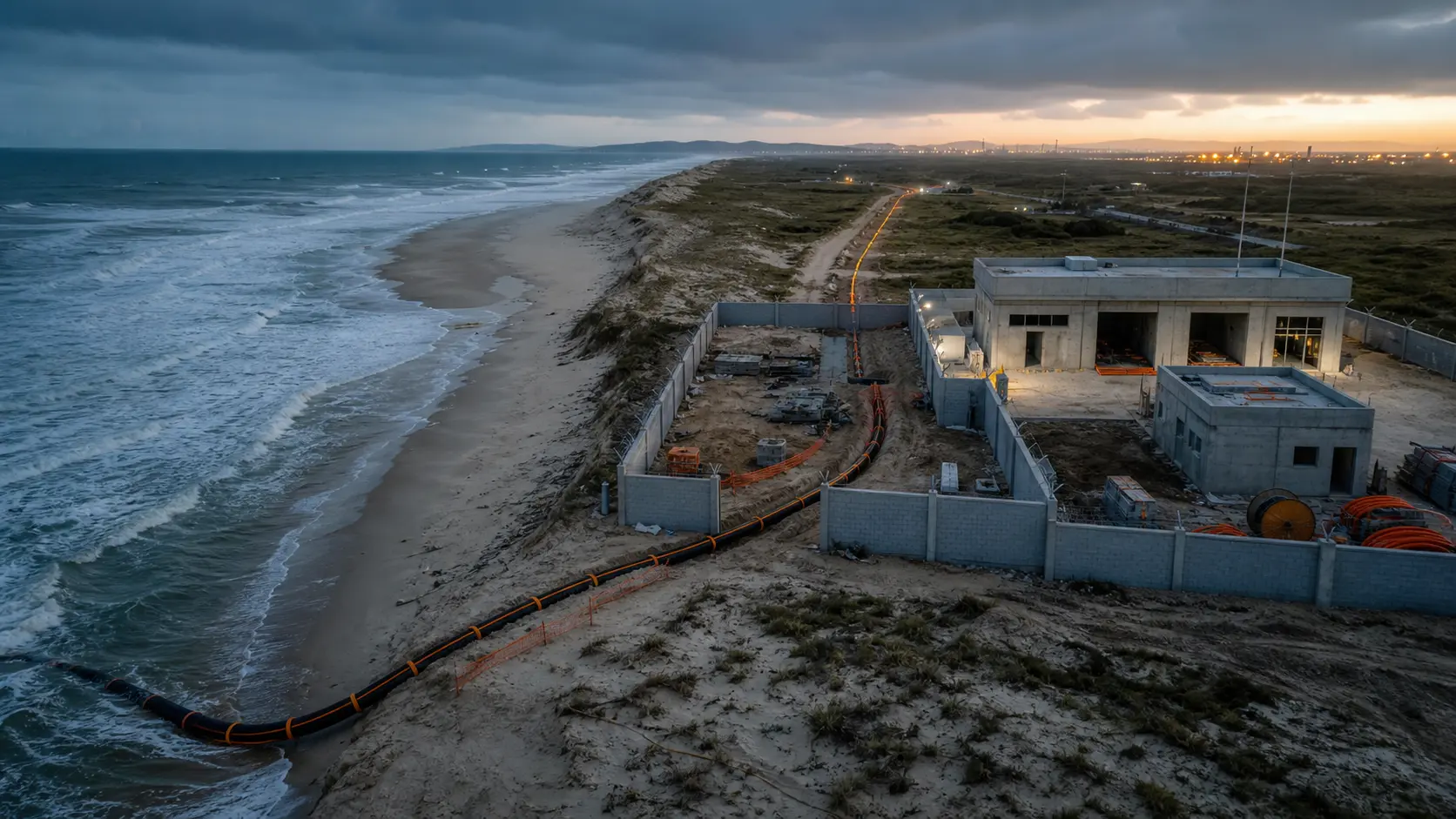
Malbec has reached shore in southern Brazil; customer traffic is still several gates away
Meta and V.tal have started installing a 280-kilometre Malbec submarine-cable branch for Porto Alegre, with a landing at Balneário Pinhal and a 2027 launch target. Shore arrival makes the route physically more real, but the advertised 20 Tbps per fibre pair remains a design…

North America National Telecom Trends
AT&T's Davis Wade network is neutral-host by design; the other hosts remain unnamed
AT&T is leading and will own a 53-sector MIMO distributed-antenna system at Mississippi State University's Davis Wade Stadium, using Airspan's MobileAccess 6000 platform across mid-band spectrum. The design is intended for more than 60,000 seats and multiple operators, but no…

Asia-Pacific National Telecom Trends
NTT DOCOMO's AI-RAN result cuts a simulated failure rate, not yet a live network problem
Samsung Electronics and NTT DOCOMO report that user-level AI optimisation reduced the frequency of communication-speed degradation from 13.1% to 7.2% in a January simulation using data from a commercial network and a 5G test network. The 5.9-percentage-point change is an…

North America Datacenter Trends
Theseus gives Anthropic a financing machine, but not yet a first address
Anthropic, Macquarie Asset Management and GIC have created a vehicle meant to finance, build, operate and lease AI data centres, initially in the United States. The structure can turn a long-term computing commitment into an investable asset, yet the announcement omits the first…

Europe and Middle East National Telecom Trends
Arabsat and LTT have named the satellite, but not the capacity Libya will receive
Arabsat and Libya Telecom and Technology have signed an agreement linking high-throughput capacity on Arabsat-6A at 30.5 degrees east with LTT's national delivery role. The pairing identifies an orbital asset and a market channel, but it discloses no bandwidth, beam, terminal…

Story
The Missing Decision in AFRINIC's Three-Step Membership Doorway
In May 2004, AFRINIC presented a remarkably compact route into member-only status: send a form and signed agreement, then pay. The surviving record shows those acts clearly, but leaves the decisive question unresolved—who accepted an organisation as a member, by what criteria…

Story
Six gates in Dakar: AFRINIC’s first LIR admission-and-allocation sequence
On 24 May 2004 in Dakar, AFRINIC presented a compact route into LIR membership and a first resource decision: complete a form, sign an agreement, pay fees, undergo evaluation, obtain approval and, optionally, undergo evaluation of a first suballocation. The order made the process…

Story
When a support letter became a ballot in Dakar
In 2004, AFRINIC turned written organisational support into a temporary Board-election credential—an expedient bridge with an incomplete audit trail.
Europe and Middle East Cloud Services
PathConnect and the Evidence Behind Network Infrastructure
PathConnect and the Evidence Behind Network Infrastructure intelligence summary explains the development, the public evidence available to readers, the organisations involved, the regional context, market exposure, and the infrastructure consequences that may follow. The Europe…

Story
AFRINIC’s Seventh Seat: When the Executive Joined the Board
On 24 May 2004, AFRINIC’s members present in Dakar reportedly approved a change that replaced a contemplated ICANN-appointed representative with the Executive Director as the seventh Board member. The decision created an indirect appointment chain and a lasting governance…

Story
When AFRINIC changed Trustees into Directors
AFRINIC’s May 2004 change of governing-office vocabulary made company-law responsibility easier to see, but the surviving record does not prove that it transferred a single power.