
Intelligence
Latest Articles
Latest intelligence on infrastructure operators, policy decisions, market moves, and digital power shifts.

History
The Web CERN Chose Not to Own: How a Laboratory Designed Its Own Exit
The World Wide Web did not become universal merely because it was invented at a famous laboratory. It became portable across institutions because its common machinery was kept small, its specifications were public, its clients escaped one workstation, and CERN eventually removed…
History
The Network That Let Institutions Join Unequally: CSNET and the Architecture of Partial Access
CSNET widened the networked research community without pretending that every institution could afford or operate the same connection. By combining ARPANET access, full Internet service over commercial X.25, and dial-up PhoneNet mail, it showed that interoperability could begin…

History
The Map Made from Expired Packets: How Traceroute Turned Failure into Internet Evidence
In December 1988, Van Jacobson was not trying to draw the Internet. He was trying to find out where his packets had gone. The tool he assembled at Lawrence Berkeley Laboratory made the network answer indirectly: send a packet designed to expire, listen for the complaint, then let…

CASE FILE
DNSSEC Can Prove Absence Without Deciding Entitlement
A signed negative DNS answer can establish that a name or record type was absent from a particular signed zone during a bounded validity period. It cannot establish why the entry is absent, who deserves the label, whether a registrar should create it, or whether an Opt-Out…

History
The Day the Old Protocol Lost Its Network: The 1983 TCP/IP Cutover and the Limits of Technical Authority
On 1 January 1983, an ARPANET host that still depended on NCP faced a new fact: the network beneath it could stop servicing the old protocol. The famous cutover mattered not because a memo became universal law, but because a disclosed rule reached an execution boundary whose…
History
Where the Network Stopped: The IMP, the Host, and the First Price of Shared Correctness
ARPANET’s Interface Message Processor made packet switching operational by putting substantial machinery into a dedicated subnet. It also made a harder problem visible: infrastructure can carry, check, meter and protect communication without possessing the knowledge required to…
History
When One Router Announced Everyone’s Network: AS7007 and the Failure of Unchecked Trust
When One Router Announced Everyone’s Network: AS7007 and the Failure of Unchecked Trust intelligence summary explains the development, the public evidence available to readers, the organisations involved, the regional context, market exposure, and the infrastructure consequences…

Story
RIPE NCC Split ENUM's Future From 23 Troubled Delegations
A draft prepared for September's ITU-T Study Group 2 meeting makes a careful retreat from a system-wide question. RIPE NCC now says Public ENUM should continue while 17 non-operational and six partly faulty delegations are handled as individual registry cases. The change is less…

History
When the First Network Became Replaceable: ARPANET’s Retirement and the Internet That Continued
ARPANET did not take the Internet with it when it was retired in 1990. That was not because the pioneering network had become unimportant. It was because its most important function—making unlike networks communicate—had already escaped the machinery and institution that first…
Story
LACNIC's 80% ROA Draft Ties New Addresses to Old Route Records
LAC-2026-3 would make a request for additional IPv4 or IPv6 resources the moment when LACNIC checks the routing-security state of an organization's existing address inventory. The proposed 80% threshold is simple enough to print in one line. Applying it fairly will require…

Story
ARIN Lowered One Threshold and Closed Three Doors
The latest ARIN-2025-3 draft makes a smaller network four times easier to count as sufficiently in-region, then bars that same out-of-region justification from the Waiting List, micro-allocations and the IPv6-deployment pool. The argument is no longer only about how much need is…

History
The Window That Learned Restraint: How TCP Stopped Congestion Collapse Without a Traffic Authority
The Internet's answer to its first congestion crisis was not a controller above the network. It was a new discipline inside every sender: learn the path from acknowledgements and loss, increase carefully, and retreat before retransmissions turn shared capacity into useless…

Story
APNIC Put Contactability and Judgment on the Same Agenda
One proposal asks whether an abuse report can reach the operator able to act. Another asks whether the reported conduct counts as abuse. APNIC 62 will discuss both on 10 September, but the route for a contested decision is still missing.

CASE FILE
Mozilla’s Hidden Security Boundary: How the Public Suffix List Becomes Running Code
Mozilla began the Public Suffix List, and Firefox still turns a version of it into browser behaviour. The DNS can tell software that `whatwg.github.io` exists beneath `github.io`, but not whether those names belong to one organisation or mutually untrusting tenants. This article…

History
The Worm That Needed a Switchboard: How the 1988 Internet Built CERT Without Giving It Command
When the Internet’s first great emergency arrived, its most effective institutional answer was neither a central operator nor a security sovereign. It was a small, trusted point of contact built to make independent operators faster and better informed while leaving their…

Story
AFRINIC's Certificate Deadline Split Into Four Clocks
The 18 August notice described one cutoff. Operations produced four different clocks: the announced date, the upstream source, the portable release and the validator runs that networks could actually observe. They did not strike together.
Global Institutional
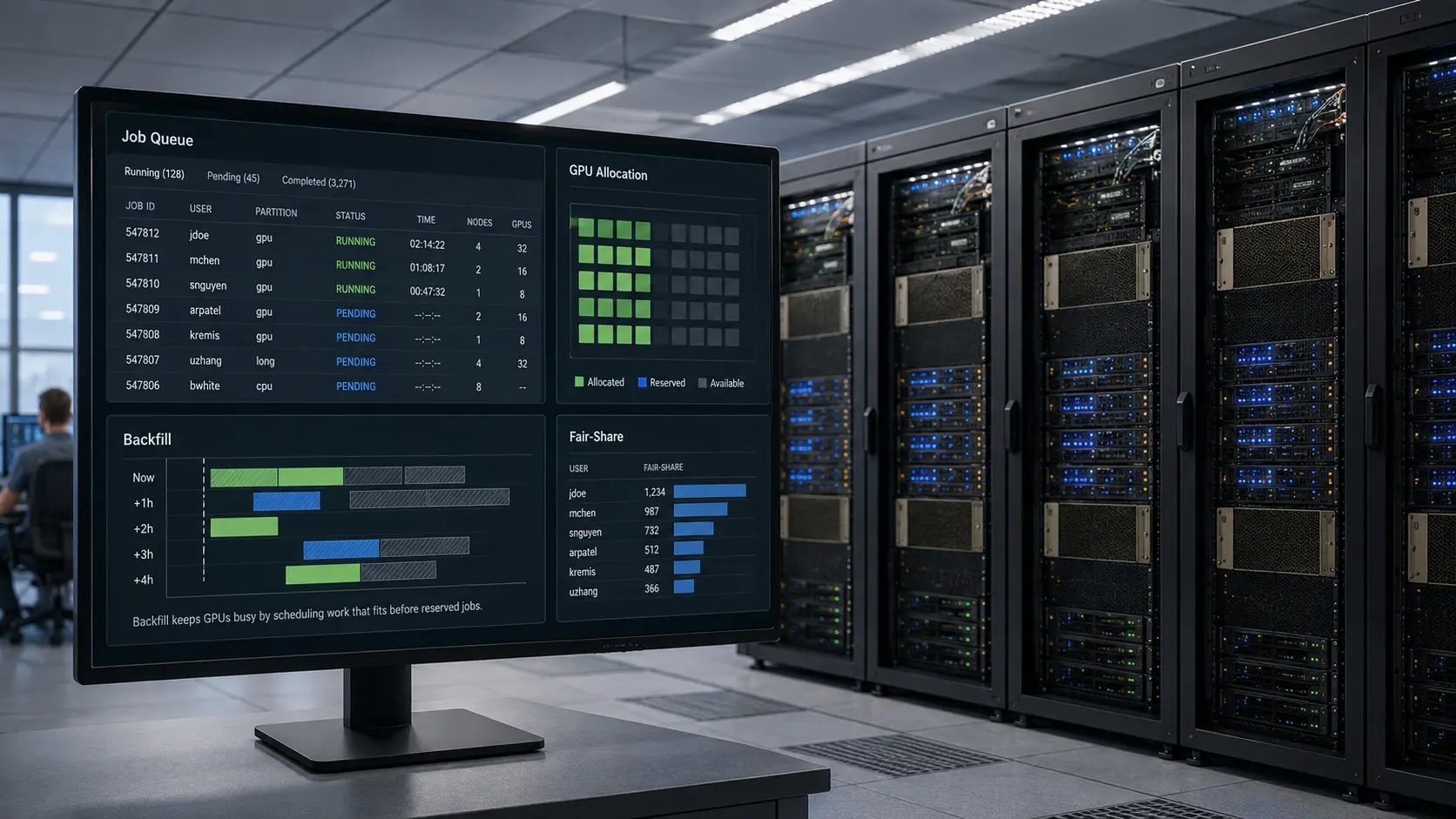
Slurm: The Scheduler That Decides Who Gets the GPU
Slurm allocates scarce compute across HPC and AI clusters, turning queue policy into a practical decision about who gets GPUs and when. NVIDIA’s 2025 acquisition of SchedMD gave the project more resources while making vendor-neutral stewardship a question that now has to be…

Creators
Eric Dumazet: Linux’s hidden queues
TCP can make a reasonable sending decision and still lose time after packets leave its direct control. Eric Dumazet’s work on TCP Small Queues, fair flow scheduling, pacing and cache-aware data structures changed how Linux accounts for this hidden packet backlog, although user…

Creators
Sage Weil: the engineer who made distributed storage computable
Sage Weil’s most enduring contribution was not a storage device but an architecture. CRUSH calculates data placement, while RADOS distributes storage, repair and movement across the cluster. Ceph enabled ordinary machines to operate as one system, then had to learn to continue…
Creators
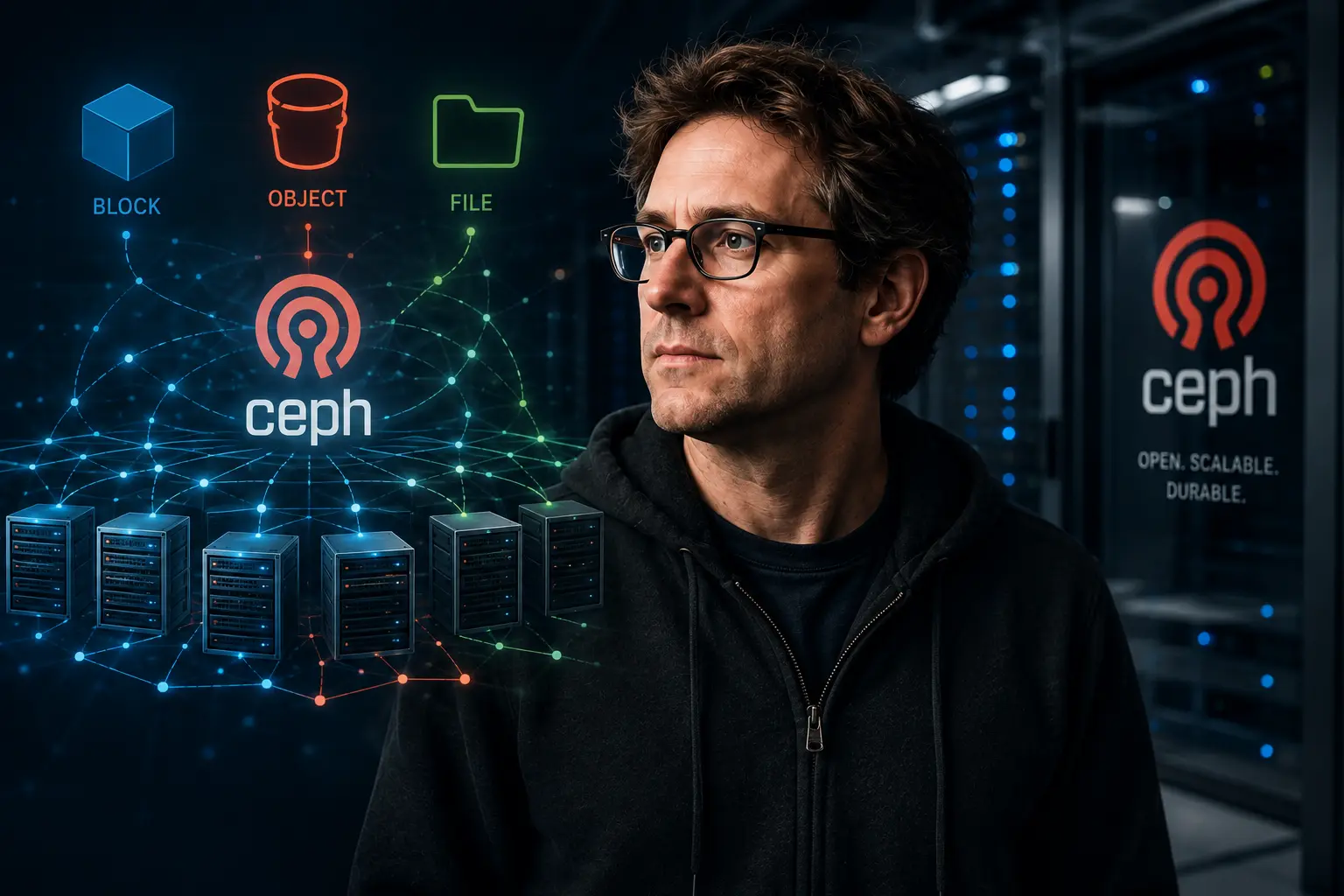
Sage Weil: The Architect Who Made Distributed Storage Calculable
Sage Weil’s most durable contribution to internet infrastructure was not a storage appliance but an architecture. Ceph used CRUSH to calculate where data belongs and RADOS to spread storage, repair and movement across a cluster. The design helped commodity machines behave like…