
Intelligence
Latest Articles
Latest intelligence on infrastructure operators, policy decisions, market moves, and digital power shifts.

IETF
The Header Said Audio. The Container Still Held More Than Sound.
A correct label can still be an incomplete inventory. RFC 5334 designed `audio/ogg`, `video/ogg`, and `application/ogg` around the container’s predominant use, while leaving every logical stream to be identified and processed separately.

IETF
The Count Fell. The LSPs Did Not.
Consider a migration in which one link's advertised unconstrained-TE-LSP count drops from 84 to 51 while every expected tunnel remains in service. Nothing has to be removed for that change to occur. A new originator can stop counting LSPs provisioned through the management…

History
The RFC Number Looked Like a Standard. The IESG Said It Wasn't: RFC 3924
RFC 3924 placed a vendor architecture for lawful interception inside the RFC Series, then put an unusually plain warning above it: Informational, not an Internet Standard, and not reviewed by the IETF for security or protocol interaction.

North America Datacenter Trends
Penguin’s AI factory boom is now a working-capital business
Penguin Solutions reported record sales and profit for fiscal 2026 and raised its next-year sales-growth outlook to about 40%. Yet continuing-operations operating cash flow turned negative as receivables and inventory expanded. The test is whether deployments convert into…

IETF
The Outer Label Was Removed One Hop Early. The Inner Label Lost Its Table.
Penultimate-hop-popping is normally an efficiency: remove an MPLS tunnel label before the egress so the last router has less work. RFC 5331 identifies the case where that optimization destroys evidence. An upstream-assigned inner label has meaning only inside the label space…

History
A Gateway Could Change the Wrapper, Not the Message: RFC 3923
In 2004, RFC 3923 gave XMPP a way to carry signed or encrypted messages through a gateway to another messaging system. Its most consequential instruction was also its narrowest: translate the envelope, never the protected entity.

Europe and Middle East Cloud Services Trends
Tracsis’s £48m rail-software bet now has to earn down the debt
Mistral brings £11.4m of annual recurring revenue and a 30% adjusted EBITDA margin. Tracsis paid £48m enterprise value and funded much of it with a near-full revolving-credit draw. The test is now cash conversion, not the word “recurring.”

IETF
Every Router Carried the Advertisement. Not Every Router Understood It.
RFC 5329 deliberately lets an OSPFv3 Traffic Engineering LSA cross an area through routers that do not recognize its type. That is a compatibility achievement, not a semantic receipt. The same packet trail can prove excellent flooding and still leave the TE database empty…

History
RMON Could Name MPLS, Not Its Children: RFC 3919
An RMON probe could distinguish two MPLS entry types, yet RFC 3919 stopped short of giving the label stack a universal protocol family tree. The contrast with IPv6 shows where an identifier can travel—and where its meaning must stop.
IETF
The Name Survived. One Resolver Path Did Not.
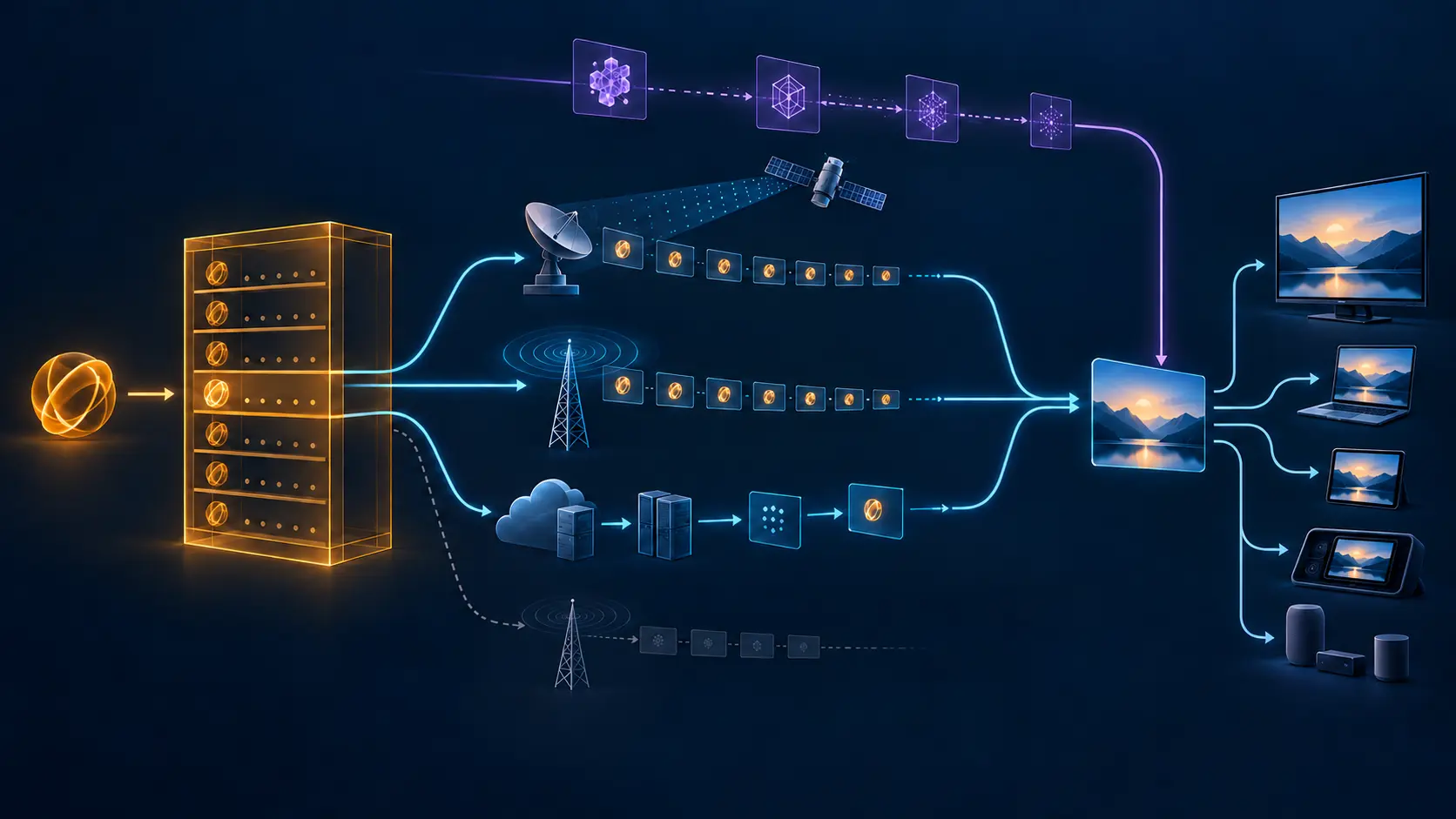
RFC 5328 gave DVB metadata a persistent, location-independent name. It did not make that name a live route, an authenticated entity or proof that a receiver used the resource. A `urn:dvb` string can remain valid while one discovery path fails, another returns a new locator and a…

IETF
The Retransmission Was Byte-Perfect. Its Cookie Was Already Obsolete.
RFC 5327 gives an LTP session a security state that can change while a signal is still crossing the link. A cookie may grow after the original segment leaves, and a retransmission must carry the value current now, not the value that was correct then. Authentication can protect…

Europe and Middle East Cloud Services Trends
Sage’s Moovin’Cloud Deal Buys a Migration Rail, Not Cloud-Native Proof
Sage is bringing a French hosting-and-migration route for four established products inside the company. The reported 5,600 environments show a working bridge into Azure hosting—not 5,600 new customers, a disclosed revenue stream, or a conversion to cloud-native software.

History
One Tagged Frame, Many Multicast Clocks
In a multicast test, one packet leaves one ingress and arrives at many exits. RFC 3918’s key measurement choice was to keep those arrivals separate: a headline latency number could not tell an operator which branch had paid the delay.

IETF
The Sender Finished the Session. The Green Bytes Were Never Confirmed.
RFC 5326 designed a transport for links where a reply might take minutes, interruptions are scheduled and retransmission capacity is expensive. Its completion notice is exact: every byte was transmitted, and the receiver reported the reliable red prefix. It does not say the…

IETF
The Policy Row Existed. The Fabric Had Not Activated It.
RFC 5324 gives an operator a large management surface for Fibre Channel security: editable policy entities, activation controls, negotiated Security Association pairs, traffic selectors, counters and bounded event history. Those records describe different stages. A configured row…

History
DHCP Gave Vendors Separate Option Spaces, Not IANA-Defined Meanings
In 2004, DHCPv4 gained a way to place several vendors’ configuration data in one exchange without pretending that a shared packet made their private option vocabularies the same. RFC 3925 widened the envelope; it did not standardize everything inside it.

IETF
The Fragment Was Feedback. It Was Not Proof of the Path.
RFC 5320 proposed an experimental tunnel layer that lets IPv4 fragmentation occur, observes it, and then tunes future packet sizes. Its SEAL_ID and feedback window can associate a report with recent traffic, but they do not identify the constraining link or prove reassembly…

IETF
The Search Returned 100 Files. The Server Said There Could Be More.
RFC 5323 gives WebDAV clients a standard way to ask a server to search collections. Its most consequential rule appears when the server stops early: a properly ordered response can still be an arbitrary subset of the resources that match. The result is evidence of one query…

History
The TLS Session Ended at the Server, Not at the CGI Script
CGI made the web server’s handoff to an application program legible across implementations. Its 2004 specification also drew a boundary that is easy to miss: the server held the authenticated network session; the script did not inherit it.

Africa National Telecom Trends
Vodacom has proved the refund loop; virtual wheeling still needs a price test
Vodacom says monthly refunds have followed Eskom’s validation of virtual-wheeling claims since November 2025. That is real operating evidence for an intricate settlement process. It still does not show how much energy was matched, what the refunds were worth, or whether the…