
Summary
- Sungai Buloh MP and Human Resources Minister R. Ramanan said the proposed Kota Damansara data centre would be brought to Cabinet to consider stronger siting guidelines, particularly for facilities near residential areas.
- Ramanan also said he sent a formal objection to the Petaling Jaya City Council mayor on 15 July and had received no official reply; neither Cabinet nor the council has announced a decision on the project.
- The reviewed public sources do not establish the developer or operator, land area, electrical capacity, water demand, cooling design or construction budget, so the proposal's physical and financial scale remains unknown.
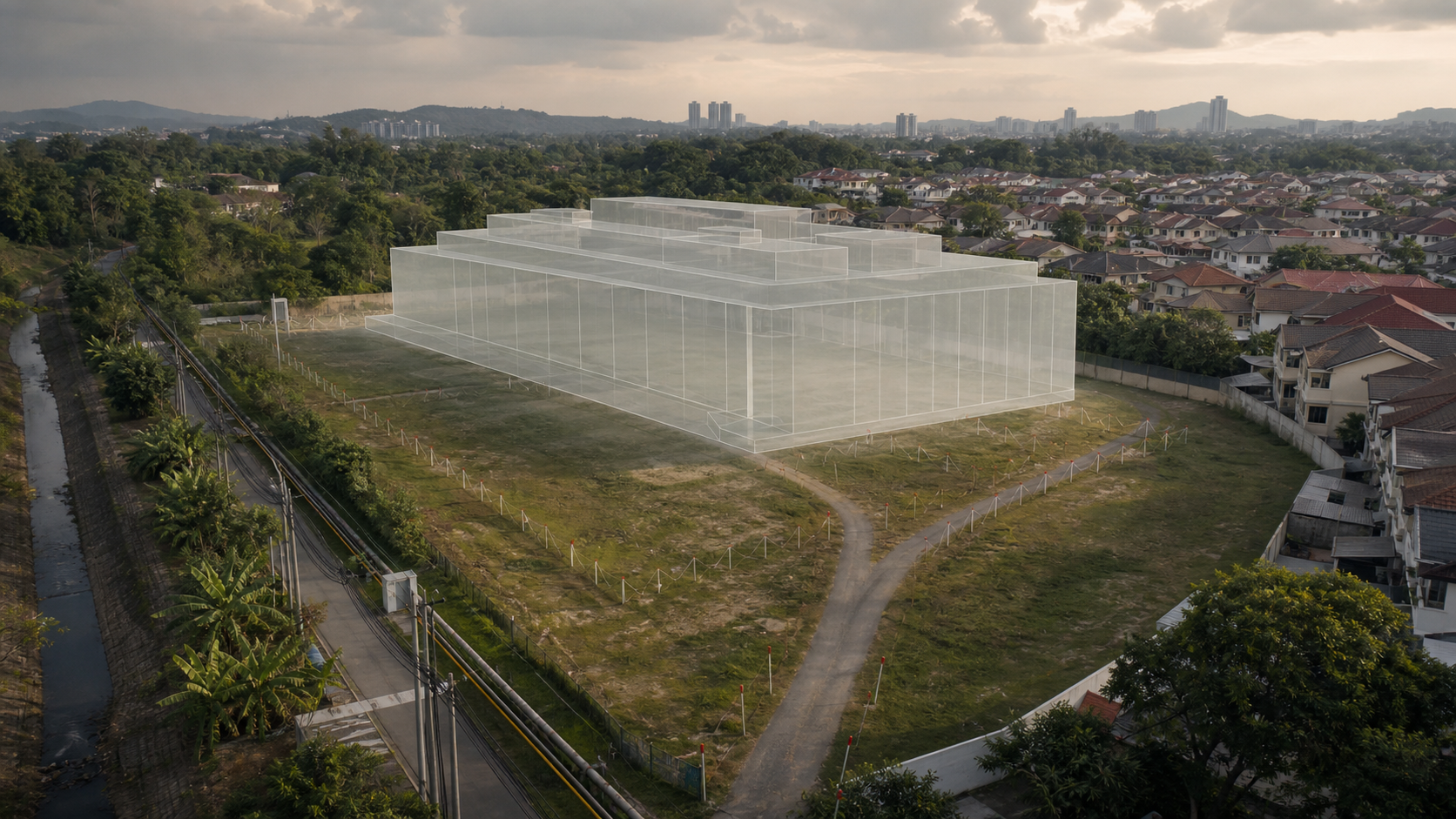
A proposed data centre in Kota Damansara is moving from a municipal planning dispute towards Malaysia's Cabinet. R. Ramanan, the Sungai Buloh MP and Human Resources Minister, said on 17 July that the issue would be brought to a Cabinet meeting after residents raised concerns. He framed the discussion around the need for more comprehensive rules and mechanisms for locating data centres, especially close to homes.
That is a procedural escalation, not a project verdict. No Cabinet decision, meeting date or instruction to suspend the planning application was disclosed. Ramanan separately said he sent a formal objection to the mayor of the Petaling Jaya City Council, known as MBPJ, on 15 July and had not received an official response when his statement was reported.
A local application becomes a national siting test
The publicly reported application concerns land in Seksyen 9 near Jalan Rimba Riang. Accounts based on local notices and objection letters are not completely aligned on its footprint: one report described Lot 50900, while another described Lots 50900 to 50918 together with part of government land. That discrepancy is itself a reason to wait for the council's underlying planning documents before attaching a definitive site boundary to the proposal.
Kota Damansara assembly member Izuan Ahmad Kasim has asked MBPJ to delay the development, conduct a public engagement session and review the relevant technical documents. Residents have questioned the consultation period and raised concerns about site suitability, noise, traffic, electricity, water and environmental effects. These are objections to be assessed, not established impacts from a facility that has not been shown to be approved or operating.
The missing project data matters. None of the reviewed official or news sources establishes a verified developer or operator, the site's area, planned IT load, grid connection, water allocation, cooling method, backup-generation plan, construction value or timetable. A campaign petition names a company, but a petition is not sufficient evidence of the legal applicant, beneficial sponsor or future operator. The identity should therefore remain unassigned until MBPJ or an authenticated company filing confirms it.
Existing controls do not settle the neighbourhood question
Malaysia already screens data-centre resource demands. One day before Ramanan's statement, Deputy Investment, Trade and Industry Minister Sim Tze Tzin told Parliament that the Data Centre Task Force examines applications against available power and water capacity, with household and local-industry needs taking priority. A June parliamentary reply also said new approvals must align with local grid planning without compromising public supply.
There is also an existing national sustainable-development guideline for data centres. It sets power, carbon and water-efficiency measures for projects seeking incentives under the Digital Ecosystem Acceleration scheme. Among other things, it advises avoiding water-stress areas and recommends design water-use effectiveness of 2.2 cubic metres per megawatt-hour or lower.
Those controls do not prove that the Kota Damansara application has passed any test. Nor do they answer every land-use question. The incentive guideline is not evidence of planning permission, and Ramanan's call concerns a more specific gap: how proximity to housing, local infrastructure, environmental effects and public engagement should influence siting. Any new national mechanism remains a proposal unless Cabinet or the responsible agencies adopt and publish it.
Delay and mitigation have different payers
For the project sponsor, escalation increases timing risk. A pause, redesign, extended consultation or relocation could add land-holding, financing, professional and connection costs. A clear rule could nevertheless reduce later litigation and approval uncertainty, particularly if it specifies minimum separation, disclosure and technical-study requirements before capital is committed.
For MBPJ and infrastructure agencies, the immediate burden is evidentiary: disclose the application status, identify the applicant, define the land involved and show how power, water, noise, traffic and environmental issues are being tested. For residents, weak scrutiny could shift disruption or infrastructure pressure outside the project's balance sheet. Stronger conditions can return those costs to the sponsor through mitigation, but only if measurable obligations are imposed and enforced.
The wider market implication is therefore conditional. A national siting framework could lengthen approvals for residential-adjacent projects while making suitable industrial sites more valuable. It could also make the pipeline more investable by replacing ad hoc political escalation with predictable requirements. One disputed proposal does not yet establish either outcome.
The next evidence to watch is concrete: an MBPJ response and planning-status record; publication of the applicant and technical documents; a confirmed Cabinet agenda or decision; and any draft rule stating which projects it covers, which authority enforces it and whether pending applications are included. Until then, the Kota Damansara proposal is contested and under higher scrutiny—not approved, rejected or cancelled.
Sources
- The Star: Ramanan says Kota Damansara data-centre issue will go to Cabinet, 17 July 2026
- Malaysiakini: Kota Damansara representative urges MBPJ to delay the proposal, 17 July 2026
- Sinar Daily via Newswav: local notice and Lot 50900 planning context, 15 July 2026
- Free Malaysia Today: Cabinet to discuss proposed data centre after Ramanan entities, 17 July 2026
- Parliament of Malaysia: R. Ramanan member profile
- MIDA: Guideline for Sustainable Development of Data Centre
- Bernama: Government says data-centre approvals depend on sufficient energy and water, 16 July 2026
- Bernama: Data-centre electricity demand and local-grid screening, 1 July 2026