

- Jumbo frames enhance network efficiency by reducing packet overhead, improving data transfer speeds, and lowering CPU utilisation, particularly in high-speed networks.
- Jumbo Platform by IPTP Networks integrates jumbo frames across a hybrid L2/L3 topology, optimising global connectivity, security, and performance for various industries.
- JumboIX extends jumbo frame support to internet exchanges, benefiting cloud gaming, financial trading, media production, and AI operations with reduced latency.
Few advancements in network infrastructure offer such tangible performance gains as jumbo frames, yet their adoption remains patchy, often hindered by a lack of understanding. First introduced by Alteon WebSystems in 1998, jumbo frames have gradually shifted from a niche optimisation to a fundamental element of high-performance networks, particularly for applications that involve large-scale data transfers, real-time streaming, and database operations. Recognising these advantages, IPTP Networks has built upon this technology to develop Jumbo Platform, a global infrastructure solution designed to tackle contemporary networking challenges while delivering marked performance improvements.
Technical foundations and the evolution of jumbo frames
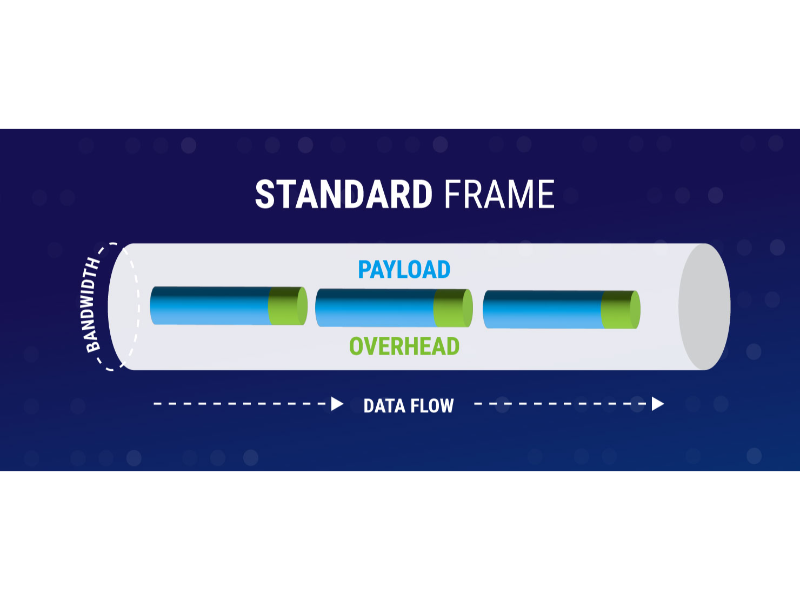
Jumbo frames emerged from a straightforward observation about network efficiency: the standard Ethernet frame size of 1500 bytes, while widely supported, introduces excessive overhead when transferring substantial volumes of data. Regardless of frame size, each packet carries the same Ethernet, IPv4, TCP, and Frame Check Sequence headers, which together account for 58 bytes. This overhead, particularly for high-frequency transmissions, consumes bandwidth and processing power unnecessarily.
By increasing the maximum payload to 9000 bytes while maintaining the same headers, jumbo frames significantly reduce the number of packets required for large data transfers. The impact on performance is substantial—fewer packets mean fewer CPU interrupts and lower processing overhead. In high-speed networks, this reduction is particularly pronounced: on a saturated 10G link, bandwidth savings of up to 4 Mbps can be realised, while CPU utilisation may decrease by 30-50% for the same data volume.

As network speeds have escalated from 1G to 10G and beyond, the efficiency gains of jumbo frames have become even more evident. While most modern networking equipment supports jumbo frames, this feature is often disabled by default, leaving its benefits untapped. However, as data centre interconnects, cloud computing, and high-performance computing continue to demand greater efficiency, jumbo frames are experiencing renewed interest.
Also read: Interview with Charmond Tsang, Chief Commercial Officer at DCConnect Global
Also read: Oxigen unveils largest data centre in Spain
Jumbo Platform: Architecture and global reach
IPTP Networks’ Jumbo Platform extends the principles of jumbo frames across a hybrid Layer 2/Layer 3 topology, combining the performance advantages of direct L2 connections with the scalability and flexibility of routed L3 networks. This approach ensures seamless integration with existing infrastructure while providing a structured path to enhanced performance through jumbo frame adoption.
The platform spans strategic locations across the Americas, Europe, and Asia, with each point of presence (PoP) featuring high-capacity switches capable of handling native jumbo frames. Multiple redundant paths reinforce connectivity resilience, while speeds range from 1G to 100G with tiered pricing structures to accommodate businesses of varying sizes. Advanced monitoring and management capabilities are embedded within the infrastructure, enabling real-time performance tracking and rapid response to potential issues.
In addition, security is a cornerstone of the design, incorporating modern encryption standards to safeguard data integrity and privacy.
As an extension of Jumbo Platform, JumboIX operates as a classical L2 internet exchange with jumbo frame support. Its peer ecosystem highlights the versatility of the platform, featuring global providers operating at 100G—such as Cloudflare and major gaming companies—alongside regional networks benefiting from the same technology at lower capacities. This inclusive framework ensures that all entities, regardless of scale, can access improved performance while maintaining broad connectivity.
Also read: Interview with Vladimir Kangin, CEO at IPTP Networks, and a 28-year voyage from USSR to Cyprus
Real-world impact and applications
The advantages of Jumbo Platform are best demonstrated through practical applications. Database synchronisation across data centres benefits significantly from reduced packet processing overhead, improving both performance and system efficiency. Video streaming services experience enhanced content delivery, while backup and disaster recovery operations benefit from smoother data transfers across sites.
Beyond pure data transfer speeds, Jumbo Platform plays a crucial role in reducing latency and jitter—key factors in real-time applications. The diminished processing overhead also translates into greater power efficiency, a growing concern in modern data centre operations. In complex, multi-tiered environments, the cumulative effect of improved network efficiency can deliver significant gains in overall system performance.
Several specialised industries illustrate the advantages of Jumbo Platform:
- Financial services and trading platforms: High-frequency trading systems require ultra-low latency, where microsecond-level improvements can determine profit margins. One major Asian trading platform reported a 35% reduction in trade execution latency after implementing Jumbo Platform.
- Media production and post-production: Studios handling 4K and 8K video content benefit from streamlined file transfers. A European post-production house noted a 40% improvement in transfer speeds for daily 8K footage movements between Paris and London.
- Cloud gaming services: With sustained high-bandwidth and low-latency requirements, cloud gaming platforms see smoother gameplay and reduced input lag. Several major gaming providers reported up to 25% improvement in stream stability and reduced frame drops following integration with Jumbo Platform.
- Healthcare imaging systems: Medical facilities transferring large imaging files, such as MRI and CT scans, experience faster inter-facility transfers while adhering to stringent data integrity standards. A Southeast Asian hospital network saw a 45% reduction in diagnostic image transfer times while maintaining HIPAA (Health Insurance Portability and Accountability Act) compliance.
- AI and machine learning operations: Large-scale AI training operations depend on efficient dataset transfers. A leading AI research facility documented a 30% reduction in model training time, largely attributed to Jumbo Platform’s efficiency in handling distributed data transfers.
Looking ahead: Infrastructure evolution and future capabilities
As data volumes continue to soar and network demands become increasingly sophisticated, Jumbo Platform is poised to evolve in tandem. IPTP Networks is actively developing support for even larger frame sizes where feasible, weighing potential gains against practical factors such as error detection and network compatibility. With an 89% IPv6 adoption rate among peers, the platform is well-positioned for future protocol advancements, while its flexible infrastructure design accommodates growing bandwidth demands.
The continuous advancement of networking technologies ensures that Jumbo Platform remains a critical component of modern infrastructure. Through ongoing development and strategic expansion, it will continue to provide organisations with the tools needed to optimise network performance in an increasingly data-driven world.