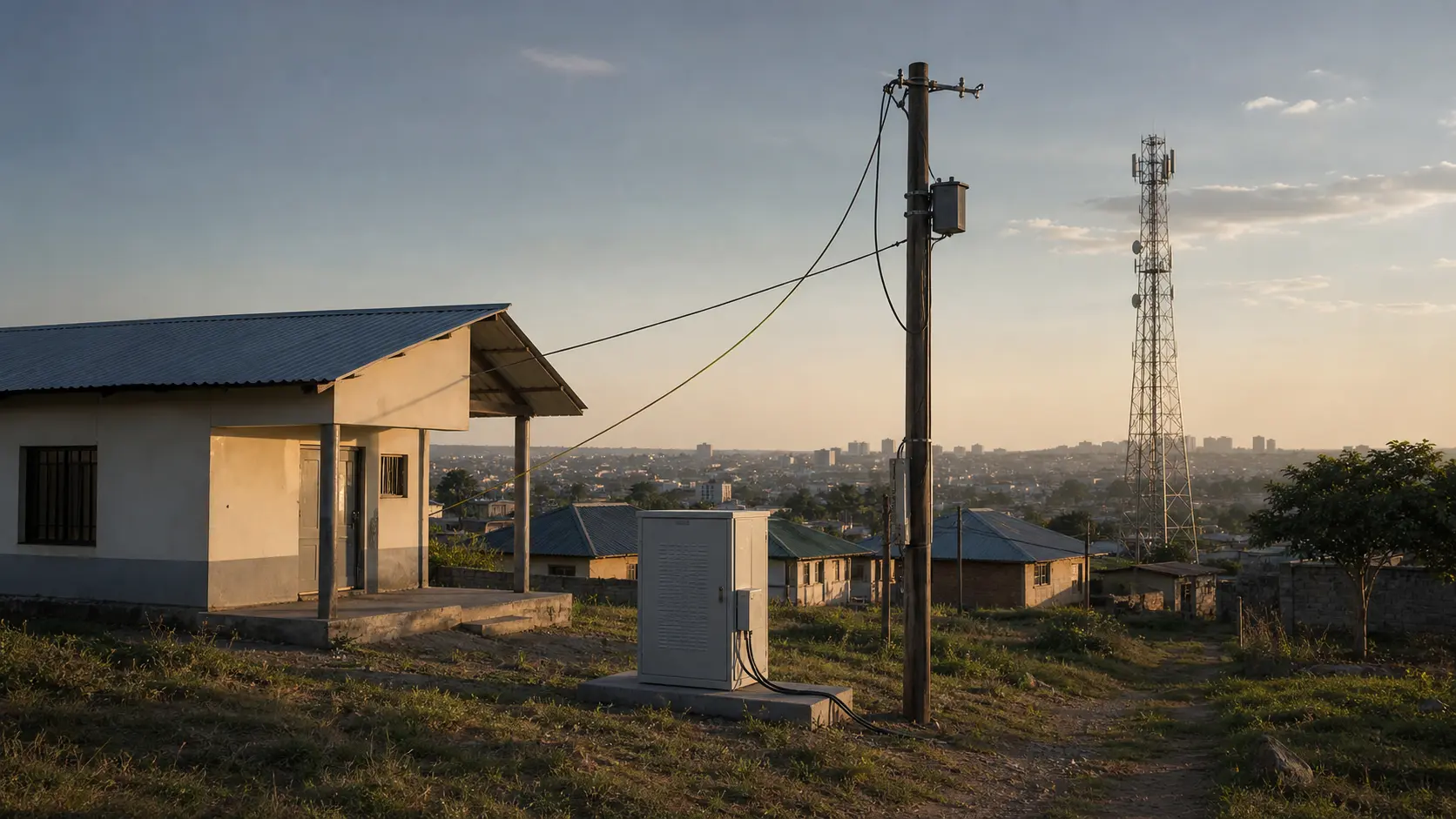
Summary
- Availability is not meaningful access when price, congestion, equipment or repair delays keep users offline.
- The useful evidence is a service-level record covering delivered speed, latency, outages, affordability and restoration time.
Internet access is a chain, not a single connection. International capacity, national backhaul, the local access network, household equipment, electricity and customer support all have to work together. A fault at any one layer can turn nominal coverage into an unreliable service.
That distinction matters for public targets and investment claims. Population covered by a signal says little about whether a family can afford a plan, whether a school can sustain a video class, or whether a small business receives help after a line fails. Satellite, fibre, mobile and fixed wireless can each close a gap, but each shifts cost and operational dependency to a different part of the chain.
A credible access programme should therefore publish more than premises passed. It should track the price of an entry-level plan relative to income, performance at busy hours, outage frequency, repair time and the proportion of customers who can obtain suitable devices. These measures reveal whether infrastructure has become a dependable utility or remains occasional connectivity.
The next watchpoint is not another coverage headline. It is whether operators and public agencies adopt a common quality floor and report who falls below it. Without that record, expansion can be real while effective access remains uneven.