

- Traditional computer program programmed with coded instructions for specific tasks in fixed rules.
- AI models make decisions and provide solutions based on learnt patterns and also generate new input without repetition from what it used to learn.
Artificial intelligence technology has been developing and applying to many fields of life. How does it differ from traditional programming? In this blog I’m going to discuss what each programming is and their different focus and specific field either of the programming is suitable for. First watch this video by Martin Keen from IBM discussing the AI system and traditional code.
AI programming: A summary
Let me briefly summerize the video content. Martin discussed that AI learns data through three steps, that is training (get the data in), validation (learning) and test (the performance). While in traditional programming, they follow rules and are programmed in lines of code manually.
He argued the three differences between those two programming methods, with the first being the scalability, as AI allows large amount of codes and data while traditional programming needs more codes input; second is traditional programming have full control over the system for its output is what it built, while AI maybe unpredictable because it can learn based on pattern that generate something new beyond expectation; third point being the learning and data handling aspects.
Also read: IBM reports growth in AI bookings, beating earnings estimates
| Traditional programmming (classical conditioning) | AI programmming (operant conditioning) |
| 1. problem? can be either the issue or the solution offered | 1. data collection |
| 2. algorithm design | 2. model selection |
| 3.code implementation | 3.training(saying training bc unpredictable) |
| 4.testing and debugging | 4.evaulation(aka testing) |
We can see clearly the difference between AI and traditional programming in the table of steps of developing them. The first high-level programming language dating back to 1942, made commercial is called the FORTRAN(FORmat TRANslation), led by a team in IBM. The first powered computers had limited capacity and memory which forced programmers to write hand-tuned lanugage programs.
Over the decades more programming languages have been invented with more advanced processing focuses. Traditional programming applies to many fields that require a secure and accurate environment like accounting systems, web development, and within the areas, payment processing and user authentication, which are all regulated under governance rules. AI, on the other hand, is quite the opposite. Founded as an academic discipline in 1956, obstacles came following decades of lack of funding confidence, finally welcoming the AI spring in 2012. Developing through deep learning outperformed AI techniques led to the AI boom in the 2020s.
Also read:Human vs AI investment adviser: Which is best?
AI programming and machine learning
Machine learning played a crucial role in developing the early AI. Machine learning is the study of programs which can improve their task performance on given tasks. Pretty similar to the idea of generative AI now, learn the pattern of the data and output something different. Developers called the third step as training for its reinforcement learning aspects in “testing”(steps in traditional programming) as experimenters will reward(sent good signal) for the good response and punish(sent negative signal) for bad response, thus training the machine to learn to give ‘correct’ answers.
As the explanation going so far from its definition to its origin/history, we understand how they are differ from each other, it’s pretty similar like the term in psychology as the classical conditioning and operant conditioning, which the former one said behaviors are elicited, while the later one said behaviors are emitted.
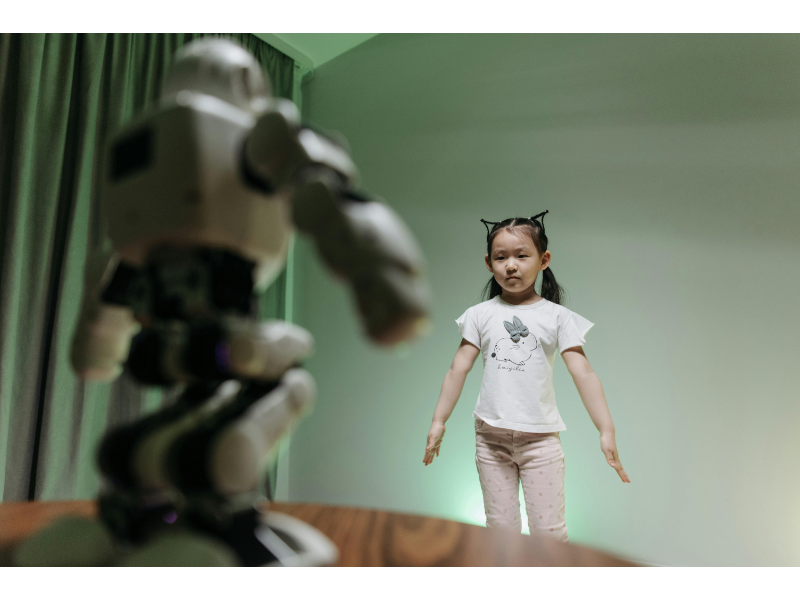
From the difference it’s not hard to understand why AI is questioned by many about its ethical issues and future risk on the human race. As they could literally learn things like what we did. Traditional programming provides a strong base for AI to be developed, will AI at some point outperform humans physically too? That remains a question.