Summary
- The RIPE NCC's October 2026 General Meeting made its Managing Director and Chief Executive an executive member of the Board: Resolution 2 carried 761 Yes to 172 No with 169 abstentions out of 1,102 votes cast, 81.56% of non-abstaining votes.
- The same ballot's Resolution 1, on the deficit rule, took 57.44% — a 24.12-point gap. The board the members voted for has seven member-elected non-executives plus the executive it supervises.
- Hans Petter Holen is also the NRO Executive Council's Vice Chair and Secretary for 2026, an office that rotates annually, on a body of five registry chief executives that decides by consensus and whose RIR Governance Document goes for adoption in Q4 2026.
What the vote actually changed
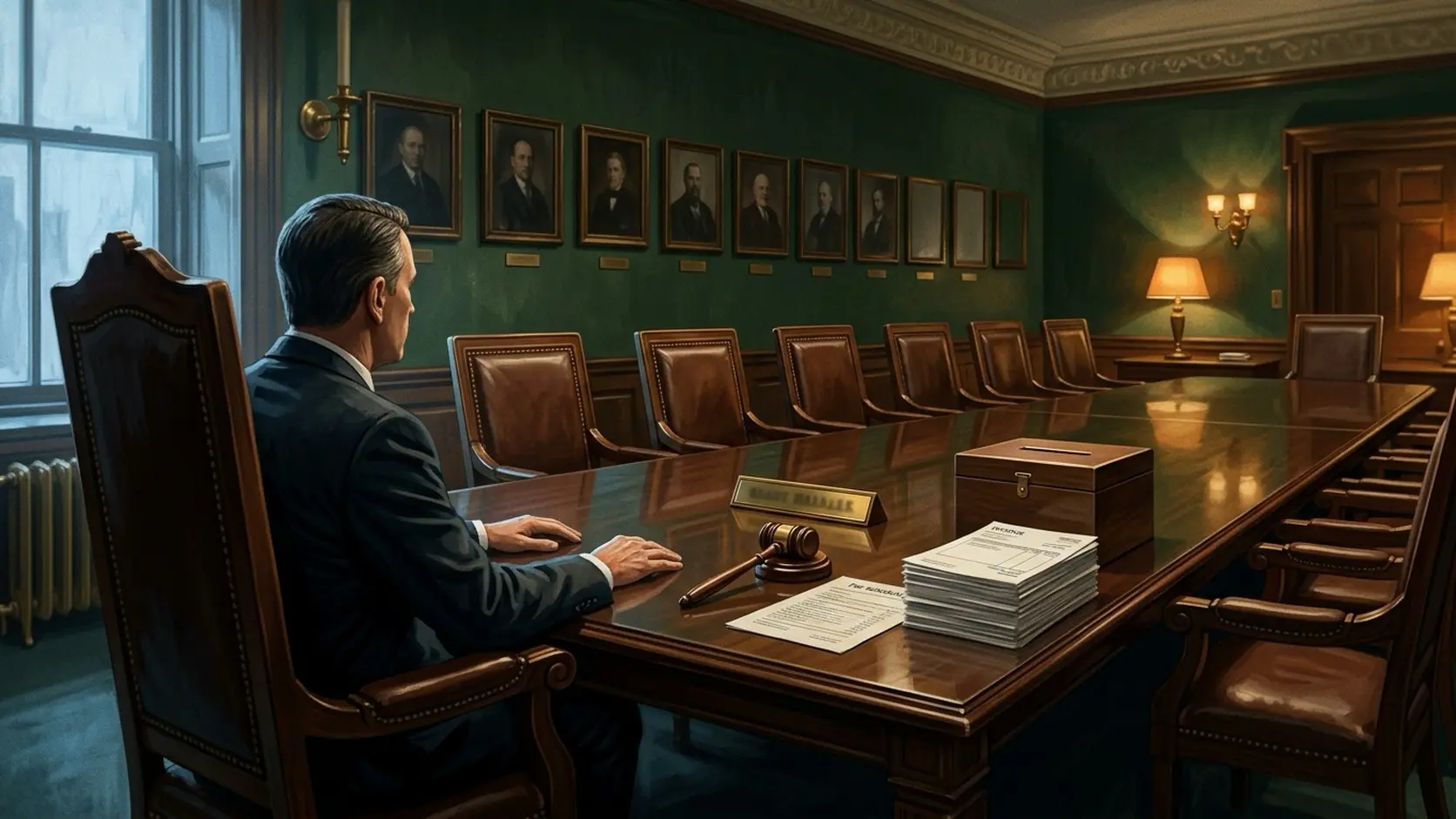
The proposal came from the RIPE NCC's Chief Legal Officer, not from the executive. Athina Fragkouli argued in September that the Articles described a board that did not match the board in practice: an "Executive Board" with no executive role, supervising a Managing Director who runs the association. The remedy was to stop describing a fiction. The Executive Board becomes the Board. Seven member-elected non-executives stay. The Chief Executive joins as an executive member.
The members approved it on 30 October 2026: 761 weighted votes for, 172 against, 169 abstentions, out of 1,102 cast. That is 69.06% of the votes cast and 81.56% of the votes that were not abstentions. On the same ballot, the resolution on the deficit rule — who pays when the association runs short — took 57.44%. Renaming the board was 24.12 points easier than deciding who carries the loss.
One detail from the mailing list is worth keeping. On 24 September 2026 a member replied that under the current Articles the Managing Director must already be invited to all board meetings. The change did not put him in the room; it put him in the vote.
The second job
The NRO Executive Council's published 2026 positions are: Chair Jia Rong Low, APNIC's Director General; Vice Chair and Secretary Hans Petter Holen, the RIPE NCC's Managing Director and Chief Executive Officer; Treasurer John Curran, ARIN's President and CEO. The page adds the three sentences that matter: the positions rotate annually, the council acts only by consensus from all five RIR regions, and each RIR's board is responsible for appointing its chief executive.
So the man who signs the NRO's minutes is a chief executive appointed by a board he now sits on, in a body of five chief executives whose officers rotate and whose decisions have no attributed votes. In 2026 two of the five officers hold seats on the boards that appoint them: Holen by the October amendment, and Curran as a voting trustee of ARIN's board under its Bylaws.
That is not an accident of personalities. It is what a system of five member organisations coordinating by consensus looks like when each of them is small enough that its chief executive is also its most senior diplomat.
What he signs next
The RIR Governance Document went from the ASO Address Council to the NRO Executive Council on 28 July 2026, and adoption by the NRO EC and ICANN is scheduled for the fourth quarter of 2026. The document sets the criteria for recognising and removing registries — the rules that decide whether a registry that misbehaves can be pushed out.
The NRO EC adopts by consensus. The secretary of that council is the chief executive of one of the five registries, sitting on the board that reviews him. If adoption arrives in the fourth quarter without a published instrument, the record will show a document, a date and five signatures; it will not show who argued what.
What the members kept
The members kept two levers. The first is the ballot: seven non-executives on an eight-vote board, elected by the membership, and the right to review or amend board decisions by a two-thirds majority of the entire membership. The second is the General Meeting itself, which can change the Articles again — the same instrument that created the executive seat in October.
Neither lever has been pulled in anger. The two-thirds review right exists on paper and has not been used; the 2026 meeting was the first in years to put a structural question to a weighted vote, and it passed with the largest margin on the ballot.
What to watch
Watch the first board meeting of 2027. An eight-vote board with one executive member decides by majority; the seven non-executives can outvote the executive at any time, and the executive can break a seven-way tie. Whether the board publishes minutes that attribute positions is the only way to know which happened.
Watch the fourth-quarter adoption of the RIR Governance Document. The secretary who signs it is the executive on his own board; a published instrument would show how the NRO EC divided, and a silence would show that it did not need to.
Watch the 2027 charging scheme and the next General Meeting. The deficit rule passed with 57.44% — the closest thing on the ballot to a contested question. If the association's finances tighten, the rule that decides who pays will be the one the members nearly rejected, administered by a board that now includes the man who spends it.
Watch Holen's own contract. The board appoints and dismisses the management. With the executive inside the room for that discussion, the question of who proposes and who votes on his remuneration is answered by practice, not by the Articles, and the practice is not published.
Sources
- Moving to a New Board Structure — the Chief Legal Officer's September 2026 argument for renaming the Executive Board, keeping seven non-executives and making the CEO an executive member.
- General Meeting October 2026 results — both resolutions approved, with the notary instruction.
- Voting Report, General Meeting October 2026 — Resolution 2: 761 Yes, 172 No, 169 abstentions of 1,102; Resolution 1: 57.44%.
- ncc-announce, 22 September 2026 — the announcement that opened the process.
- RIPE NCC Executive Board — the board's seven members, its power to appoint management, and the members' two-thirds review right.
- NRO Executive Council — the 2026 officers with Holen as Vice Chair and Secretary, annual rotation, consensus rule, and the NRO MoU clause on appointing chief executives.
- RIR Governance Document Version 3: Summary of Differences — the 28 July 2026 handover and the Q4 2026 adoption step.
- members-discuss reply, 24 September 2026 — the current Articles already require the Managing Director to be invited to all board meetings.
Member Briefing
Read the full trend briefing
Members read the full briefing with the source notes behind every finding.
Strategic Circle
A daily briefing in your language, built from changes we have verified.
Join for USD 20/monthCancel anytime.
Members also get the full research library, a daily briefing on the networks they follow and the private forum.