
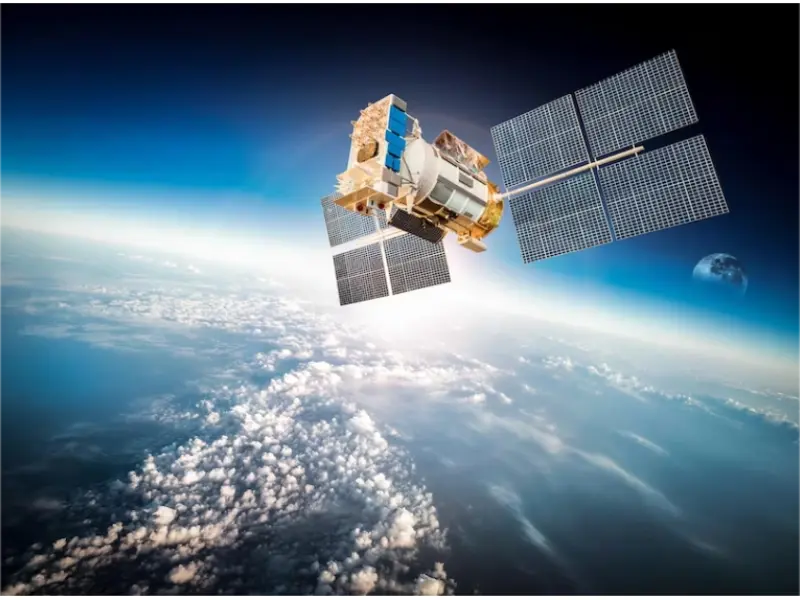
- Why satellite internet has high latency lies in long distances, speed of light limitations, and weather dependencies causing unavoidable delays.
- Managing latency effectively involves using latency-tolerant apps, optimising your network, and exploring low Earth orbit (LEO) satellite services.
Satellite internet has transformed connectivity in remote areas, but it comes with its own set of challenges. One major issue is high latency. In this blog, we’ll explore why satellite internet has high latency and how users can manage it effectively.
Also read: Musk’s Starlink seeks security clearance to enter the satellite internet market in India
Also read: Jio Platforms cleared for satellite internet in India
Why does satellite internet have high latency?
Latency is the time it takes for data to travel from one point to another and back again. With satellite internet, this journey is much longer compared to other types of connections. Here’s why:
Long distance to satellites
The biggest reason for high latency in satellite internet is the distance data must travel. Satellites used for internet services are often in geostationary orbit, about 35,000 kilometres above Earth. For data to reach the satellite and return, it covers an enormous distance. This journey results in a delay of around 500-600 milliseconds, even in perfect conditions. By comparison, fibre optic internet has a latency of about 20 milliseconds or less.
Speed of light limitations
The speed of light, while incredibly fast, still creates a bottleneck for satellite communication. Even though signals travel at light speed, the sheer distance involved means a noticeable delay. This is not something that can be fixed by improving technology on the ground—it’s a limitation set by physics.
Weather and line-of-sight issues
Satellite internet also depends on a clear line of sight between the dish and the satellite. Adverse weather, such as heavy rain or snow, can increase latency further. These interruptions add to the inherent delay already present.
The effects of high latency
High latency affects the quality of many internet activities. For browsing, the difference might be minimal, but for activities that require real-time interaction, such as video calls or online gaming, high latency can be frustrating. It leads to noticeable delays, lag in conversations, or sluggish gameplay. This is why satellite internet often struggles to provide the same experience as cable or fibre connections for these tasks.
How to manage high latency
While you can’t eliminate latency in satellite internet, there are ways to manage it and improve your experience.
Use latency-tolerant applications
The first way to manage high latency is to use applications that are less affected by delays. For instance, email, social media browsing, and video streaming can tolerate higher latency without too much impact. Avoid activities like online gaming or voice over IP (VoIP) calls if possible, as these are the most affected.
Optimise your network
Optimising your home network can also help reduce the impact of latency. Limit the number of devices using the internet simultaneously, especially for activities like video streaming or large downloads. Reducing the network load can help make latency less noticeable.
Quality of Service (QoS) Settings
If your router supports Quality of Service (QoS) settings, use them. QoS helps prioritise certain types of traffic, which can make essential activities run more smoothly, even with high latency. For example, you could prioritise streaming services over large file downloads.
Preload content
Some services allow you to preload content. Video streaming platforms like Netflix allow users to download content in advance. This helps you avoid the effects of latency while watching your favourite shows or movies.
Consider lower-orbit satellites
Newer satellite providers, such as Starlink, use low Earth orbit (LEO) satellites, which are much closer to Earth compared to traditional geostationary satellites. This significantly reduces latency, making it possible to use applications that require real-time interaction. If available, consider switching to a LEO-based satellite service for a better experience.
Mastering satellite internet latency
High latency is an unavoidable part of satellite internet due to the distances involved. However, by understanding the reasons behind it and making a few adjustments, you can manage it effectively. Using latency-tolerant applications, optimising your network, and exploring newer technologies can all help improve your internet experience. Satellite internet might not match the low latency of fibre, but with these strategies, it can still serve your needs effectively—especially in areas where other options are limited.