
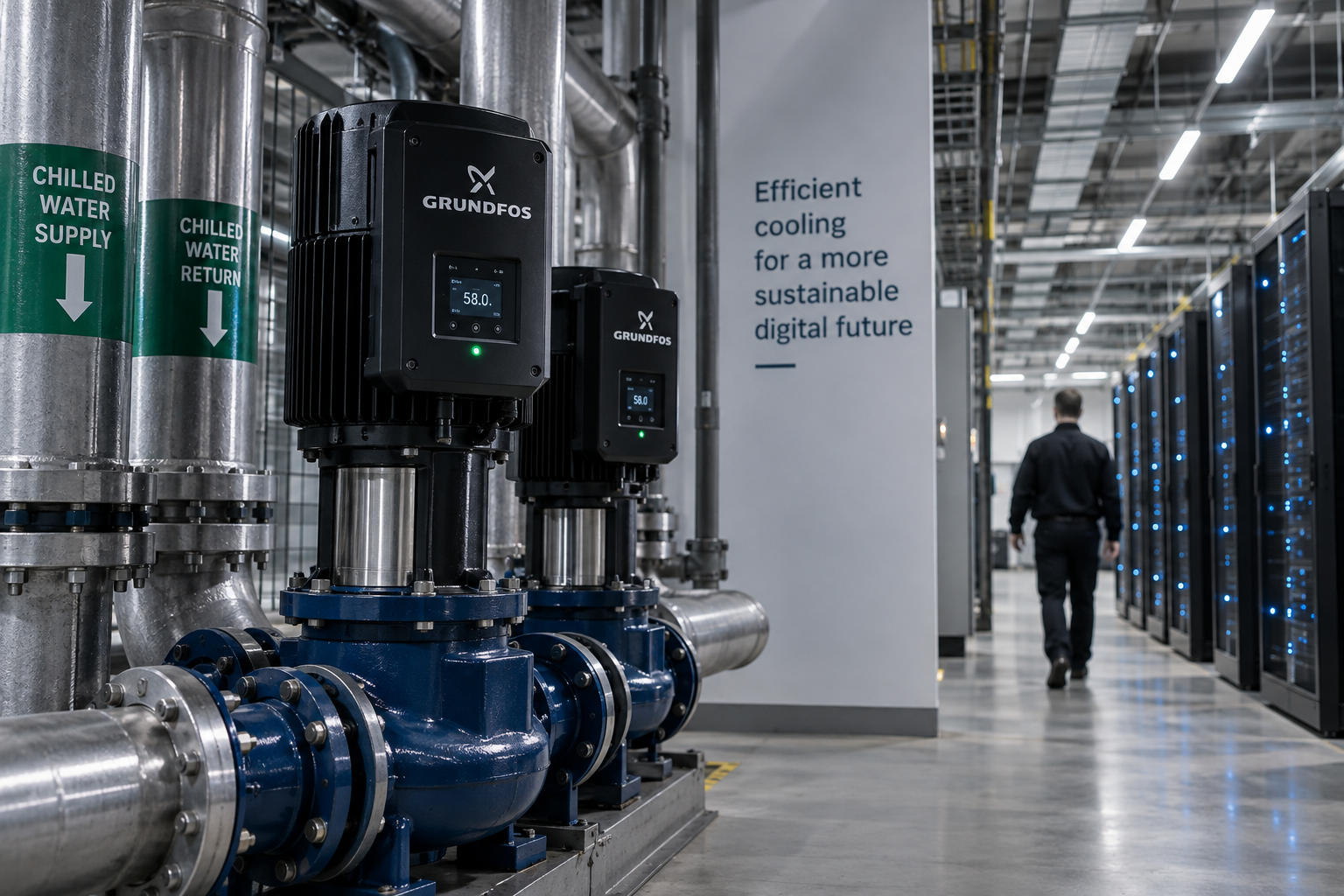
- Grundfos says cooling can account for up to 40% of a data centre's energy use
- It highlighted variable-speed pumps and the trade-off between power and water efficiency
The fact
Grundfos has urged UK data-centre operators to pay closer attention to cooling-system efficiency as AI workloads raise power and cooling requirements. The company highlighted variable-speed pumps and controls, particularly for equipment that runs continuously. These pumps can increase or reduce water flow as cooling demand changes instead of operating at a fixed output throughout the day.
The UK government's Compute Evidence Annex says cooling can account for up to 40% of a data centre's total energy consumption. It also notes that higher GPU power requirements and denser server configurations place greater demands on cooling systems. Grundfos said electricity savings also need to be considered alongside water use because some water-based cooling approaches can reduce power consumption while increasing water demand.
Uptime Institute's 2026 survey put average industry power usage effectiveness, or PUE, at 1.52. Newer and larger facilities can reach 1.3 or below, while older facilities remain one reason the wider industry average improves slowly.
The assessment
Cooling efficiency depends on how closely the system responds to the heat being produced inside the facility. Even an efficient pump can consume unnecessary electricity if it circulates more water than the IT equipment requires. ASHRAE's AI data-cententre framework treats variable-speed pumping, flow control, temperature sensors and cooling controls as connected parts of thermal management.
That puts more emphasis on commissioning and day-to-day control as rack densities and workloads change. Facility teams need to establish how much cooling flow different areas require and adjust pump speeds and temperature settings accordingly. Water use also needs to be measured alongside electricity consumption. Uptime Institute's research on dry and evaporative cooling found that design and operating practices can materially affect performance and recommends considering water usage effectiveness, or WUE, alongside PUE.
Existing facilities can therefore look for inefficiencies in how their cooling systems are operating before deciding whether major equipment needs to be replaced. Flow rates, pump loads, temperatures, PUE and water consumption can reveal where equipment is working harder than the thermal load requires. For BTW readers, the stronger evidence will come from measured performance after operating settings or controls are changed, rather than from the efficiency rating of an individual component.
What to watch
Watch for operators to publish before-and-after electricity and water data from cooling-system upgrades, particularly at facilities adding higher-density AI racks. Changes in PUE, WUE, pump energy use and cooling reliability would show whether better control is reducing overhead without shifting the problem from electricity consumption to water use.
Member Briefing
Deeper Profile Context
Sign in with the right membership level to unlock the full briefing and source notes.
Only for Strategic Circle
Strategic Circle
Open to all readers. Unlock profile briefings after joining and signing in.
Join Strategic CircleOnly for Leadership Alliance
Leadership Alliance
For qualified IP-asset owners and management; sign in to unlock alliance briefings.
Join Leadership Alliance