
Policy continuity, legitimacy, and accountability signals across internet governance institutions.
Governance
Governance
Internet governance intelligence tracks institutions, policy processes, standards activity, registry operations, accountability disputes, and implementation signals that affect internet infrastructure. BTW.
RIR WatchdogCase FileNumber Resource SocietyICANNIETFHistory of InternetNOGs

RIR Watchdog, Case File, NRS, ICANN, IETF, History of Internet, and NOG sessions.
Coverage prioritizes implementation evidence and institutional behavior over declarative positions.
Latest Coverage
Latest from Governance
7,549 articles

History
One Connection Was One Point: How RFC 1025 Tested TCP/IP Compatibility
Before compatibility could be assumed, it had to be demonstrated between actual implementations. RFC 1025 turns that early Internet practice into a scorecard: start with one connection, then add peers, gateways, damaged packets and cases designed to expose what a successful…

IETF
IETF Runs Two INT AD Selections on Different Clocks
The IETF is handling two Internet (INT) Area Director selections at once. One replaces Tommy Jensen after his mid-term resignation; the other is the regular two-year appointment for which Éric Vyncke is not seeking to continue. The timetables and terms do not line up.

History
The Frame Held 512 Bytes. The Datagram Could Span 120 of Them: RFC 1201
The 1991 ARCNET specification made a small fixed frame carry a much larger IP datagram by moving fragmentation down to the data link. Its 60,480-octet ceiling was only a format limit: every network still had to choose and share a practical maximum.

CASE FILE
ITU Report Maps a 50% Duty Test for Major Organizational Change
Document 53-E describes a threshold tied to duties in regular-budget D-1 and D-2 posts. PP-26 is invited to note the report; it has not adopted a new rule.

History
Before Joining the Internet, You Needed Its Oral Tradition: RFC 1118
In September 1989, RFC 1118 set out to help a small, isolated IP network cross into the Internet. Its most useful contribution was a map of people, operating centers and unwritten practice; its own disclaimer showed how quickly that map could age.

CASE FILE
ITU’s 147 Exemptions Reach PP-26 as One Renewal Package
A Secretariat review places 96 organizations in the group considered to meet all exemption criteria, 16 short of one or more criteria, and 35 without a formal extension request. The Secretary-General nevertheless recommends extending all 147 for 2028–2031; PP-26 has not decided.

History
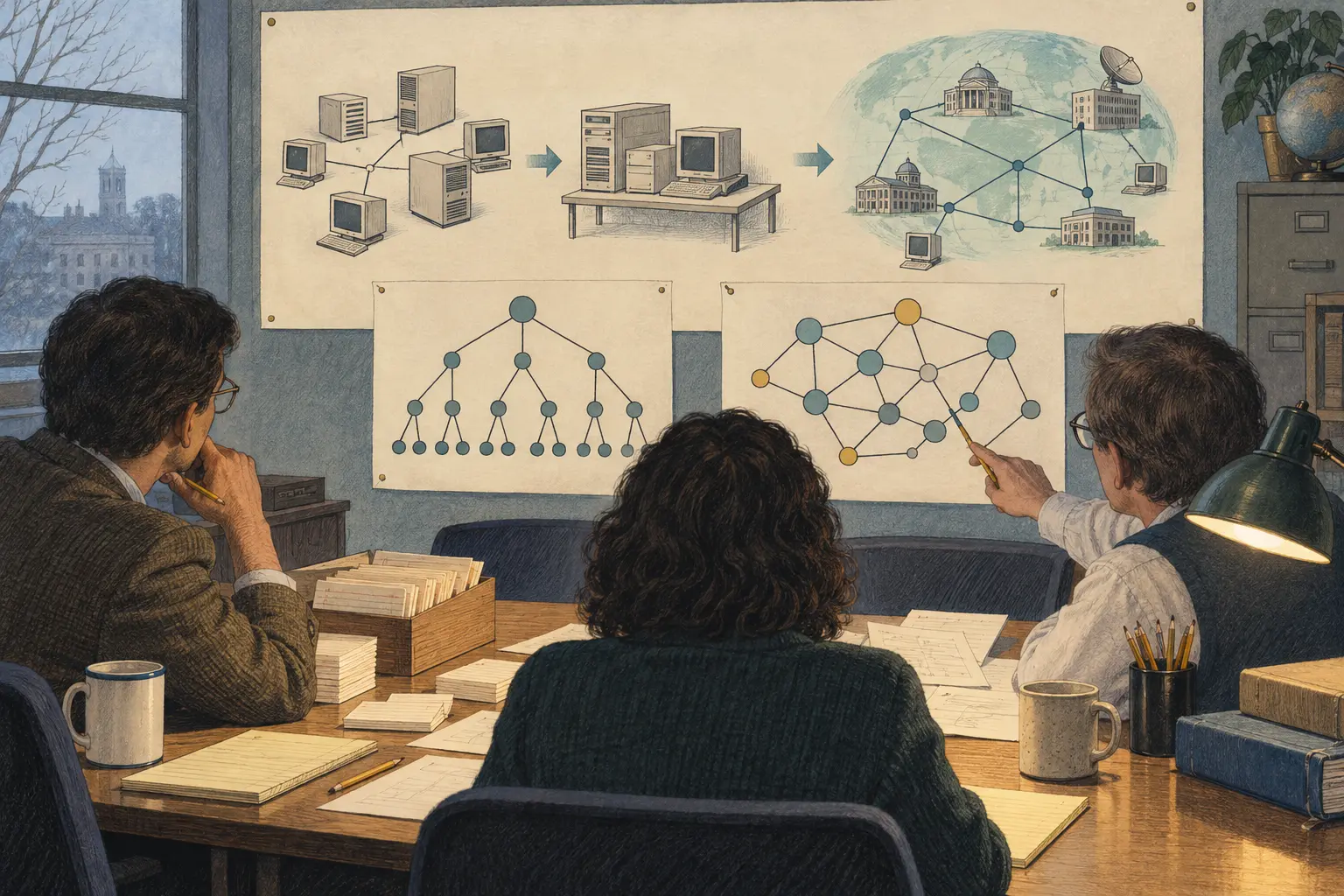
One Empty Query Could Show Who Was Online: Name/Finger’s Presence Boundary
A 1977 empty CRLF asked one host to enumerate every user on that machine. The request could travel; the answer stayed a site-produced report whose fields and disclosure boundary were local.
History
The Three-Year Plan for Internet White Pages: RFC 1107
In July 1989, a plan for finding people across research networks arrived with an unusually clear qualification: a service might be possible in three years, but the memo did not represent a committed Internet-community research activity. That gap between timetable and commitment…

IETF
IETF individual draft raises proposed NomCom guarantee to five seats and sharpens incentive trade-offs
Revision -06 of an individual Internet-Draft raises a proposed NomCom guarantee from three seats to five for a self-declared opt-in pool. The design makes selection independently verifiable, but creates stronger incentives in small pools and turns pool membership into a…

CASE FILE
ITU’s PP-30 Invitation Reaches Its Next Authority Gate
The ITU Council has approved an invitation for India to host the 2030 Plenipotentiary Conference, but the record still points to a further formal step at PP-26. A proposed host-selection framework is aimed at conferences from 2031, leaving PP-30 on the current track.
History
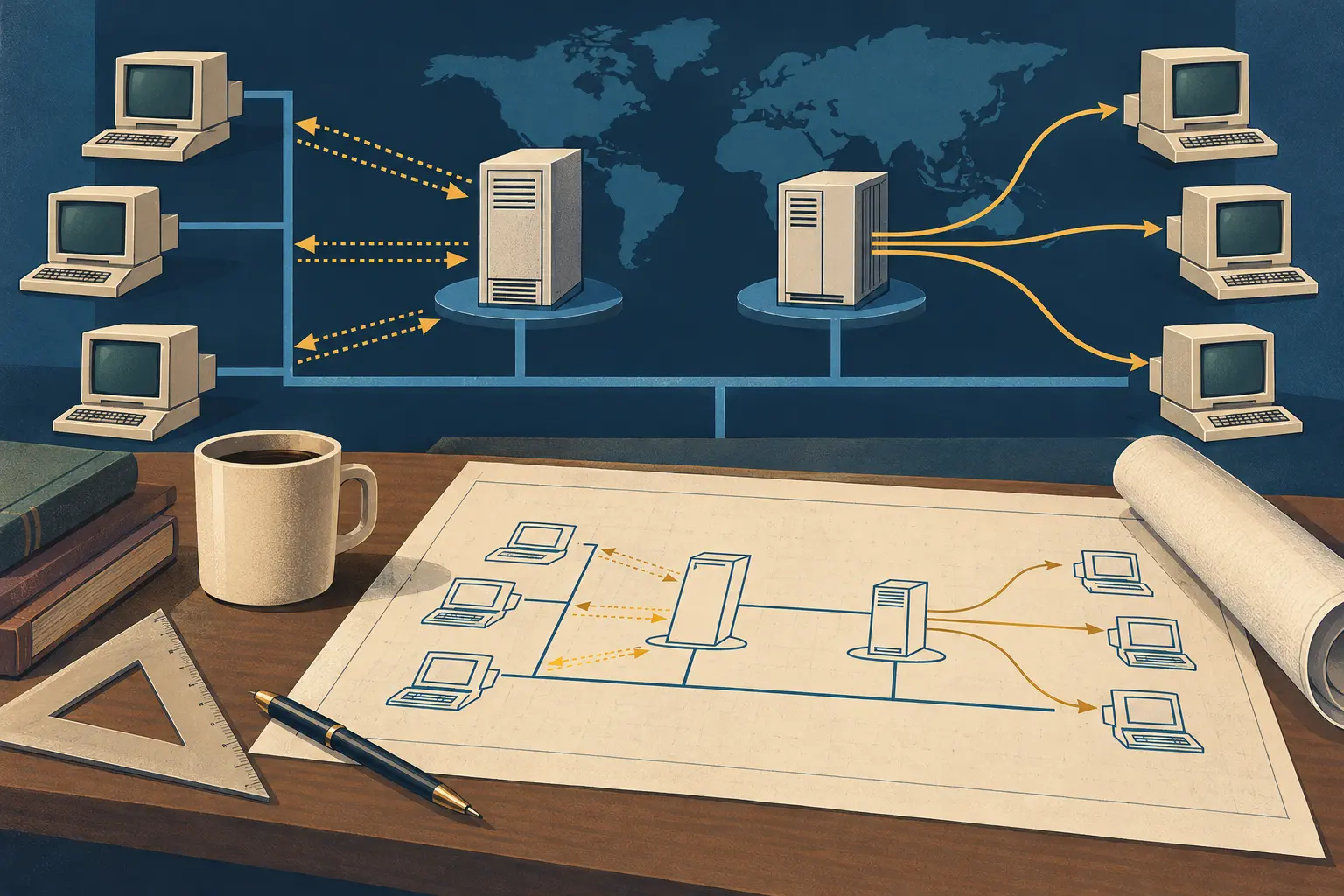
A Name Server Could Not Deliver a Datagram to the Group: RFC 1001 and RFC 1002
A name directory can tell a sender where a name is registered. In the March 1987 NetBIOS-over-TCP proposal, that answer still did not distribute a group datagram. RFC 1001 and RFC 1002 gave that second job to a distinct logical service, then left its forwarding result largely…
History
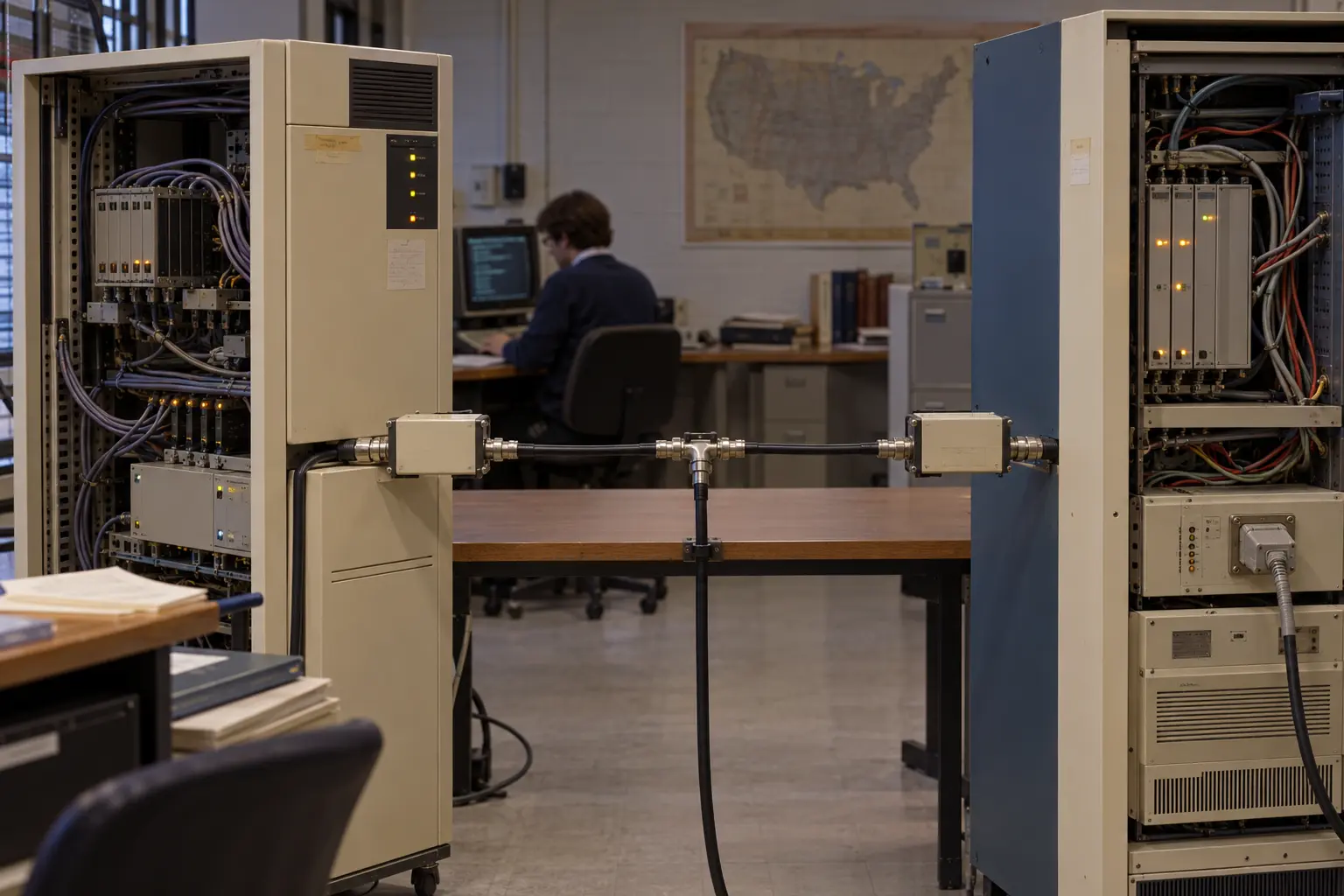
The Ethernet Handoff Was Common. An Open IGP Was Not: RFC 1009
In 1987, the National Science Foundation required gateways from different vendors to meet at a familiar boundary: Ethernet, with serial links as a minimum companion. The same specification admitted that the vendors still had no open interior gateway protocol in common. One layer…

History
Archie’s Search Was Only as Fresh as Its Last FTP Listing
Archie made a scattered set of anonymous FTP archives searchable by collecting their directory listings. That small distinction shaped the service: its answer could point to a filename and a place, but the file still lived on someone else’s machine—and the index could only…

History
When a Usenet Cancel Failed Locally, RFC 1036 Said to Stop
A cancel message could travel through the same distribution machinery as ordinary Usenet news, yet its authority remained tied to what each host could find and verify for itself. RFC 1036 drew a sharp boundary: if a system could not cancel the named article locally, it should not…

History
The License Covered the Code, Not the Protocol: Gopher’s 1993 Line
On 11 March 1993, the Minnesota Gopher Team opened a newsgroup post by saying it had heard enough “hysteria” and rumor to set out an official position. The phrase that later stuck was simple: commercial users would need a licence. The policy that followed was not. It divided…

IETF
RFC 10065 makes the group ID a control input, not proof of enforcement
RFC 10065 gives operators a way to carry group identity into network access rules. The harder question begins after the identifier arrives: who owns its mapping, where is the rule installed, and what evidence shows that the right traffic was actually controlled?

History
A Port Was Not Enough: RFC 675 Put the Network in the Socket Name
A process could choose a port that made sense on its own machine. It could not assume that the same number named the same endpoint across a network of independently run systems. RFC 675 answered that scope problem by joining a port to the address of the TCP that owned it, then…
Story
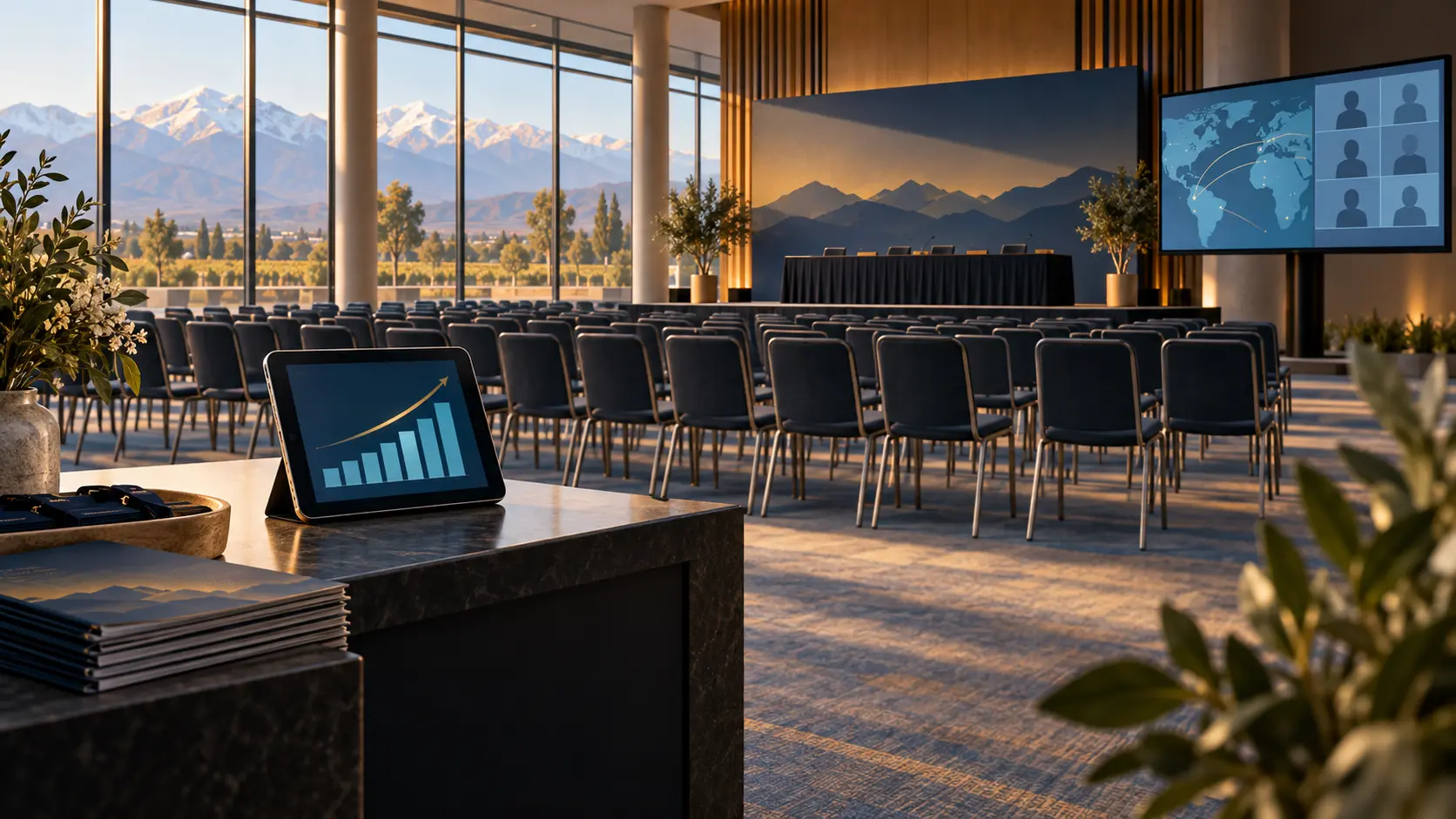
LACNIC 46 Registrations More Than Doubled. That Is Not Attendance
The public count moved from 348 to 763–766 in about four weeks. It is a sign of registration momentum before the Mendoza meeting, not a record of who will attend or take part in its policy forum.

CASE FILE
Philippines’ cable outage: three clocks behind one “restored” notice
On 2 October, public probes saw a sharp rise in latency between the Philippines and Singapore, but could not identify a cable. InfiniVAN later reported its C2C segment restored; carriers then described their own rerouting and service recovery. These are connected events, not…

History
The Plug Had Four Pins: NORDUnet and Europe’s Protocol Choice
In May 1988, a Nordic research network asked the United States for a route into NSFNET while promising to carry several rival network services at home. Its four-pin plug became a practical answer to a harder question: could researchers share a backbone before they agreed on one…
Session Map
Governance Branch
RIR Watchdog
Five regional sessions tracking allocation policy, board legitimacy, and institutional continuity.
Open RIR WatchdogCase File
Long-cycle governance dossiers with legal, election, and institutional stress analysis.
Open Case FileNumber Resource Society
Membership, charter, and resource-governance intelligence from the NRS ecosystem.
Open NRS SessionICANN
DNS coordination, accountability frameworks, and global multi-stakeholder process dynamics.
Open ICANN SessionIETF
Protocol standardization trajectory and interoperability risk under fragmented policy conditions.
Open IETF SessionHistory of Internet
Long-cycle infrastructure history used for governance interpretation and structural forecasting.
Open History SessionNOGs
Operator-level implementation intelligence from APRICOT plus regional and national NOG ecosystems.
Open NOGs Session