
RIR Watchdog
Five regional sessions tracking allocation policy, board legitimacy, and institutional continuity.
Open RIR WatchdogGovernance
The internet runs on institutions most people never see. We follow the regional registries, ICANN, the IETF and the operator communities through every board vote, policy fight and court case, and tell you what each move means for your network.

Latest Coverage
9,366 articles

IETF
A number can be both useful and radically incomplete. RFC 9972 gives BMP operators a more precise way to report how many routes occupy a named RIB view at a particular moment. It does not turn that count into a route record, a policy explanation or a delivery observation. Mukul…

Story
An 8 kbit/s voice encoder can send a 24 kbit/s stream before Ethernet, security and control traffic enter the calculation. LACNIC’s latest telephone explainer points to a distinction that matters when operators turn compression into a capacity budget.

CASE FILE
This autumn, OpenJS Foundation’s Cross Project Council will replace two separate non-Impact voting paths with one Community Voting Member class. The Charter is unusually clear about the planned change: it names the effective election cycle, caps the new class at five seats and…

ICANN
The Council’s July answer permits enquiries prompted by a reasonable basis, while rejecting active compliance policing. A September Board discussion will consider the next steps for the still-pending recommendations.

IETF
Before two networks exchange a single route, each can state what kind of neighbour it believes it has. RFC 9234 turns that bilateral statement into a control: incompatible roles can stop the session, while the Only-to-Customer attribute can stop a marked route from crossing the…

IETF
A standard can make a demanding rule without manufacturing the evidence that the rule has become true in every running system. That distinction is not a loophole; it is how an operator can tell a sound protocol decision from an unsupported deployment claim. Rich Salz’s…

History
A monitoring console can display a MIB module's latest revision date with complete confidence and still know almost nothing about the code answering from a particular device. RFC 1442 gave SNMP information modules a stable identity and a disciplined memory of change. It also drew…
IETF
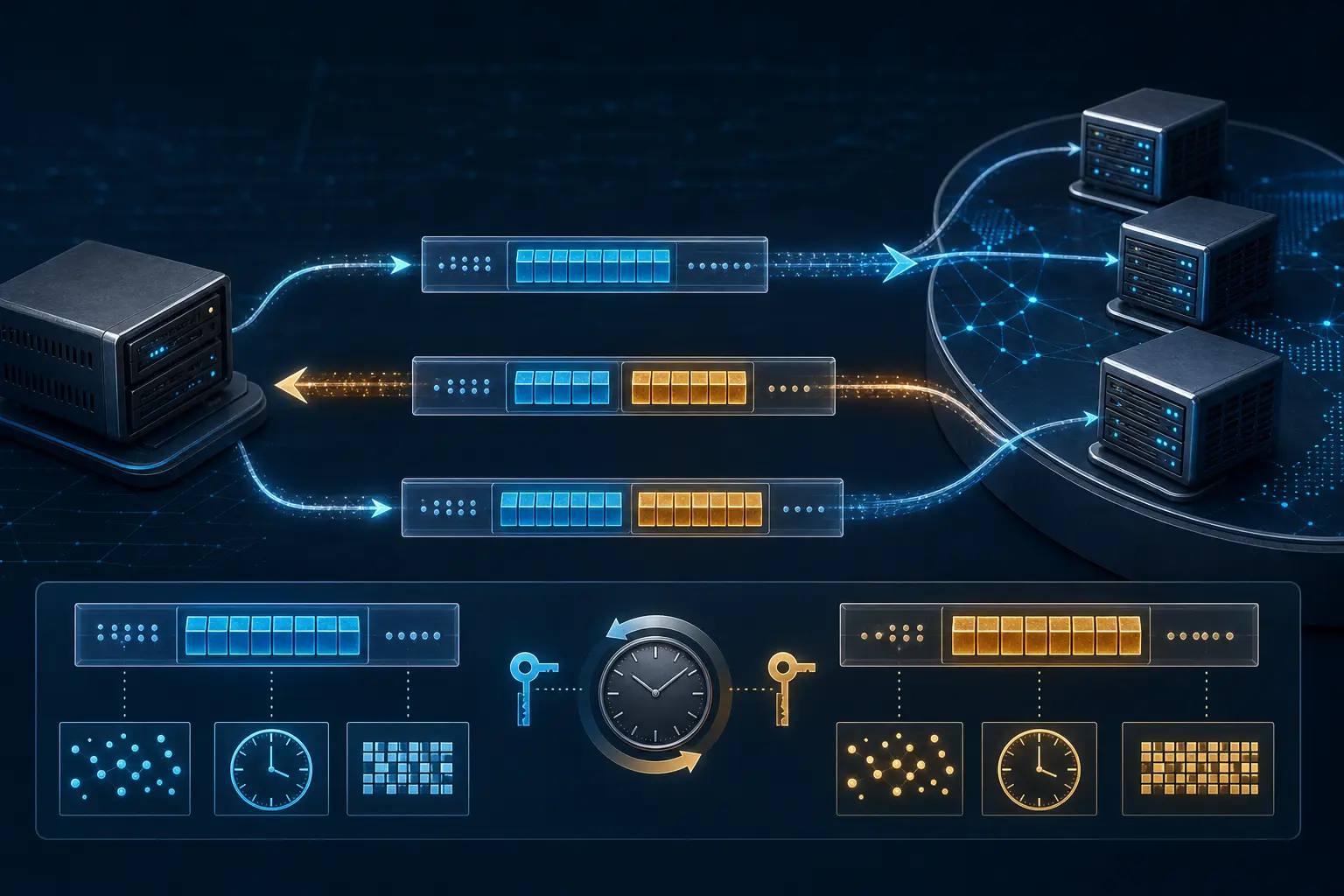
A valid DNS Server Cookie can show that a requester at a source address is returning a value issued in an earlier exchange. That is useful evidence against off-path forgery. It is not a login, a durable device identifier or permission to attach a person’s name to the query.

Story
A customer’s address range does not tell an operator where the reverse-DNS handoff belongs. ARIN’s direct-allocation rules put the editing boundary higher in the tree than a downstream inventory may suggest.

ICANN
The new nomination call offers three mentor places and three selection-committee places. Arrival order matters, but so does whether a community group has held the particular role before.

History
The application asked for a bulk retrieval. The old agent never saw one. Between them, a bilingual manager consulted a local database, selected SNMPv1, zeroed two fields and changed the PDU into a single next-step request. RFC 1452 called the result transparent to the…

Story
ARIN resolved a problem with some Whois queries in August. For anyone whose tools retained a suspect result, the next task is different: checking the local copy without turning a failed observation into a registration verdict.

IETF
An identity system can tell another domain that something changed and still leave the receiving domain with consequential work to do. It must decide whether the resource is the one it knows, whether the schemas align, whether a callback is needed, what local rule applies, and…

CASE FILE
Three former Technical Advisory Group leaders entered the Cloud Native Computing Foundation's 2026 Technical Oversight Committee cohort. CNCF says they stepped down from TAG leadership because TOC members may not hold TAG lead positions at the same time. That is a useful public…

IETF
A telephone caller needs more than a signal that looks official. The practical question is whether the party reached is the intended party, what evidence supports that conclusion, and what a device should do when the evidence does not arrive. Chris Wendt’s co-authored RFC 9970…

IETF
A popular meeting can still run short of places to work between sessions. The IETF’s Vienna review exposes the timing problem behind a venue decision: a forecast can change after the room for adjustment has narrowed.

CASE FILE
RFC 9889 turns 5G network slicing into a chain of accountable translations: the mobile domain can name a slice, but the transport domain must still classify traffic, allocate resources, install state and prove the resulting service.

IETF
An algorithm label can make two implementations speak precisely about the same kind of key. It cannot tell a verifier why that key arrived, who stands behind it, which claims it may support, or what action the verifier should take. RFC 9964, co-authored by Michael Prorock and…

Story
The Mumbai course is meant to prepare engineers to teach and rebuild their own training labs. That makes it part of a practical handoff before network automation leaves APNIC’s instructor-led curriculum at the end of 2026.

Story
Three historical address records changed their dates without changing their ranges. The case shows why reconstructing a resource's past also requires understanding the past of the fields used to identify it.
Session Map
Five regional sessions tracking allocation policy, board legitimacy, and institutional continuity.
Open RIR WatchdogLong-cycle governance dossiers with legal, election, and institutional stress analysis.
Open Case FileMembership, charter, and resource-governance intelligence from the NRS ecosystem.
Open NRS SessionDNS coordination, accountability frameworks, and global multi-stakeholder process dynamics.
Open ICANN SessionProtocol standardization trajectory and interoperability risk under fragmented policy conditions.
Open IETF SessionLong-cycle infrastructure history used for governance interpretation and structural forecasting.
Open History SessionOperator-level implementation intelligence from APRICOT plus regional and national NOG ecosystems.
Open NOGs Session