
Strategic Circle Briefing
Join to unlock strategic briefings after signing in.
Join Strategic CircleGovernance / RIR Watchdog
Five regional registries decide who gets IP addresses and on what terms. We watch ARIN, RIPE NCC, APNIC, AFRINIC and LACNIC — elections, transfer rules, fees and failures — so you see the change before it reaches your allocation.

Latest Coverage
3,279 articles

Story
AFRINIC’s published 2025 schedule is precise enough to reveal where most of its “Other Expenses” sat, yet too aggregated to show the chain from member money to service output. AFRINIC should reconcile the one-dollar difference, separate accounting assurance from transaction…

Story
AFRINIC’s largest disclosed supplier line for its 23 June 2025 Board election is precise to the dollar and vague about almost everything else: USD 407,518 sits beside the name Judgement Limited, while the public record as of 10 August 2026 does not identify the legal entity, the…
Story
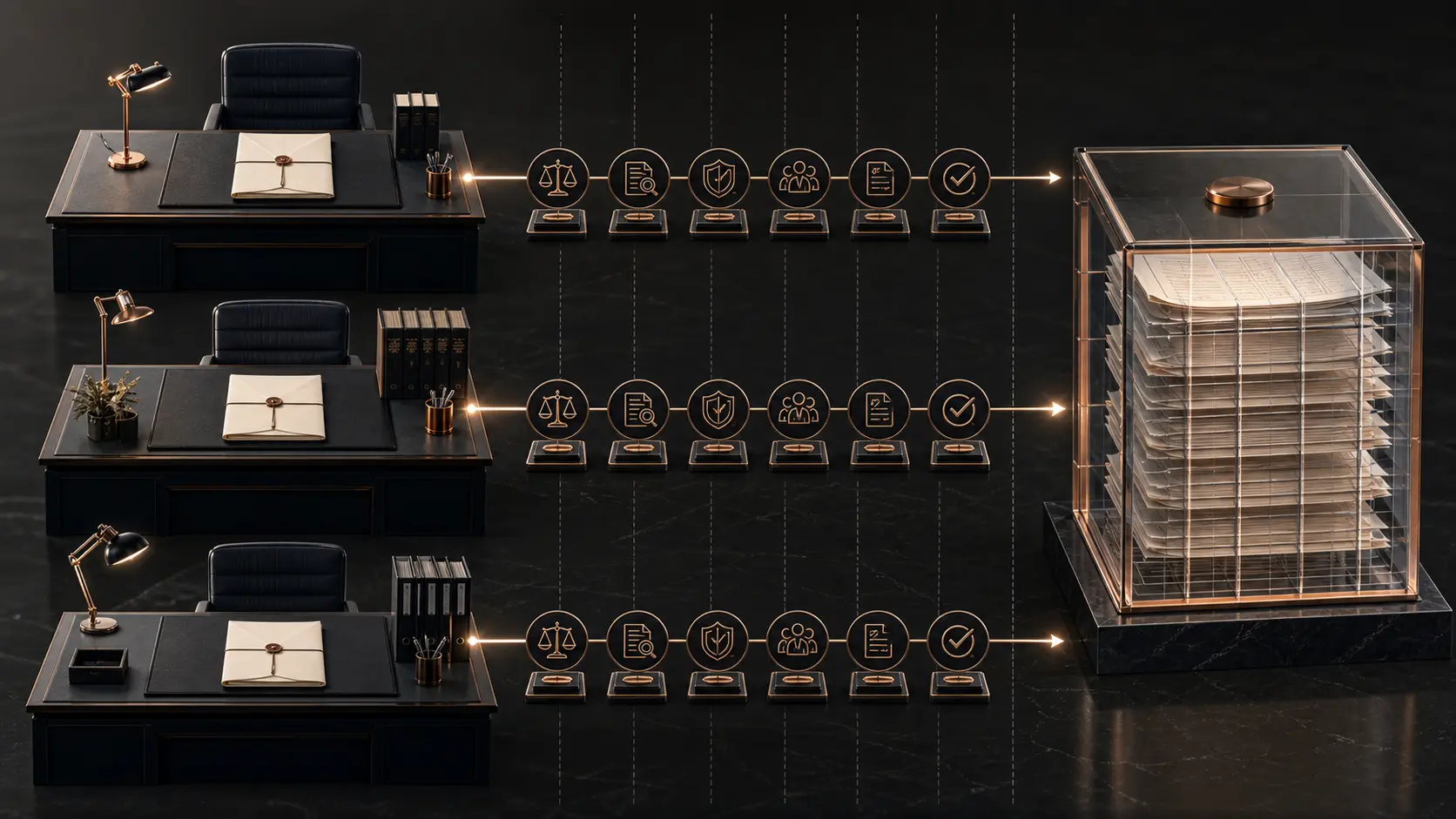
AFRINIC’s own disclosure fixes three June 2025 election-cost lines and their total, but the public appointment record describes a four-person Nomination Committee with one collective mandate—not an individual map of work, authority, fees, invoices or payment.

Story
Ben Roberts was given a chair and a formidable brief: take stock of every ongoing AFRINIC case, make better use of legal resources and impose coherence on the strategy. What the public has not yet been given is the institutional machinery that could turn that brief into…

Story
AFRINIC has disclosed a precise receiver-fee figure for its 23 June 2025 Board election, but precision is not the same as an accountable transaction: the public record still does not show the order, rate, work, invoice, approval and payment trail that would explain what the…

Story
AFRINIC's own unaudited report prices the Board election it annulled three days later at USD 931,849 across fourteen lines. The arithmetic is flawless. The authority behind it has never been published.

Story
AFRINIC's own impact assessment admits what its press releases avoid: the new transfer policy keeps members from leaving. Six months after ratification, its case list still calls the challenge to that policy ongoing — and the Board's authority is still being tested in court.

Story
AFRINIC’s five disclosed lines for its September 2025 Board-election rerun reconcile exactly, but the clean addition sits inside a much less complete chain of contracting, approval, payment, audit and member review. The distinction matters because a registry’s role as ledger…

Story
AFRINIC’s first Public Policy Meeting after a long institutional vacuum was presented through three subtly different formulas: the Board acted after consulting the receiver, the Board convened in agreement with him, and the completed event was jointly convened by both. Those…

Story
AFRINIC’s February 2026 transfer policy sorts number resources by origin and then gives them unequal routes out of its service region: Legacy and imported “Global” resources may cross the boundary, while ordinary AFRINIC-pool “Regional” resources may not. That distinction does…

Story
AFRINIC’s direction that members should not answer an enquiry unless it was formally sanctioned by AFRINIC turned a narrow privacy question into a test of institutional authority: who may verify a private registry’s public election record, on what evidence, and under whose…

Story
On 4 February 2026, AFRINIC declared a long-dormant number-resource transfer proposal ratified. The announcement was brief; its consequences were not. Behind it lies an unresolved chain of consensus, corporate power, receivership, litigation and unfinished implementation—and a…

Story
AFRINIC’s three overdue audits answered a real need for financial visibility. They did not answer who lawfully appointed the auditor, who fixed the fee, which legal entity accepted the engagement, or whether a later member vote could cure an earlier gap. The distinction matters…

Story
When two offices can appear to give an instruction in AFRINIC’s name, the practical question for a staff member, network operator, bank or contractor is not whether those offices say they are collaborating. It is whose decision binds, whose objection stops it, whose signature…

Story
AFRINIC put four years of audited accounts to a member vote on 25 June 2026. Checked on 10 August, its public AGMM page still shows the proposed resolutions—but no result, no tally and no minutes. For a registry that spent roughly $3.29m on lawyers across those years, silence is…

Story
The instruction issued on the eve of AFRINIC’s 2026 annual meeting was unusually concrete: cast four negative votes, lodge a formal objection, put both the objection and each vote into the minutes, and refuse to let aggregated accounts stand in for the missing chain of…

Story
AFRINIC’s purported new Board drew a line through June 2022 and placed every Resource Member joining after it under review, without publishing why that date governs, how individual cases will be tested, or what protects running networks while the legal questions remain open. The…

Story
AFRINIC announced a person for every elected Board seat on 12 September 2025, but its own notice withheld every candidate total promised by the election guidelines. That omission matters because the notice was only one transition in a longer chain—from seven contested seats and…

Story
On 27 April 2005, AFRINIC recorded unanimous approval of a one-third increase in the annual fee for its highest IPv4 LIR billing band. The arithmetic is simple; the institutional consequences are not. AFRINIC’s surviving record shows a fee-linked exposure at the open-ended > /14…

Story
AFRINIC’s reported decision in Maputo to lift the Large IPv4 LIR annual fee from USD 7,000 to USD 13,000 was arithmetically clear and economically consequential, yet the surviving record leaves the essential implementation ledger unfinished: which members were billed, when the…
Member Unlock
Login is required to unlock full profile briefings and deep-dive sections.
Join to unlock strategic briefings after signing in.
Join Strategic CircleFor IP-asset owners and leadership teams: alliance briefings, private reports and direct analyst support.
Join Leadership AllianceSession Map
North America governance, transfer-market behavior, and member process monitoring.
Open ARINAccountability, member visibility, and implementation signals across the RIPE NCC region.
Open RIPE NCCAllocation pressure, policy adaptation, and Asia Pacific institutional execution.
Open APNICElection process, legal continuity, and board legitimacy under institutional stress.
Open AFRINICInstitutional adaptation and ICP-2 governance trajectory in Latin America.
Open LACNIC