
Strategic Circle Briefing
Join to unlock strategic briefings after signing in.
Join Strategic CircleGovernance / RIR Watchdog
Five regional registries decide who gets IP addresses and on what terms. We watch ARIN, RIPE NCC, APNIC, AFRINIC and LACNIC — elections, transfer rules, fees and failures — so you see the change before it reaches your allocation.

Latest Coverage
3,196 articles

Story
The transfer table recorded a permanent policy transfer of `80.117.0.0/16` from Telecom Italia to Fibercop. Hours later, the registry, RPKI and public routing records told three different completion stories.

Story
RIPE NCC’s probe-controlling infrastructure failed for almost 55 minutes on 11 November. The final incident note names the cause cleanly: the cluster exhausted its allocated resources. Capacity was increased. The permanent plan remains a sentence about looking at how to reduce…

Story
RIPE NCC scheduled a half-hour RIPE Atlas maintenance for 18:00 CET on 23 November. It marked the job complete at 18:11. Between those timestamps, one component label changed and changed back. No probe, API, measurement or data check entered the public record.

Story
The green validation icon says the final RRset is authentic. It says nothing about whether the resolver trusted a parent-side referral, checked the child apex, or redirected its question through a path nobody signed.

Story
APNIC told customers on 13 November that email in both directions might be delayed or never arrive because a third-party provider had failed. Eleven days later the same official page still has no end time. Its status is still “Ongoing.” The alternative published contact points…

Story
ARIN announced the full ARIN 58 meeting report on 3 November, seven business days after the meeting closed. The report page still introduces its transcript as unedited, unproofread and unsuitable for verbatim citation. It promises a clean version after about ten business days.…

Story
Sixty-six of 698 registrar primary domains had a DS record. Change the denominator from domains to accreditations and the same study falls to 2.32% — a useful safety rail for anyone about to quote an adoption number as proof that DNSSEC is working.

Story
The proposal author says PPM-38 agreed. AFRINIC’s own policy page says the debate is open. Both records can be real, but the missing bridge is not a small administrative detail.

Story
LACNIC’s new year-long Fellows Program makes two Campus courses a gate to the applicant pool. Its programme page still calls one required course “Coming soon.” The page it links says registration is open permanently. This is what happens when a selection pipeline is published…

Story
RIPE Atlas caught the bulk download being scattered across CDNs, clouds, networks and countries. The engineering was real; the causal performance story is smaller than the traffic map.

Story
RIPE Labs examines proposed “adaptability” duties for encrypted communication services. Key escrow and hidden recipients can expose plaintext to a third party. A modified client can refuse both. What remains is the security loss for everyone who runs the official build.

Story
APNIC’s procurement guidance asks the question resilience plans often skip: when the grid dies and the vendor cloud disappears, can you still see and control the power system?

Story
ARIN’s Board minutes say models are already scanning public repositories. The same record leaves the corporate AI model, sandbox, policy and funding for a later date.

Story
ARIN-prop-350 promises planning-based IPv6 allocation instead of rigid formulas. It still requires applicants seeking more space to consume 75% of the “prefix units” in their current two-year plan. The arithmetic left through the front door and returned as an undefined…

Story
A school website really was being filtered by hostname. A fresh test from inside 21 US residential providers found none of it. Both facts matter, and the second one marks the limit of the first.

Story
ARIN-prop-352 says it will clarify and deduplicate the registry’s principles without meaningful policy change. It also moves fairness and conflict rules, retires IPv6-specific uniqueness and registration clauses, and asks reviewers to catch any unintended change. That warning is…
Story
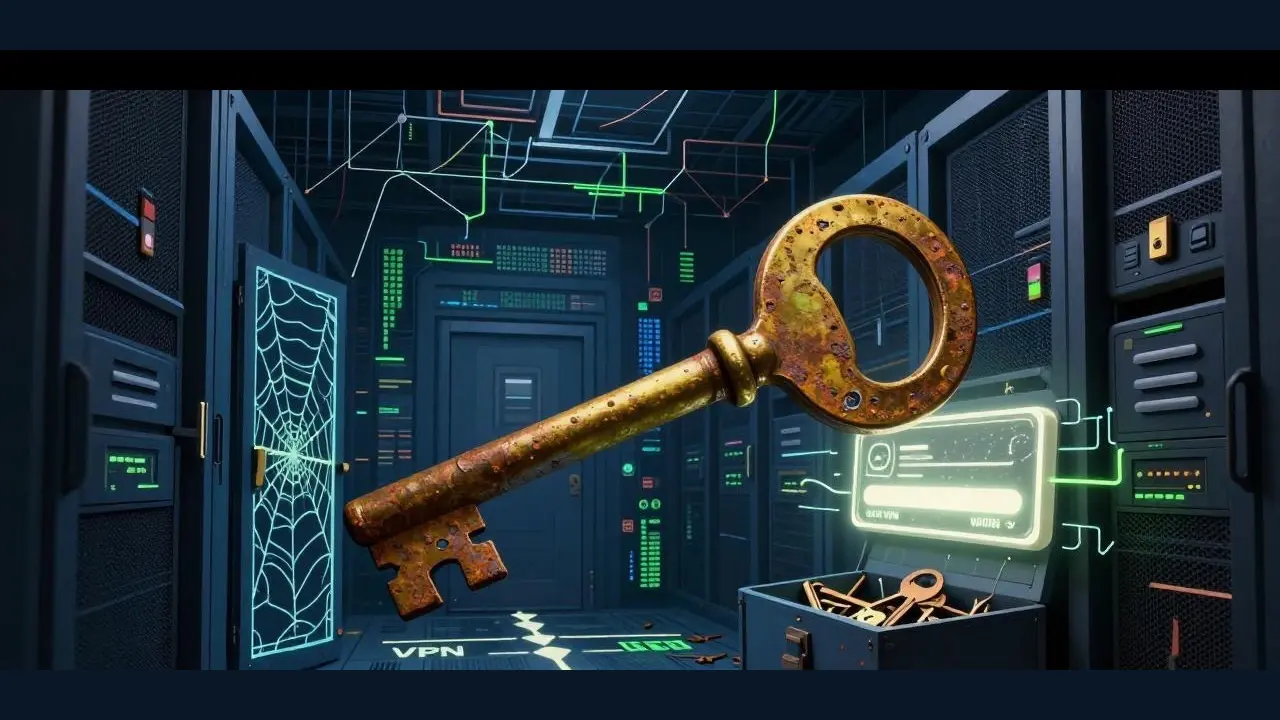
LACNIC's warning is not that AI invented a new attack. It is worse: agents can turn stale keys, broad permissions and unpatched systems into an intrusion that runs while the defender is still opening a laptop.

Story
The RIPE Chair Team says every BoF slot at RIPE 93 was used. Its Practical AI session delivered a clear instruction—be specific to network operations—and still ended by asking what happens next. A full meeting programme has produced an open follow-up ledger.

Story
ARIN-prop-357 would replace the waitlist and the dedicated IPv6-deployment block with one allocation section. The policy goal is cleaner. The draft itself still asks what to call the new section, carries malformed cross-references and leaves old and new transfer language visible…

Story
The lawsuit began in 1992; Linux work began in 1991 and initially lacked a working network stack. Legal uncertainty hurt BSD, but it did not create the kernel that later ran Android, routers and clouds.
Member Unlock
Login is required to unlock full profile briefings and deep-dive sections.
Join to unlock strategic briefings after signing in.
Join Strategic CircleFor IP-asset owners and leadership teams: alliance briefings, private reports and direct analyst support.
Join Leadership AllianceSession Map
North America governance, transfer-market behavior, and member process monitoring.
Open ARINAccountability, member visibility, and implementation signals across the RIPE NCC region.
Open RIPE NCCAllocation pressure, policy adaptation, and Asia Pacific institutional execution.
Open APNICElection process, legal continuity, and board legitimacy under institutional stress.
Open AFRINICInstitutional adaptation and ICP-2 governance trajectory in Latin America.
Open LACNIC