
Strategic Circle Briefing
Join to unlock strategic briefings after signing in.
Join Strategic CircleGovernance / RIR Watchdog
Five regional registries decide who gets IP addresses and on what terms. We watch ARIN, RIPE NCC, APNIC, AFRINIC and LACNIC — elections, transfer rules, fees and failures — so you see the change before it reaches your allocation.

Latest Coverage
3,279 articles

Story
LACNIC's César Díaz reminds operators that headers count. Run the arithmetic and G.729's advertised 8 kbit/s becomes 24 kbit/s on IPv4 and 32 on IPv6 — because compression shrinks bytes, never packets.

Story
A customer's address range tells you nothing about where the reverse-DNS handoff belongs. ARIN's own examples show why the editing boundary sits higher in the tree than a downstream inventory suggests — and why a /16 can carry fewer editable zones than a /23.

Story
ARIN fixed a Whois glitch in 21 minutes. The harder task is local: reconciling stored empty answers so a failed query never becomes a registration verdict.
Story
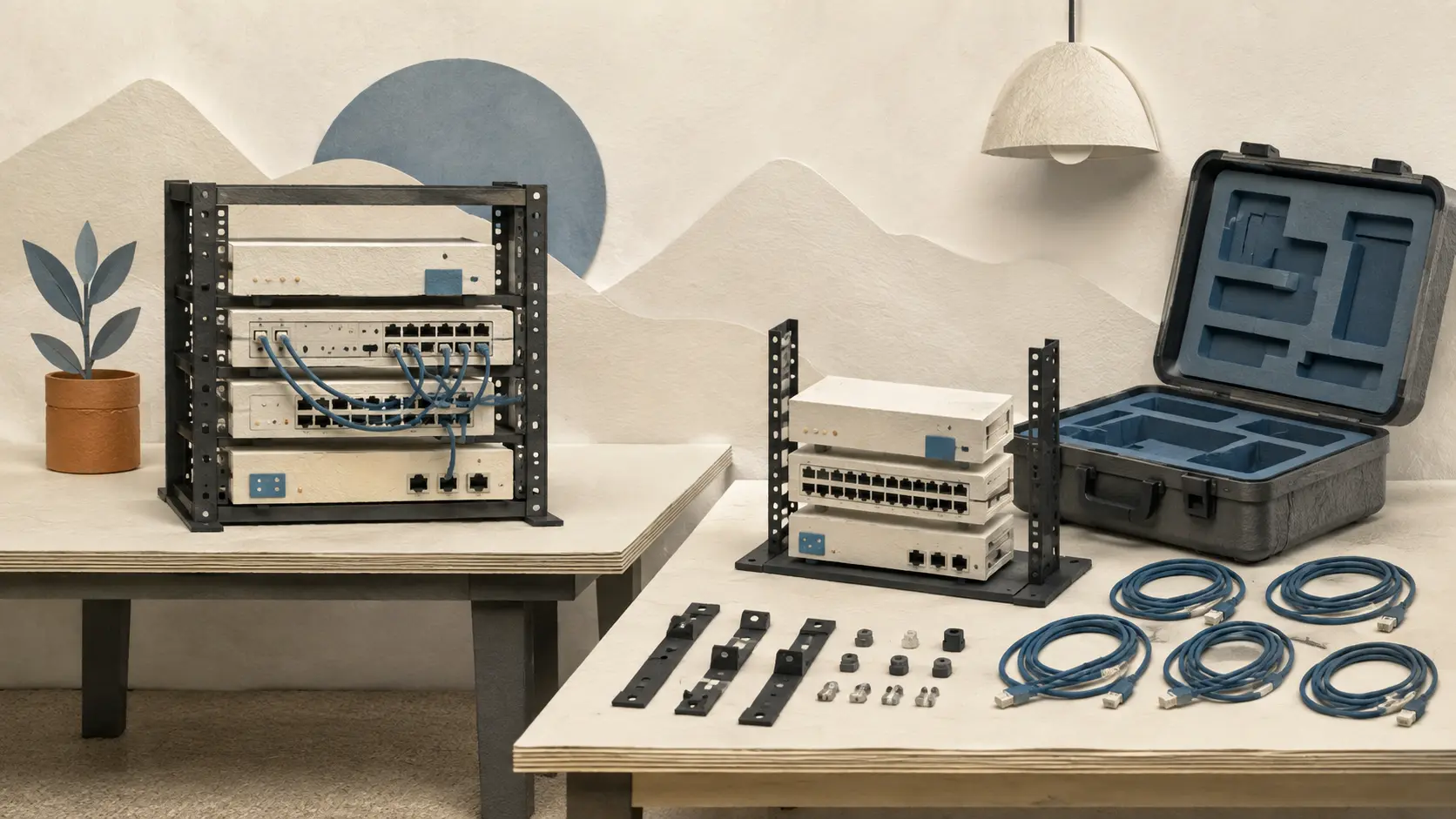
APNIC's Mumbai automation workshop trains engineers to run a programmable network — and to rebuild the lab where the next cohort learns it. That second job is the handover, and it lands just as automation leaves the instructor-led curriculum in 2026.

Story
Three APNIC /16s carry a 2003 REx transfer date their own archive contradicts. The real story is subtler than an error: a date can be a matching key, and correcting it can quietly rewrite the join.

Story
AFRINIC's June 2026 report puts $6,574,785 of strategic cash reserves and $58,670 of accrued interest on one page, then adds them to $6,633,455. The arithmetic is fine. The assumption that both numbers are cash is not — and that distinction is the only thing members should…

Story
Two strings that look interchangeable — an address and its /24 — returned different answers on a RIPE NCC forum. Our retest found no such gap. The real lesson is smaller, sharper, and more useful than an outage: know what an empty answer actually asked.

Story
LACNIC's ASN Forecast Goes Negative — and That's Exactly What the Refill Is For intelligence summary explains the development, the public evidence available to readers, the organisations involved, the regional context, market exposure, and the infrastructure consequences that may…

Story
AFRINIC's own files keep delegation records, domain entities and resource holders in separate boxes — and keep an error inventory separate from removal events. Read together, they show the 95% badge counts a shorter list, not restored service.

Story
An IPv6 request can enter ARIN's system, pass automatically or move into staff review, prompt a request for more information, receive approval, wait for fees and a signed agreement, and only then become an issuance. ARIN publishes useful numbers at the entrance and the exit of…

Story
Prop-173 would give ordinary APNIC WHOIS and RDAP queries their own acceptable-use policy. The real question is not whether terms should exist, but whether a registry that keeps the record starts licensing the facts — and whether automated limits come with a route to review.

Story
AFRINIC's 13 May notice confirmed one narrow fact: forms.afrinic.net was offline for urgent maintenance after a technical issue. It never recorded when the problem began, which workflows stalled, or when recovery was verified — and that open loop is the story.

Story
Prop-172 hands APNIC a common vocabulary for abuse involving IP addresses. The whole game is the boundary: naming conduct must never quietly become the authority to judge it.

Story
*By Nia Okafor*

Story
Nine IPv4 prefixes changed hands inside APNIC on 1 September 2026. The next morning, the delegated statistics file gave all eleven resulting rows the same origin date: 3 December 2007. Neither file is wrong — they are keeping two different clocks, and the gap between them is the…

Story
AFRINIC's changelog says JSContact was added. Its RDAP guide — the page clients actually read — never mentions the word. The gap is small, real, and exactly the kind of thing a registry's public record should close.

Story
A new RIPE Labs study makes a distinction that loose talk about 'replacing the IRR' keeps flattening: a prefix–origin record and the policy data used to discover a customer cone are different operational entities, and they do not get one shared retirement date.

Story
Version 3.4 of the RIR Governance Document does more than describe how a registry crisis gets handled. Article 7.2 freezes the rulebook while the crisis machinery runs — and leaves the public without a switch to see it.

Story
AFRINIC's March bulletin presents its support for Douala-IX as a route to stronger local interconnection in Cameroon. The public snapshot is a useful inventory of exchange attributes — not a measurement of the result it claims.

Story
AFRINIC has announced Mike Silber as CEO Designate, effective 1 January 2027. It has not published the date of the board decision behind the appointment — and the board's own legitimacy is still before the court.
Member Unlock
Login is required to unlock full profile briefings and deep-dive sections.
Join to unlock strategic briefings after signing in.
Join Strategic CircleFor IP-asset owners and leadership teams: alliance briefings, private reports and direct analyst support.
Join Leadership AllianceSession Map
North America governance, transfer-market behavior, and member process monitoring.
Open ARINAccountability, member visibility, and implementation signals across the RIPE NCC region.
Open RIPE NCCAllocation pressure, policy adaptation, and Asia Pacific institutional execution.
Open APNICElection process, legal continuity, and board legitimacy under institutional stress.
Open AFRINICInstitutional adaptation and ICP-2 governance trajectory in Latin America.
Open LACNIC