
LACNIC · RIR Watchdog
Story
BTW reporting and context linked to this RIR. For the proposal-by-proposal history, the people involved and their changing positions, start with Policy.
Story
Latest stories
283Stories

Story
LACNIC’s IPv6 Clock Subtracts 210 `/32`s Without Showing Which Fragments Count
IANA’s allocation clock for LACNIC reaches a reassuringly precise answer: 978,428 units of `/32` space remain available. The public rows beneath it supply exactly the 210-unit subtraction that produces that number. Yet most of those fragments are not labelled `available` in…

Story
LACNIC’s Highest Risks Have Two Clocks and No Public Start Point
LACNIC has put unusually sharp time limits around its most serious residual risks. Its public Board record says what must happen immediately, within 90 days and in less than 120 days. What it does not publish is the event from which either clock is counted—a small omission that…

Story
Rapport Tests Cache Survival. Its Missing-Manifest Warning Is Still Commented Out
LACNIC’s young RPKI test suite preserves the right routes when a manifest disappears; the quieter question is whether the person responsible for those routes is demonstrably told why they are now coming from cache.

Story
LACNIC Listed 32 Resources for December Revocation. That Is Not 32 Cases.
A new LACNIC cohort places 32 number-resource records on one 90-day clock. The table is useful precisely because it is public. Its limit is just as important: a row identifies a resource, not the recovery case behind it.

Story
LACNIC Budgets a $390,000 Operating Gap. Financial Results Close All but $87,000 on Paper
A budget can show a small loss while concealing three different movements: the recurring cost of running the registry, the accounting result of a portfolio and the cash that actually entered or left the institution. LACNIC’s 2025 accounts show why its 2026 plan needs those…

Story
LACNIC’s ASPA Explainer Cites a Moving Percentage Without a Snapshot
LACNIC’s ASPA Explainer Cites a Moving Percentage Without a Snapshot intelligence summary explains the development, the public evidence available to readers, the organisations involved, the regional context, market exposure, and the infrastructure consequences that may follow.…

Story
LACNIC 46's Attendee List Has Consent. It Still Needs a Retention Clock
LACNIC tells registrants that their names will appear on the event website. That clarity settles the easy argument; the harder one is how a public list shows the scope, duration and outcome of the permission it already has.

Story
LACNIC’s Autonomous-Network Ladder Needs a Scenario Ledger, Not a Company Badge
Two operators can both call themselves level three while describing entirely different machines. One may automate fault diagnosis in a radio network; the other may automate service fulfilment but leave every consequential configuration change to a person. The number sounds…

Story
LACNIC’s Abuse-Contact Lockout Sits Outside the Policy Manual
LACNIC’s policy manual says when an abuse contact becomes noncompliant. A separate help page says the consequence is blocked access to MiLACNIC. The missing entity is not another reminder email. It is the public record that joins a rule to the administrative control it activates.

Story
A LACNIC Telecom Essay Moves Voice to IP. It Leaves Backup Power Unassigned.
A new LACNIC Blog essay catches the most consequential detail in the retirement of traditional telephony: the call may look unchanged, but its power supply has moved. That observation deserves a more exact public answer about who keeps an IP call alive when the lights go out.
Story
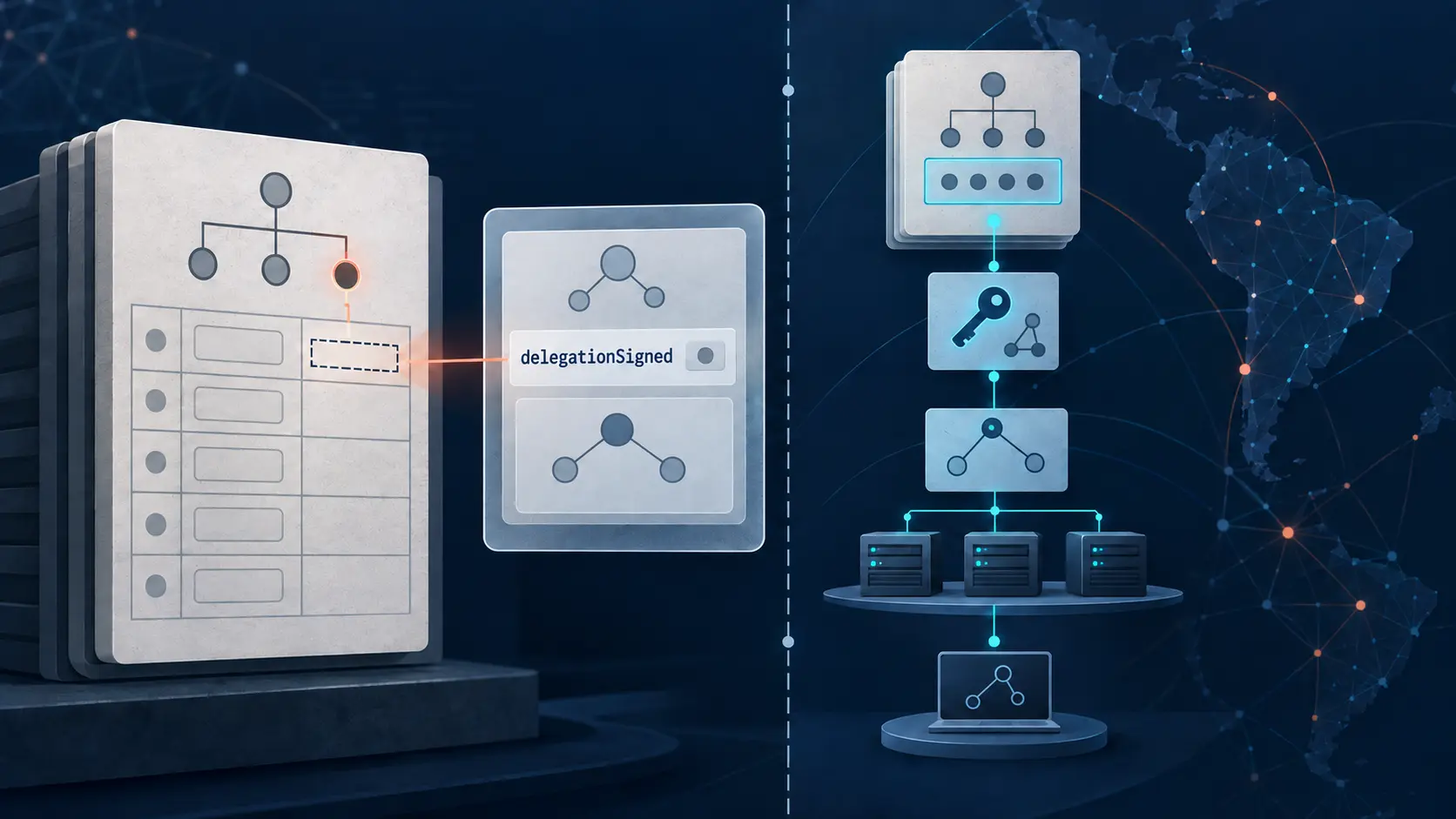
LACNIC's RDAP delegationSigned Records Parent DS Presence, Not DNSSEC Validation
A boolean in a registry response can look like a verdict on the security of a DNS chain. LACNIC's RDAP `delegationSigned` field answers a narrower question: whether the registration view reports DS records in the parent. It does not run a resolver, test the child keys or prove…

Story
LACNIC Deferred Its $2,100 IPv6-Only Fee to 2029. The 2020 Notice Still Ends the Waiver in 2026
The lower 2026 price is not an accounting mistake. It is the result of a unanimous Board decision that shifted the final step of LACNIC’s IPv6-only discount from 2026 to 2029. The documentary problem is quieter: the original notice remains public with the old endpoint, while the…

Story
LACNIC Says to Email the Bulk WHOIS Form. The Same Page Says Email Is Not Accepted
LACNIC’s public instructions give a Bulk WHOIS applicant two doors and no label for the threshold between them. The signed form is to be emailed first, the original is to be posted after approval, yet the same page ends by saying emailed forms are not accepted. The problem is not…
Story
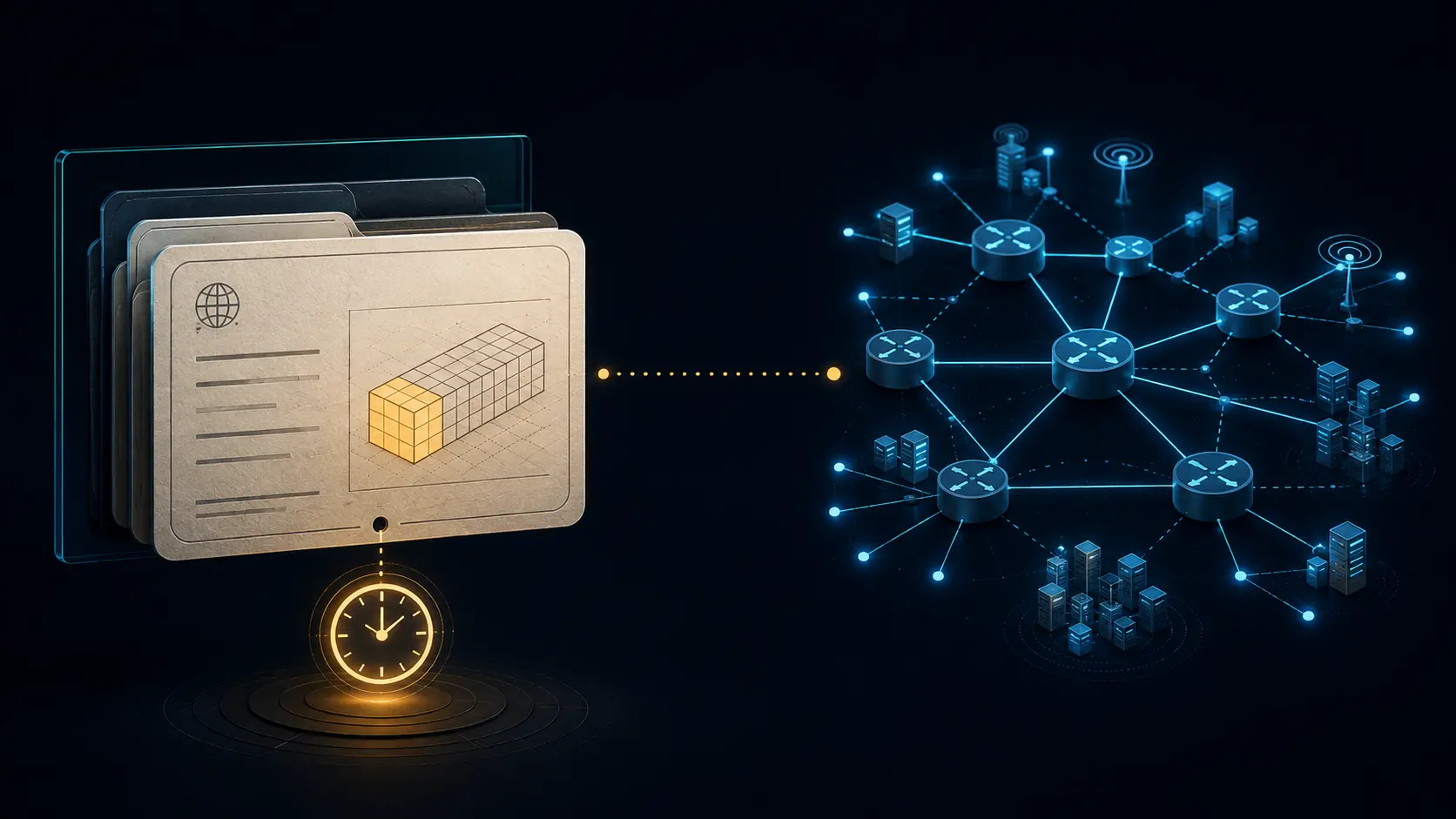
LACNIC Whois created Dates the Registry Record, Not the Network's Launch
A timestamp precise to the second can look like a birth certificate. In LACNIC registration data, however, `created` dates the record for an address block. It does not reveal when the holder was founded, when engineers switched on a network, when the addresses were first used, or…

Story
LACNIC Made Merger Transfer Fees Equal. It Did Not Make the Payment Rules Equal
A price list can make two transactions look alike long before their obligations are alike. LACNIC has put merger, acquisition and name-change transfers on the same published fee bands as ordinary IPv4 transfers and has attached both to an annual inflation clock. Yet the public…

Story
LACNIC Whois routing-c Can Register Routing Policy, Not Prove Who Operates BGP
LACNIC Whois routing-c Can Register Routing Policy, Not Prove Who Operates BGP intelligence summary explains the development, the public evidence available to readers, the organisations involved, the regional context, market exposure, and the infrastructure consequences that may…

Story
Barry’s README Uses the IPv6 Prefix Its Lexer Rejects
`::/0` and `0::/0` name the same IPv6 address space. In LACNIC’s experimental Barry generator, the first spelling is documented as a default yet an open issue says it stops at the descriptor lexer; adding one zero lets the token proceed. That is not an RPKI validation failure. It…

Story
LACNIC’s PAI Client Documents Java 8. Its Latest JAR Requires Java 17
The public instructions offer a familiar promise: Java 8 or later. The latest downloadable library makes a different, equally precise statement in its own bytes. Every class in the observed 1.5.1 JAR is version 61—the class-file level for Java 17. The code and the documentation…

Story
LACNIC Whois owner-c Marks Administrative Authority, Not Network Operation
LACNIC Whois owner-c Marks Administrative Authority, Not Network Operation intelligence summary explains the development, the public evidence available to readers, the organisations involved, the regional context, market exposure, and the infrastructure consequences that may…

Story
A Splice Is Not a Recovery. Venezuela’s Atlas Study Needs the Events in Order
On 22 July, Cirion said the two ends of a Venezuelan submarine cable had been fused and end-to-end tests had passed, while pre-immersion work still lay ahead. On 23 July, the operator called the country completely reconnected. A later account uses 24 July for confirmation of full…