
Summary
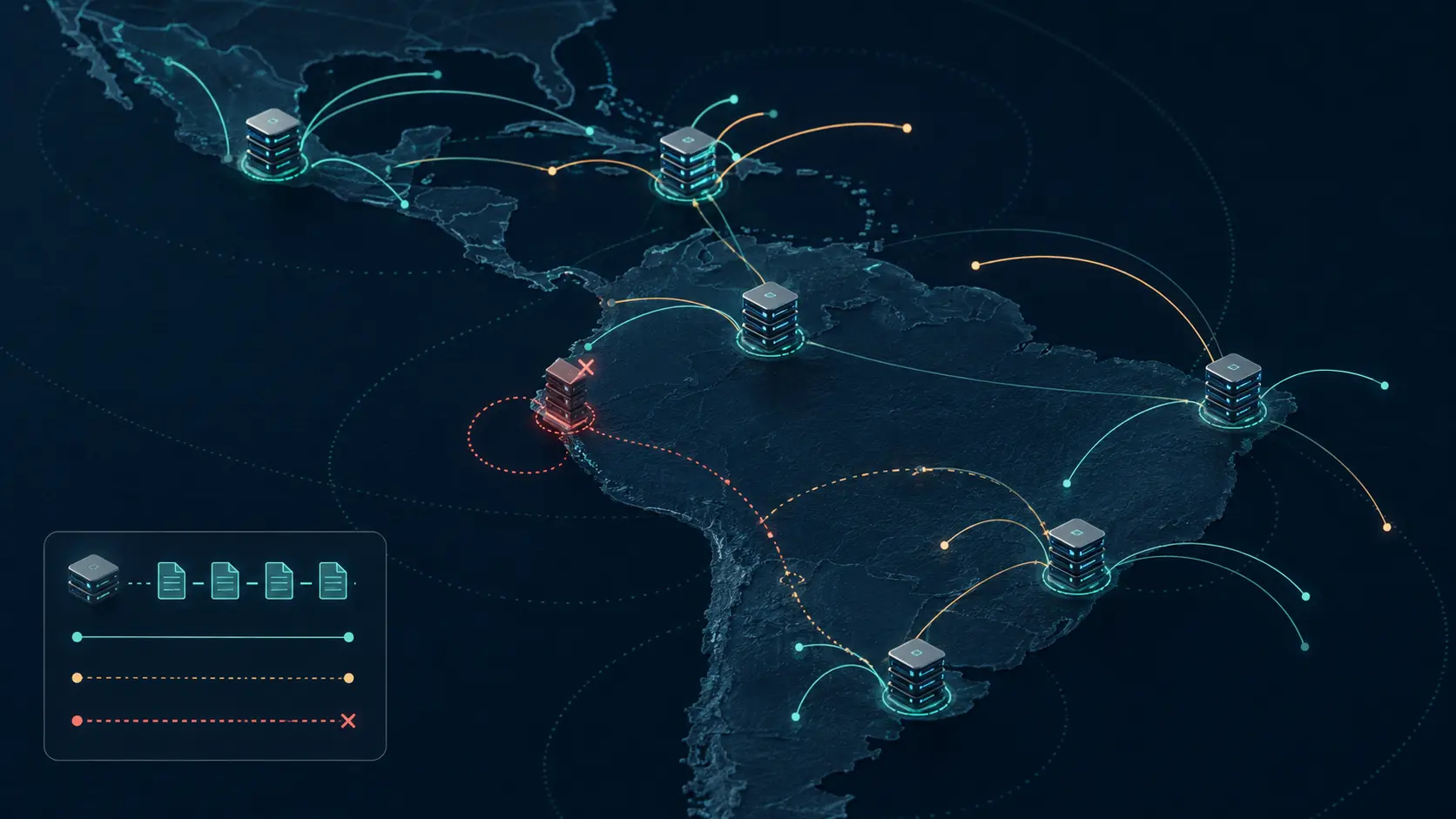
- LACNIC says it distributes the reverse zones associated with the IPv4 and IPv6 blocks delegated to it across anycast servers and has placed copies at IXPs and in the LACTLD cloud.
- BTW analysis: the control is useful because it distributes an operational dependency, not because anycast guarantees a nearest, equally capable or independently failing instance.
Sources: LACNIC on DNS resilience, LACNIC on anycast DNS initiatives and LACNIC on secure Internet foundations.
Reverse resolution sits behind many quiet operational checks. LACNIC says it operates the reverse zones associated with the IPv4 and IPv6 blocks delegated to it, and warns that failure of those zones would leave members without reverse resolution. That makes the service part of the registry’s continuity surface, even when most users never see it directly.
Anycast changes the shape of that dependency. LACNIC describes the mechanism as advertising the same network prefix from multiple locations so a user can reach a closer copy. It has reported placing reverse-zone copies at local Internet exchange points and in the LACTLD cloud to reduce access times. Distribution can shorten paths and limit the reach of some failures.
The boundary matters. A shared prefix does not prove that every query reaches the nearest healthy instance. It does not show that every copy has equal capacity, that route selection is stable, or that two sites do not share a hidden dependency. Those are operational questions requiring route observation, health checks, synchronization evidence and failure exercises.
The useful governance view is therefore narrower than “anycast makes DNS resilient.” LACNIC’s deployment creates a distributed control surface. Its value depends on whether operators can see where instances are reachable, whether data is consistent, and whether a failed site is withdrawn without turning one local problem into a wider routing problem.
Member Briefing
Deeper Profile Context
Sign in with the right membership level to unlock the full briefing and source notes.
Only for Strategic Circle
Strategic Circle
Open to all readers. Unlock profile briefings after joining and signing in.
Join Strategic CircleOnly for Leadership Alliance
Leadership Alliance
For qualified IP-asset owners and management; sign in to unlock alliance briefings.
Join Leadership Alliance