Summary
- OpenDNSCache stops CNAME and delegation loops with visited-name detection, alias and depth limits, and a total work budget. Those controls bound one query but do not make the next client's identical work disappear.
- In mirrored traffic, a five-second zone-keyed failure cache produced 7,511 hits per million responses, served 43% of SERVFAILs from cache, and reduced upstream queries per client query from 0.245 to 0.229.
- A once-through Top 1M replay produced only about 1.1 hits per cached zone. The cache helps where failures repeat; it is not a universal discount.
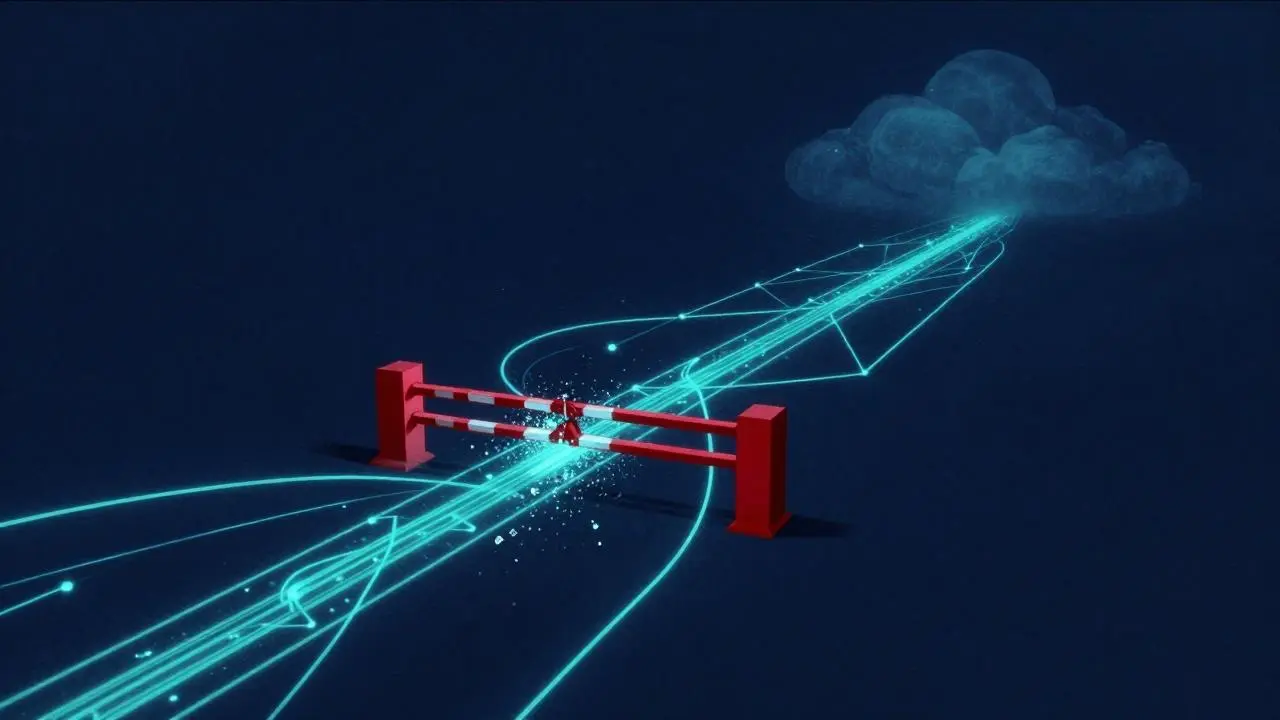
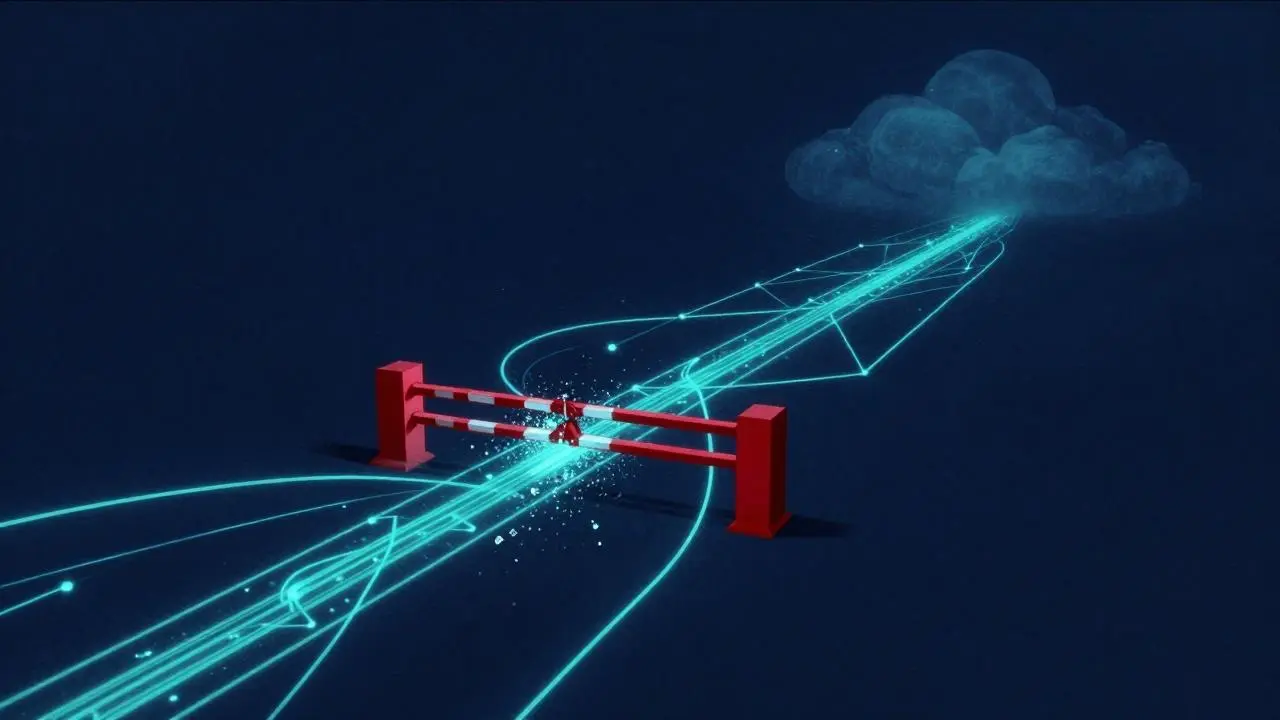
A DNS loop looks like a dramatic failure. A name points to itself, a CNAME ring closes, or two delegations keep handing the resolver back to nameservers that cannot resolve them. The obvious question is whether the resolver stops. In the tested system it does, through several overlapping controls. The more useful question is who pays before the stop and whether the next user pays again.
The OARC 47 presentation by Dejan Donin, Dipa Thakkar and Sean Mooney of Cisco DNS Security put four controls under one roof. Visited-name detection stops when a CNAME target repeats. An alias limit caps how many CNAMEs one query can follow. Recursion depth and a total work-step budget stop longer dependency chains. A failure cache remembers a zone whose delegation has no usable nameserver for five seconds.
The controls catch different failures. A CNAME self-loop can be answered directly, so it never needs the delegation failure cache. A glueless delegation ring cannot be resolved, but its names may not repeat inside a client CNAME chain; the failure cache sees it even when the response.loop counters do not. The presentation says each tested loop shape appeared in either loop counters or the failure cache, never both. Some appeared in neither.
That visibility gap is the operational problem. The tested resolver used 16 CNAMEs as the alias limit, six dependency levels and a 356-step work budget reduced by three steps per level. Those are not universal DNS constants. They are concrete controls in one build, and each tells the resolver when to stop spending. A loop counter tells the operator that one kind of loop was encountered. It does not necessarily equal the upstream cost, the next client's repeat, or a count of failed responses.
The failure cache is where repetition becomes visible. It is keyed by zone, not by the exact queried name, so siblings can share the result when a delegation has no usable nameserver. Its five-second TTL is a local choice inside RFC 9520's broad recommendation, not a registry rule. It is off by default in the tested build. A hit returns the same SERVFAIL without touching an upstream server.
Mirrored traffic measured the difference. Across a matched hour with similar load and SERVFAIL rate, the cache produced 7,511 hits per million responses across 604 zones, roughly twelve hits per cached zone. Forty-three percent of SERVFAIL responses came from the cache. Upstream queries per client query fell from 0.245 with it off to 0.229 with it on, about 6% less work.
The answer stability matters as much as the saving. SERVFAIL responses were 17,489 with the cache on and 17,150 off in the compared windows, a difference the slides describe as within 2% alongside the matched load. The cache changed where the work was avoided, not what users saw. Queue time also stayed at 2.5 ms in the reported comparison. Those are test observations, not a promise that every deployment will see the same throughput.
The Top 1M replay tested the other regime. The lab sent 20,000 queries per second after a warm-up, first with the cache on and then off. It produced 112 hits per million responses across 105 cached zones, about 1.1 hits per zone and only 2.4% of SERVFAILs from cache. Upstream work still fell from 0.55 to 0.42 queries per client query because the repeated zones in that run were expensive enough to matter.
The different results describe demand, not a flawed cache. Real mirrored traffic asked again for the same failed zones roughly eleven times inside five seconds. A once-through popularity list barely revisited them. An operator planning capacity from a generic cache-hit percentage will misread both cases.
The tested loop events were also distinct from SERVFAIL volume. CNAME direct-loop events ran around 14 to 17 per million responses with the cache on or off. Work-budget exhaustion was rare in mirrored traffic, below one per million, and roughly three per million in the Top 1M replay. The cache did not erase those counters because CNAME loops were answered, not held as zone-level failures.
One observability defect survives clean code. A client-side CNAME chain can cross the 16-alias limit, while the alias-limit counter only fires while resolving a nameserver's address. Operations can therefore see a SERVFAIL without seeing which limit stopped it. The presentation recommends separate counters for direct CNAME loops, alias exhaustion, work exhaustion and failure-cache hits, then proposes an Extended DNS Error mapping for loop and unusable-delegation failures.
That is the right product. A resolver should not merely know that it stopped. It should expose the rule that stopped the query, whether a cached failure answered it, and how much upstream work vanished. DNS operators already count latency and error rates. The missing unit is repeated upstream work avoided before the same failure reaches the next user.
Sources: APNIC OARC 47 summary; official Beyond Loop Limits presentation; DNS-OARC 47; RFC 9520.
Member Briefing
Read the full trend briefing
Members read the full briefing with the source notes behind every finding.
Strategic Circle
A daily briefing in your language, built from changes we have verified.
Join for USD 20/monthCancel anytime.
Members also get the full research library, a daily briefing on the networks they follow and the private forum.