
Summary
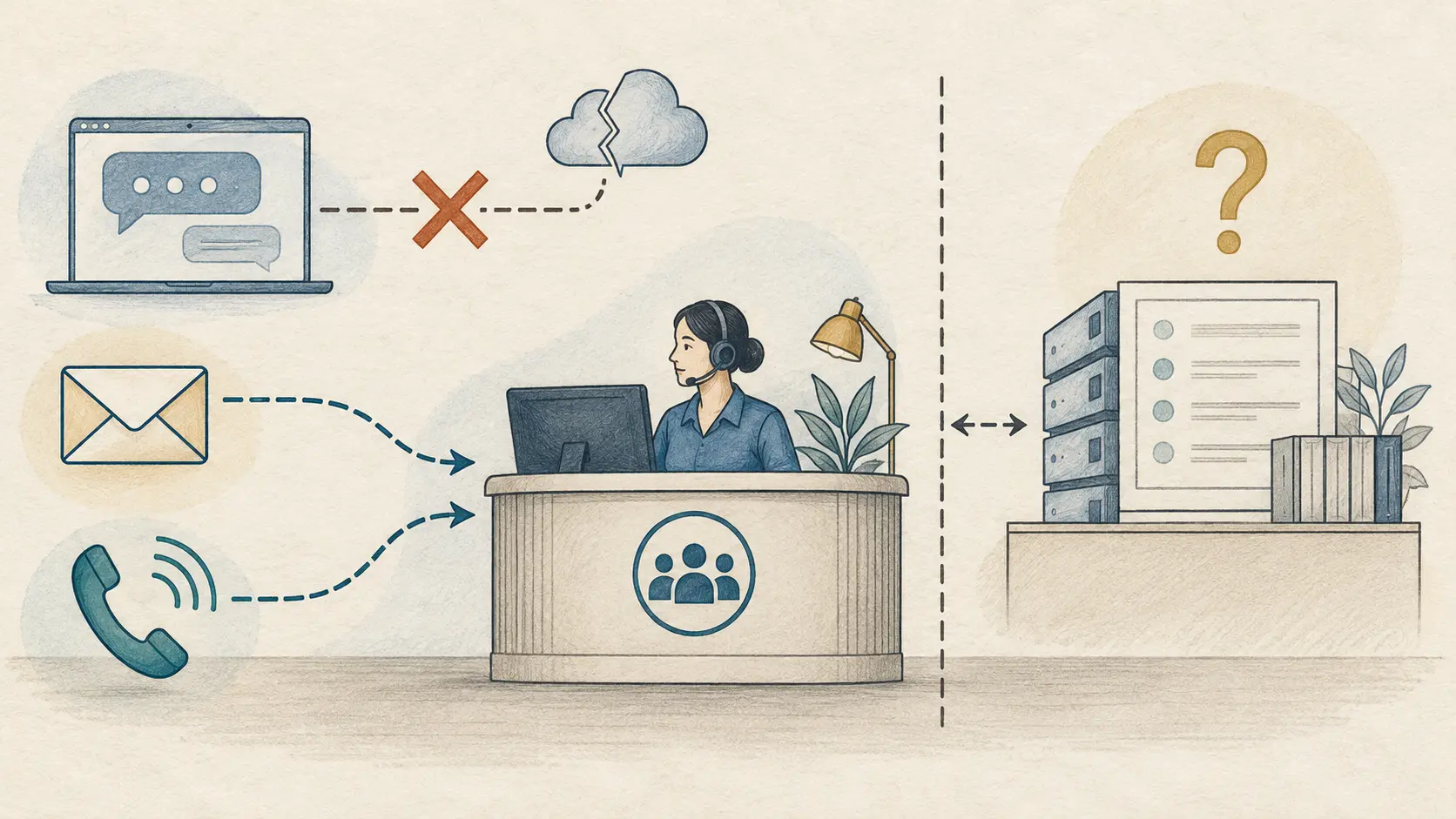
- APNIC lists a 28-hour-30-minute online-chat disruption from 28 September to 29 September 2026 on the Help Centre and MyAPNIC, caused by an issue with a third-party provider.
- Email and phone were offered as alternatives. APNIC’s notice reports no user count, queue data, response times, named provider, or impact on MyAPNIC’s resource-management functions.
The most useful number in APNIC’s notice is the duration. It records a start at 10:00 on Monday, 28 September, and an end at 14:30 on Tuesday, 29 September, both UTC+10. APNIC attributes the problem to an issue with a third-party provider and directs people needing help to email or phone. The notice’s description still uses present-tense disruption language, and it contains no separate account of how restoration was confirmed. The service notice therefore gives readers a bounded time window and a named service surface, but little evidence about the experience behind that window.
That boundary matters. APNIC’s affected-service field says online chat on the Help Centre and MyAPNIC. It does not say that the portal itself, the APNIC Whois Database, or resource-management functions were unavailable. APNIC describes MyAPNIC as a secure portal through which members manage Internet number resources, account information and contacts, with access to services including RPKI and DNSSEC. The MyAPNIC service description shows why support access belongs in the operating picture; it does not expand the outage scope.
A help channel can matter at moments when members need to recover access or complete an administrative task. In its first-half 2025 feedback report, APNIC said member interactions included support tickets and live chats, and described concerns about response timeliness, follow-up and access to self-service guidance. It also said it had embedded a help widget in the MyAPNIC login interface after some members struggled to set up or recover multi-factor authentication. That report gives context for the role of support. It does not establish that the login widget was affected in September 2026.
APNIC offered email and phone as fallback routes. That is evidence of an alternative contact instruction, not a measure of the alternatives’ capacity. The public notice does not state how many members tried to use chat, how much demand moved to email or phone, how long replies took, or whether any queue grew. Nor does it identify the provider or explain whether the fault was confined to a vendor component. A long interruption is observable; the member-level impact is not.
The notice also contains a small but relevant reporting gap. Its fields specify an end time and a duration, while the explanatory text says APNIC is currently experiencing the disruption. There is no separate restoration statement, description of the recovery check, or account of whether the chat service returned normally. This does not disprove the listed end time. It limits what an outside reader can verify from the notice alone.
For members, the distinction is practical. An unavailable chat widget may add friction to support access without stopping resource administration. Whether that friction matters depends on the task, the person’s access to the other channels, and how quickly those channels respond. The available evidence establishes the channel interruption and the stated alternatives. It does not establish a loss of service, a delayed resource change, or a member who could not complete a transaction.
What to watch next
Future status notices can be read against three measures: which surface failed (chat, login help, portal access or registry function); whether email and phone absorbed incoming demand, including first-response time and unresolved backlog; and when restoration was checked after the provider issue. These indicators would distinguish a contained support-widget incident from a wider access problem. They are monitoring questions, not facts reported for this event.
Member Briefing
Deeper Profile Context
Sign in with the right membership level to unlock the full briefing and source notes.
Only for Strategic Circle
Strategic Circle
Open to all readers. Unlock profile briefings after joining and signing in.
Join Strategic CircleOnly for Leadership Alliance
Leadership Alliance
For qualified IP-asset owners and management; sign in to unlock alliance briefings.
Join Leadership Alliance