
Open standards body with worldwide implementation impact.
Governance / IETF
IETF
IETF governance intelligence tracks institutions, policy processes, standards activity, registry operations, accountability disputes, and implementation signals that affect internet infrastructure. BTW.
GlobalProtocol GovernanceInteroperability Risk

Protocol process and standards legitimacy.
Spec-to-implementation gap across vendors and operators.
Major standards shifts usually affect systems over 120d+ cycles.
Latest Coverage
Latest from IETF
992 articles

IETF
PROCON’s Recharter Is Open for Review. Its Milestone Clock Still Says June
The IETF has opened a comment window on a proposed change to the group that rewrites its own process rules. The proposal is not yet the group's authority, and three dates in its schedule already precede the review. That is a question about the public record, not proof that the…

IETF
IETF Paused Bounce Processing. Restored Subscribers Still Need a Test
An automated mail-delivery control has been stopped and its recent decisions reversed. The IETF's September update puts a sharper question behind the incident: what evidence should be sufficient to disable a entity's list delivery when old unreachable addresses and suspect new…

IETF
The IESG Cleared a Trust-Anchor Taxonomy to Publish. It Did Not Clear a Device
A research draft now has an open route toward an Informational RFC. The harder question—who can show how a manufacturer's keys entered a particular device class and how that authority can be recovered—remains outside the clearance.

IETF
The flags were all there. The connection history was not
A flow record can report SYN, ACK and FIN in one tidy bitmap. RFC 9565 makes that report more interoperable and future-proof, but it does not turn the bitmap into a transcript of the connection that produced it.

IETF
The packets arrived in order. The network still had not proved the whole history
RFC 9566 gives DetNet IP a practical way to replicate packets, remove duplicates and restore order through MPLS over UDP/IP. Its machinery can improve service protection, but the clean sequence leaving an ordering function is a local result, not a complete receipt for path…

IETF
The router became Active. The path still had not proved it could carry traffic
RFC 9568 can move a virtual first hop from one router to another in seconds. Its state machine decides who should speak for the address; operators still need separate receipts showing that the new speaker can move the packets.

IETF
The update graph was complete. The network verdict was not
RFC 9569 gives ALTO clients a disciplined way to retrieve changing network information. It preserves a server’s version history; it does not certify the observation, the client decision or the traffic result.

IETF
The token was valid. The reason for opening the gate was still missing
RFC 9578 lets an issuer mint a token without learning the token itself. The cryptography proves a narrow past act; authorization and delivery remain decisions of other systems.

IETF
The timestamp carried a guarantee. The clock never showed its work
RFC 9581 can encode a precise instant, its timescale and a claimed error bound in one compact CBOR entity. That makes the claim portable; it does not make the clock trustworthy.

IETF
The photons survived the suburbs. The application case still needs proof
NIST’s 62-kilometre entanglement test is valuable running evidence. RFC 9583 shows why it is only the first receipt in a much longer chain from quantum link to useful service.

IETF
Every packet arrived. The picture still did not exist
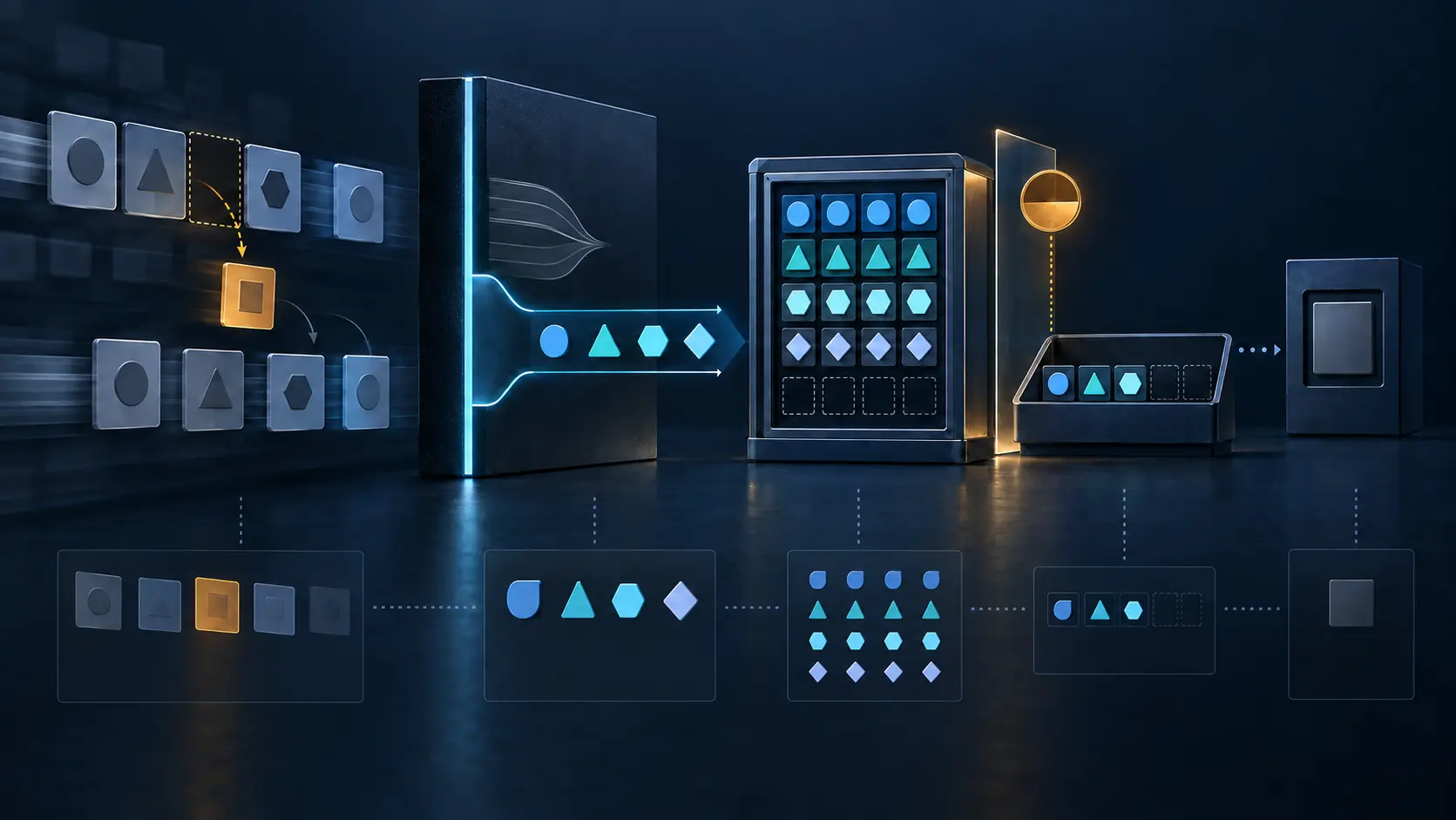
RFC 9584 gives EVC video a rigorous RTP transport grammar, but a clean packet trace ends before decoding, rendering and the viewer’s screen.
IETF
The sequence numbers disappeared. The mailbox did not become settled
RFC 9586 removes one unstable IMAP identifier from the working path; it does not turn a UID into proof that every mailbox change has been seen and applied.

IETF
The safer password exchange failed. The fallback exposed the guess
RFC 9588 protects one Kerberos password exchange from offline testing, but the protection can disappear at the moment a client falls back to the older method.

IETF
The progress bar moved. The command had not finished
RFC 9585 lets an IMAP server show that a long operation remains active. It does not turn a keepalive, a processed-item count or an almost-full bar into the command’s completion result.

IETF
The mark crossed the tunnel. It did not name the congested queue
RFC 9599 gives operators a disciplined way to carry congestion notification across protocol layers. The surviving codepoint is still only one observation in a longer chain from queue to sender response.

IETF
RFC 9019: A Signed Firmware Manifest Is Not Installation Authority
The release pipeline turns green when a firmware manifest verifies. The payload digest matches, the signer is known, and the sequence number is acceptable. Only then does the neglected question become visible: what was this signer actually allowed to change on this device, at…

IETF
The exporter saw a QUIC field. It did not see the whole connection
IPFIX can give operators a common vocabulary for QUIC observations. It cannot turn one configured vantage point into a complete connection, application or outcome receipt.

IETF
RFC 9608: No Revocation Route Is Not Permanent Trust
A validator skips one line because a certificate carries `noRevAvail`. The dashboard then paints the whole credential green. That colour has silently combined two different findings: the certificate asked for no revocation lookup, and the relying service has decided to keep…

IETF
A CCF Receipt Draft Now Names the Proofs Its Registry Number Would Need
The latest IETF text corrects a missing half of its registration request. It does not yet put a new CCF algorithm or its proofs into IANA's public tables.

IETF
The window grew. The path did not promise the next burst
A congestion window is a sender’s control state, not capacity booked from the network. That distinction matters most when the application or receiver has left much of the window unused.
Member Unlock
Restricted Profile Intelligence
Login is required to unlock full profile briefings and deep-dive sections.
Strategic Circle Briefing
Join to unlock strategic briefings after signing in.
Join Strategic CircleLeadership Alliance Briefing
For qualified IP-asset owners and management; sign in to unlock alliance briefings.
Join Leadership Alliance